Temple towns, land ‘scams’: Are BJP govts fostering corruption in name of religion?
From Ayodhya's Ram Mandir donation row to Madhya Pradesh CM Mohan Yadav's Ujjain land deals, analysts debate accountability and conflict of interest

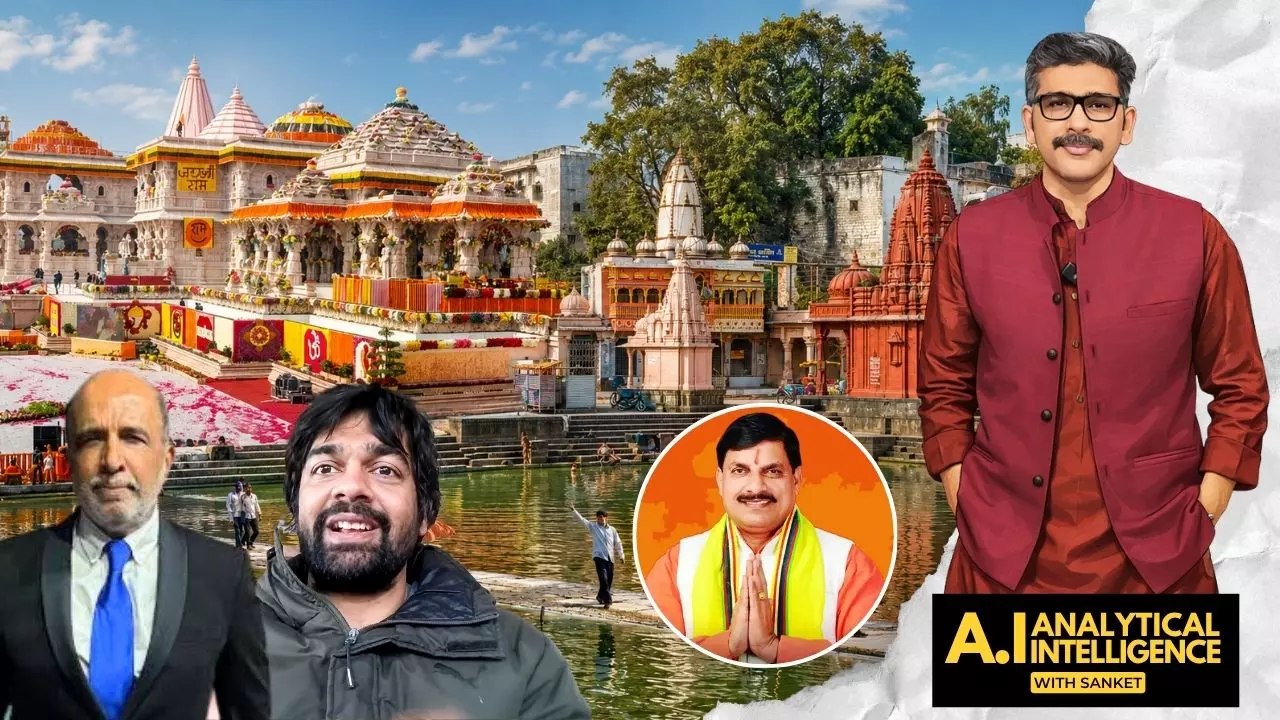
Religion has not just been a political tool; it has become a business model, says political analyst Sanjay Jha, as back-to-back controversies erupt in two of India's most prominent temple towns.
With a Special Investigation Team (SIT) already investigating the Ram Mandir donation row in Ayodhya and an Indian Express exposé now targeting Madhya Pradesh Chief Minister Mohan Yadav's family over land acquisitions in Ujjain, the question of accountability in ruling dispensations has returned to the centre of political debate.
The Federal spoke to Jha and Raghav Awasthi, advocate and political analyst, on whether conflict of interest, propriety, and the demand for resignations still carry meaning in Indian public life.
Two towns, one pattern
The Ayodhya controversy involves allegations that donation money collected at the Ram Mandir was misappropriated under the watch of those closely associated with the ruling establishment. The SIT constituted by the Uttar Pradesh government has already submitted its report, and trust general secretary Champat Rai has been questioned. Jha drew a direct line between the two controversies, arguing that in both cases, religion has been weaponised — first to win elections and then to accumulate disproportionate wealth.
Also read: Amid Ujjain’s infra upgrade, CM Mohan Yadav family’s land purchases raise questions
In Ujjain, the allegations are against Chief Minister Mohan Yadav's family. An Indian Express investigation found that since Yadav was sworn in as chief minister in December 2023, his family and their associated real estate companies acquired at least 137 plots totalling over 168 acres in and around the city, worth an estimated Rs 45 crore. The acquisitions, the report alleged, are concentrated in areas designated for a change in land use under the Ujjain Master Plan 2035 and along new road and highway projects — developments that Yadav's government is overseeing.
Conflict of interest or coincidence?
Jha was clear in his assessment. "Without doubt, I don't think there is any ambiguity on this at all," he said of the Indian Express report. "They have put down whatever are both sides of the story. The documents or whatever insinuation they have made are based on evidence collected by the Indian Express."
He drew a sharp contrast with the precedent set during the Adarsh housing scam, when former Maharashtra Chief Minister Ashok Chavan resigned amid allegations of preferential allotment of just a few apartments to his family.
"Here you are finding about hundreds of acres of land in Ujjain. There is a clear-as-daylight case of conflict of interest. The chief minister, right now, in the interest of a fair investigation, should just step down," Jha argued.
Also read: Ayodhya Ram temple multi-crore donation scam: What we know so far
Awasthi, however, struck a more cautious tone. "As a student of administrative law, I am not in a position to comment on whether there is a conflict of interest or not. Conflict of interest is essentially a judge-made doctrine," he said.
He added that the family had been in the real estate business since before Yadav became chief minister, and that several of the land transactions preceded the release of the master plan.
Is PM equally accountable?
The host pressed a key point — if the prime minister was front and centre at every milestone in these temple towns, from the 'Pran Pratishtha' ceremony at Ayodhya to inaugurating infrastructure projects in temple cities, should he not be equally accountable when things go wrong?
Awasthi resisted the conflation. He argued that Yadav was chosen by the BJP legislature party in Madhya Pradesh, and that land is a state subject, making it constitutionally inappropriate to draw the prime minister into a state-level controversy.
Also read: From Bhutan to Slovakia: Tracking PM Modi’s record 100 overseas visits
"To bring Mr Modi into the conversation everywhere — I think it is also counterproductive," he said.
Jha rejected this framing. "In our country, we have the concept of a high command culture. We all know where the choice comes from," he said, pointing out that the family's meteoric rise in real estate tracked precisely with Yadav's political elevation.
He also raised the reference to former PMO Principal Secretary Nripendra Misra, who had publicly commented on the Ayodhya trust controversy, and questioned whether accountability would ever reach the top.
Normalised corruption
The conversation widened beyond Ujjain and Ayodhya. Jha painted a bleak picture of a political ecosystem where corruption has been systematically normalised.
"Has anybody from the BJP resigned ever? And the answer is no," he said, recalling Rajnath Singh's reported remark in 2014 that unlike the Congress, nobody in the BJP would ever resign.
Also read: Rahul Gandhi calls BJP ‘Bhrast Janata Party’, attacks double engine govt
He also raised the role of the media, suggesting that what he described as "captured" institutions — regulatory, judicial, and press — had eroded the fear of consequences that was once the basis of political accountability.
"When do you become accountable? When you have the fear of being asked questions that could lead to serious consequences. This government, this party, believes it is above that."
Awasthi countered that the legal process remained intact. He cited the Supreme Court's Lalita Kumari judgment, which obligates police to register an FIR if a cognisable offence is disclosed, and invited those who believe crimes have been committed to approach the courts. "The law is the same for everyone," he said.
Temple economy, temple discipline
On Ayodhya specifically, the host described a palpable erosion of trust among devotees — including those from Tamil Nadu, Telangana, and Andhra Pradesh who constitute a significant portion of the temple's visitor base.
Donations to the Ram Mandir, he noted, have dropped since news of the controversy broke.
Jha underscored the civic dimension of this failure. He recounted a conversation with a friend from Ayodhya who said he had given with good intention, leaving the caretakers' karma to God — a sentiment that reflects resignation more than trust.
Also read: How Ayodhya Ram temple donation row put faith and transparency to test
"This is a clear case of temple economy and temple accountability," the host concluded. "If we are building cities around religious tourism and religious economy, there has to be religious economy discipline and methodology in place."
Both panellists agreed that investigations must proceed, though they differed sharply on whether political consequences — resignations, prime ministerial statements, or party action — would follow.
The content above has been transcribed from video using a fine-tuned AI model. To ensure accuracy, quality, and editorial integrity, we employ a Human-In-The-Loop (HITL) process. While AI assists in creating the initial draft, our experienced editorial team carefully reviews, edits, and refines the content before publication. At The Federal, we combine the efficiency of AI with the expertise of human editors to deliver reliable and insightful journalism.