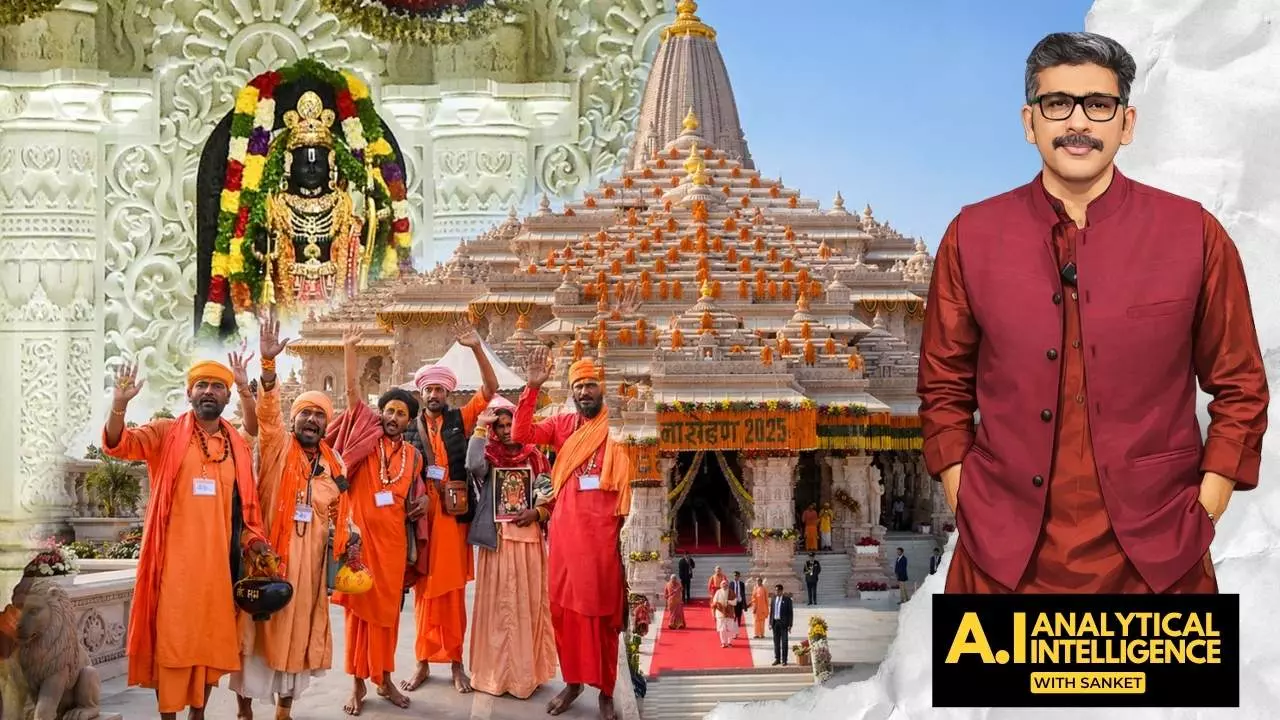
How Ayodhya Ram temple donation row put faith and transparency to test
Analysts warn that allegations of fund misuse at the temple betray devotee trust and expose the urgent need for stronger oversight of religious institutions

"Even Ram is not immune to the greed of Indians!" This appears to be the sad truth of India today, as it emerged from a discussion on The Federal's daily YouTube show AI with Sanket.
The discussion looked at allegations of fund embezzlement linked to donations made by devotees at the Ayodhya Ram Temple. The controversy has triggered questions about transparency, accountability and temple governance, with concerns that public faith may have been betrayed. While investigations are still underway and no final conclusions have been reached, panelists agreed that the allegations are serious enough to warrant scrutiny.
Also Read: Ayodhya Ram temple multi-crore donation scam: What we know so far
On the panel were political analysts Prof Badri Narayan and R Kannan, and senior journalist RK Radhakrishnan. They discussed not only the controversy but also its implications, and what it means for temple management in India.
Trust and transparency
Badri Narayan cautioned against drawing conclusions before investigations are complete. He repeatedly stressed that the allegations remain unproven and said authorities are still examining the facts.
However, he argued that if the allegations are eventually established, they would raise larger questions about how temples are managed and how temple finances are monitored. "There should be regulation, standard operating procedures and transparent management systems," he said, adding that India needs stronger mechanisms to oversee religious institutions and the funds they receive.
He also argued that the issue should prompt a broader policy discussion about temple governance rather than being viewed as an isolated controversy.
Betrayal of faith
R Kannan described the allegations as a breach of public trust and faith. He argued that religious institutions handling large volumes of public donations require intensive scrutiny and oversight.
Referring to the Ayodhya temple project, Kannan said devotees contribute money out of devotion and trust, making any alleged misuse of those funds particularly troubling.
Also Read: Ayodhya Ram Mandir | God, temple, prayer, and all things personal 5 mins read
He pointed out that the controversy comes at a time when Ayodhya has emerged as a major religious destination attracting visitors from across India.
Kannan also argued that temple administration requires deeper introspection and stronger safeguards against corruption and misuse of funds.
Influx of southern devotees
There is an unprecedented influx of devotees from Tamil Nadu, Kerala and Andhra Pradesh to Ayodhya after the consecration of the Ram Temple. Many pilgrims travel long distances and donate money, jewellery and other offerings as expressions of faith.
The allegations have resonated strongly because they involve donations made by ordinary devotees who trusted that their contributions would be used appropriately.
RK Radhakrishnan agreed that many devotees feel disappointed and betrayed by the allegations.
He recalled that support for the Ram Temple project extended far beyond Ayodhya, with devotees from southern states participating in various ways long before the Supreme Court verdict cleared the path for construction.
Need for government interference
Radhakrishnan argued that the controversy highlights the importance of institutional oversight. Drawing comparisons with temple administration models in Tamil Nadu and Kerala, he said government supervision creates multiple layers of accountability through audits and scrutiny by public agencies.
According to him, periodic audits and external oversight can help ensure transparency in handling temple funds. He expressed concern that leaving temple administration entirely to trusts without sufficient monitoring could create opportunities for misuse.
The discussion also touched upon broader debates over whether governments should oversee religious institutions or whether management should be left entirely to religious bodies.
Digital solutions
A significant portion of the discussion focused on possible solutions. Technology could reduce opportunities for corruption by minimizing human intervention in the donation process.
Digitising donations and replacing traditional donation boxes with electronic systems capable of issuing receipts and maintaining centralised records could address some of the issues. Such systems could improve accountability and reduce the possibility of funds being diverted.
Also Read: Ayodhya Ram Temple, 1949 to 2024: Nine dates that changed everything
Narayan supported the idea, drawing parallels with debates around reducing human intervention in other areas where corruption risks exist.
He said digitisation and technology-driven systems could help create more transparent and efficient financial management processes for religious institutions.
Larger debate
Throughout the discussion, the panelists repeatedly returned to the central issue of public trust. While opinions differed on the causes and broader implications of the controversy, all agreed that allegations involving donations made by devotees strike at the heart of the relationship between religious institutions and believers.
Narayan maintained that investigations must be allowed to establish the facts before definitive conclusions are drawn. Kannan and Radhakrishnan, meanwhile, stressed the need for greater accountability and stronger oversight mechanisms.
The panel concluded that preserving public confidence in religious institutions will require transparent investigations and robust systems that ensure donations are managed responsibly.