



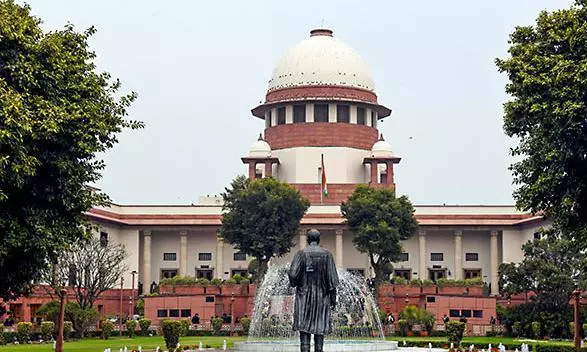
SC dismisses plea seeking nationwide menstrual leave policy
The Chief Justice raised concerns about the potential social consequences of mandating menstrual leave through legislation, citing it could unintentionally reinforce stereotypes about women

A PIL seeking nationwide policy to provide menstrual leave for women students and workers was dismissed by the Supreme Court on Friday (March 13). The top court said that such a provision could unintentionally reinforce gender stereotypes and make it difficult for employers to hire women.
The court, however, said the competent authority could consider the representation and examine framing a menstrual leave policy after consulting relevant stakeholders.
Also read: Karnataka govt approves 1-day menstrual leave a month across sectors
The Bench was hearing a PIL filed by Shailendra Mani Tripathi.
The PIL was accordingly disposed of with the direction to the authorities to take an appropriate decision on the representation. “These pleas are made to create fear, to call women inferior, that menstruation is something bad happening to them. This is an affirmative right, but think about the employer who needs to give paid leave,” a bench comprising Chief Justice Surya Kant and Justice Joymalya Bagchi said.
Social implications
During the hearing, the Chief Justice raised concerns about the potential social consequences of mandating menstrual leave through legislation. He observed that such pleas could unintentionally reinforce stereotypes about women.
Also read: Bengaluru hotels body moves HC against govt's mandatory menstrual leave order
Senior advocate MR Shamshad, appearing for the petitioner, pointed out that certain states and institutions have already taken steps to accommodate menstrual leave.
He cited the example of Kerala, where relaxation has been introduced in schools, and added that several private companies have voluntarily provided such leave to employees.
Responding to this, the CJI said voluntary policies were welcome but cautioned against making such provisions mandatory through law. “Voluntarily given is excellent. The moment you say it is compulsory in law, nobody will give them jobs. Nobody will take them in the judiciary or government jobs; their career will be over. They will say you should sit at home after informing everyone,” the CJI said.
Repeated plea
The Bench also highlighted the potential impact of such measures on workplace perceptions and the professional growth of women.
Also read: Karnataka expands menstrual cup scheme statewide to reach over one million students
Taking note of the petitioner’s submissions, the bench said that the petitioner had already made a representation to the relevant authorities.
The Bench stated that it was not necessary for the petitioner to repeatedly approach the court seeking a mandamus.