



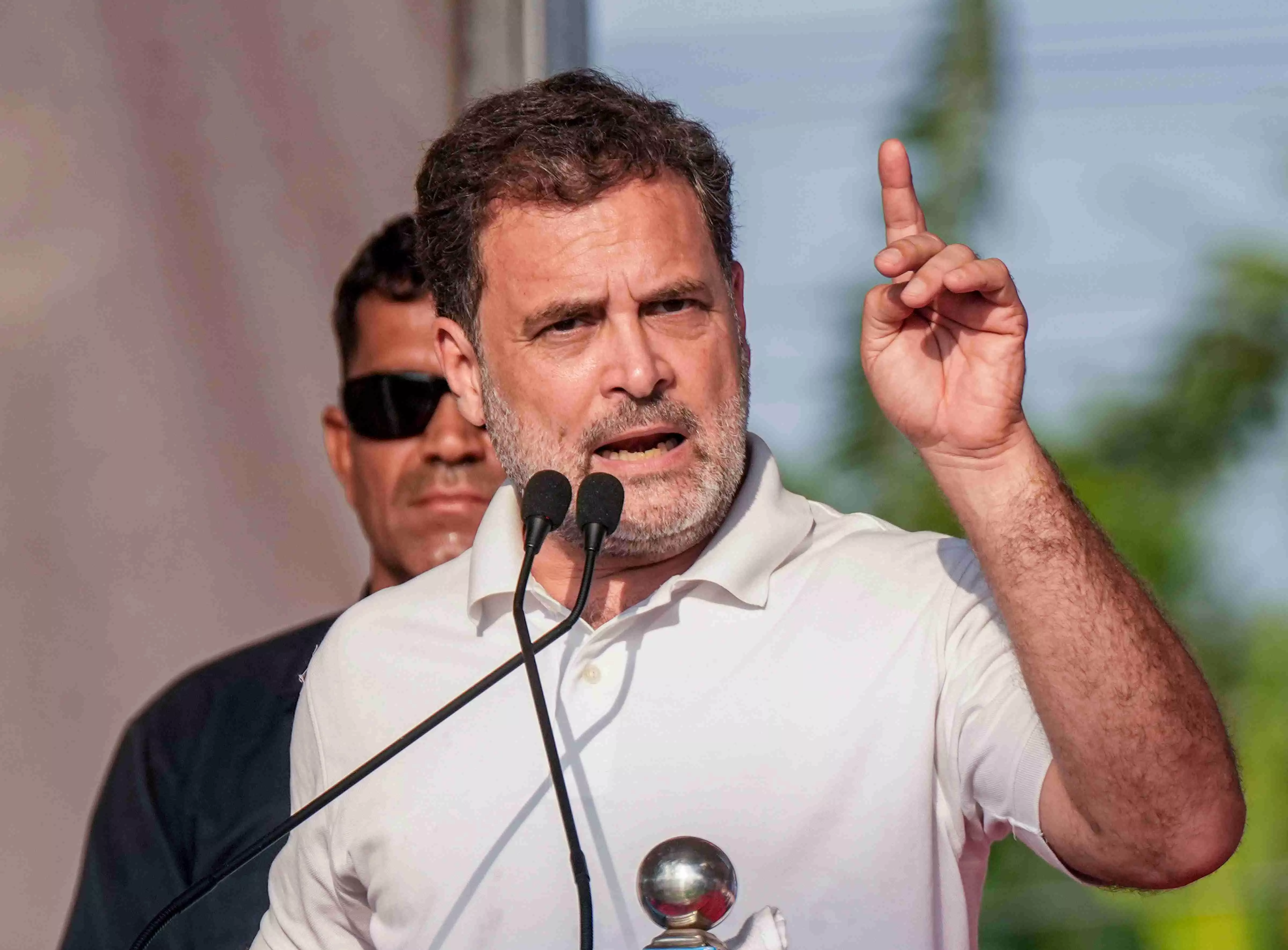
Rahul slams Modi as ‘compromised PM’ over fuel, gold austerity appeal as market tumbles
Rahul Gandhi and Akhilesh Yadav attack PM Modi’s austerity appeal as rising oil prices, West Asia tensions and market losses fuel political debate

Congress leader Rahul Gandhi on Monday (May 11) lashed out at Prime Minister Narendra Modi for his advice to the people on adopting austerity measures about fuel consumption, purchase of gold and foreign travel in view of the West Asia crisis, accusing him of failing to run the country and dubbing him a “compromised PM”.
The Leader of the Opposition in the Lok Sabha further alleged that the government was now shifting the burden of its own failures onto ordinary citizens.
Failure and fallout
Rahul said the Prime Minister’s message to the country was not advice but a public acknowledgement that the government had failed to prepare for an economic shock.
“Yesterday, Modi Ji called upon the public to make sacrifices -- do not buy gold, do not travel abroad, consume less petrol, cut down on fertilisers and cooking oil, take the Metro, and work from home,” Rahul said in a post on X.
Rahul further alleged that the country had been pushed into a situation where citizens were now being instructed on what to consume, where to travel, and how to spend their money.
Accountability attack
“These are not words of counsel; they are evidence of failure,” he said, adding that after more than a decade in office, the government was now asking the public to absorb the cost of what he described as policy mismanagement.
Also Read: Iran effect | Polls done, PM seeks Covid-era measures from people: WFH, don’t buy gold
Rahul alleged that accountability was repeatedly being transferred away from those in power.
“Time and again, they shift the responsibility onto the public to evade their own accountability. The ‘Compromised PM’ is no longer capable of running the country,” he said.
Akhilesh slams PM
During the day, Samajwadi Party chief Akhilesh Yadav also mounted an attack on the BJP-led Centre, calling the government’s appeal an “admission of failure” in both economic management and foreign policy.
In a post on X, Yadav said the timing of the appeal raised serious questions.
“As soon as elections are over, the government suddenly remembered the ‘crisis’. In reality, there is only one crisis for the country and its name is BJP,” he said.
Economic questions
Questioning the Centre’s economic narrative, the former Uttar Pradesh Chief Minister asked how India could aspire to become a five-trillion-dollar economy if citizens were being asked to postpone spending and reduce consumption.
Also Read: LPG shortage triggers PNG push, and exposes its logistical limits
“So many restrictions are being imposed, then how will the much-publicised ‘five trillion dollar economy’ become a reality? It appears the BJP government has completely lost control,” Yadav said.
He also flagged currency concerns, alleging that economic fundamentals were deteriorating rapidly.
Markets under pressure
“The dollar is touching the sky while the Indian rupee is sinking deeper,” he said, warning that such public appeals could trigger panic across trade and investment circles.
Also Read: LPG crisis: Industries start shutting down as states grapple with ‘inadequate’ supply
Meanwhile, the political exchanges coincided with turbulence in domestic equity markets, as rising crude oil prices and renewed geopolitical uncertainty rattled investor sentiment.
The 30-share BSE Sensex plunged more than 800 points in opening trade, while the Nifty 50 slipped over 230 points, tracking weakness across Asian markets and a spike in global energy prices.
Brent crude surged above USD 105 per barrel after fresh concerns emerged over the stalled diplomatic engagement between Washington and Tehran.
PM’s appeal
Market analysts said two immediate concerns were weighing on sentiment: the rise in crude prices and fears that prolonged external pressure could widen India’s current account deficit. Foreign institutional investors also remained net sellers, adding to the pressure on frontline indices.
A day earlier, addressing a rally in Hyderabad, PM Modi had urged citizens to adopt austerity measures to help cushion the economy from external shocks caused by the West Asia conflict.
Also Read: India's oil reserves: How long can the country sustain a supply shock?
Stressing the need to conserve foreign exchange, the Prime Minister called for reduced consumption of petrol and diesel, postponement of gold purchases and overseas travel, increased use of public transport, and a return to work-from-home practices adopted during the Covid period. “We have to save foreign exchange by any means,” the Prime Minister said.
(With agency issues)