oils and prices
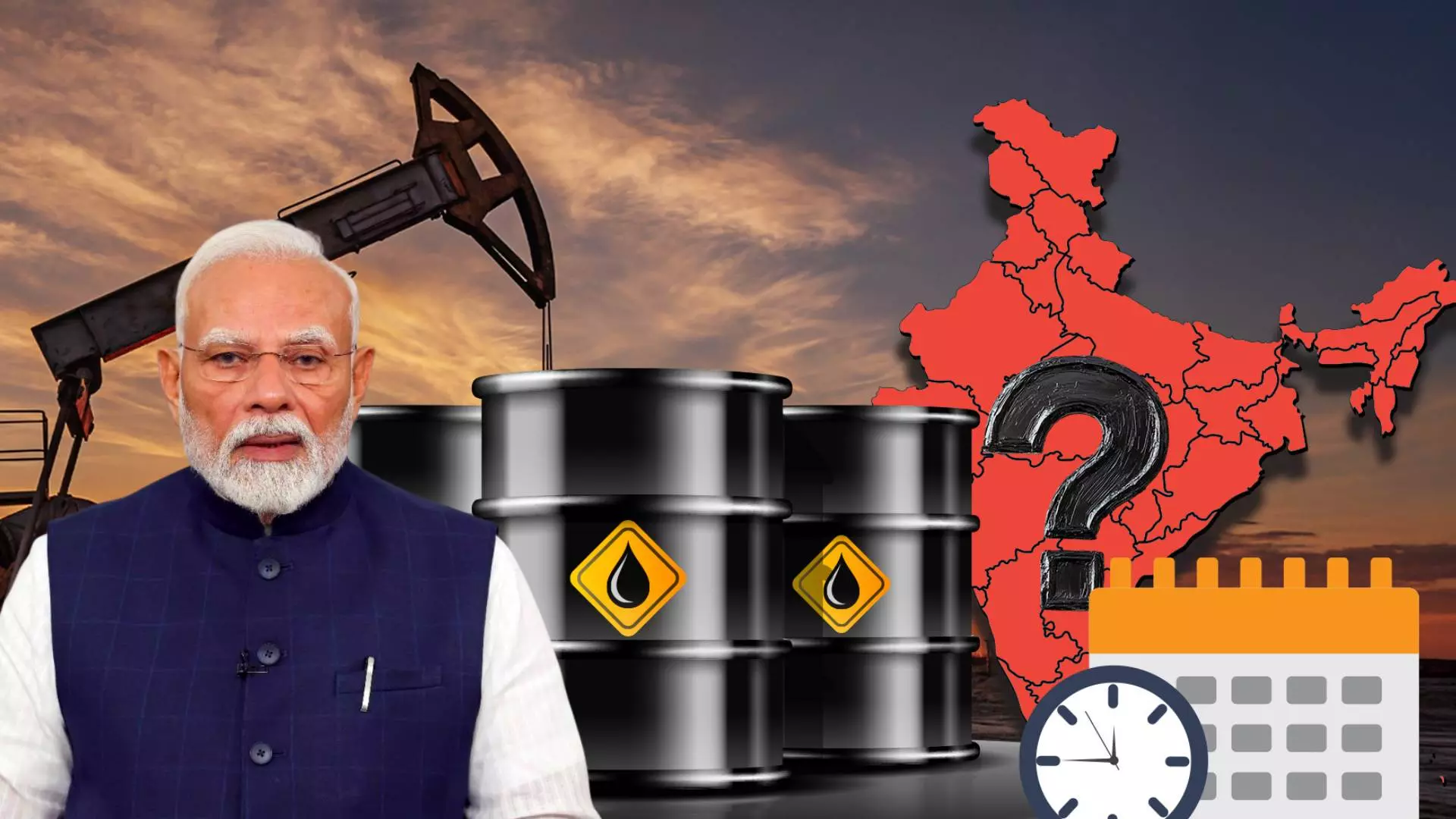
India's oil reserves: How long can the country sustain a supply shock?
With underground reserves currently at just 64 per cent capacity, India pivots to a "Virtual Reserve" of ethanol blending, diversified sourcing from 41 nations to stop energy shutdown

India is facing renewed concerns over its energy security as geopolitical tensions involving Iran send ripples across global oil markets. The big question now remains: how long can the country sustain itself if crude imports are disrupted?
Data presented in the Rajya Sabha on March 23 reveals that India currently holds about 3.3 million tonnes of crude oil in its strategic petroleum reserves—roughly 25 million barrels. However, this accounts for only about 64 per cent of the total storage capacity.
Media reports suggest that these emergency reserves alone can meet India’s needs for just 9–10 days in the event of a complete halt in imports.
Reserve limits
India, however, does not rely solely on its strategic reserves. When factoring in oil stored by refineries and private companies, the country’s total backup is estimated to last between 70 and 74 days.
Also read: LPG shortage triggers PNG push, and exposes its logistical limits
Despite this, the cushion appears limited for a nation that imports nearly 90 per cent of its crude oil, particularly during a prolonged global crisis.
“So, how much oil does India really have? We don't have a straight or single answer,” the report notes, highlighting the uncertainty around actual resilience.
Storage sites
India’s crude reserves are not stored in conventional tanks but in massive underground rock caverns designed to withstand wars, natural disasters, and supply shocks.
The country currently operates three major strategic storage facilities—Visakhapatnam in Andhra Pradesh, and Mangaluru and Padur in Karnataka. Together, these sites have a total storage capacity of 5.33 million tonnes.
Additional capacity is also in the pipeline, with a new reserve planned in Odisha and an expansion underway in Karnataka.
Diversification push
Addressing the Rajya Sabha on March 24, Prime Minister Narendra Modi underscored India’s preparedness. He stated that the country has already built over 5.3 million tonnes of strategic reserves and is working to expand further.
He also emphasised diversification in sourcing, noting that India now imports oil from 41 countries, compared to 27 earlier. This strategy aims to reduce dependence on any single region, especially as tensions in the Gulf region threaten key supply routes like the Strait of Hormuz.
Also read: No fuel shortage in India, say state-run oil firms amid West Asia conflict
“Iran is at war, though paused now. The Strait of Hormuz could get blocked again any minute,” the transcript warns, underlining the fragility of global oil flows.
Future risks
India’s current reserves may be sufficient to manage short-term disruptions. However, a prolonged global crisis could pose significant challenges.
The path forward, experts suggest, lies in expanding storage capacity, diversifying supply sources, and reducing reliance on specific regions.
Because in today’s uncertain geopolitical climate, energy security is no longer just about supply—it is about survival.
The content above has been transcribed from video using a fine-tuned AI model. To ensure accuracy, quality, and editorial integrity, we employ a Human-In-The-Loop (HITL) process. While AI assists in creating the initial draft, our experienced editorial team carefully reviews, edits, and refines the content before publication. At The Federal, we combine the efficiency of AI with the expertise of human editors to deliver reliable and insightful journalism.