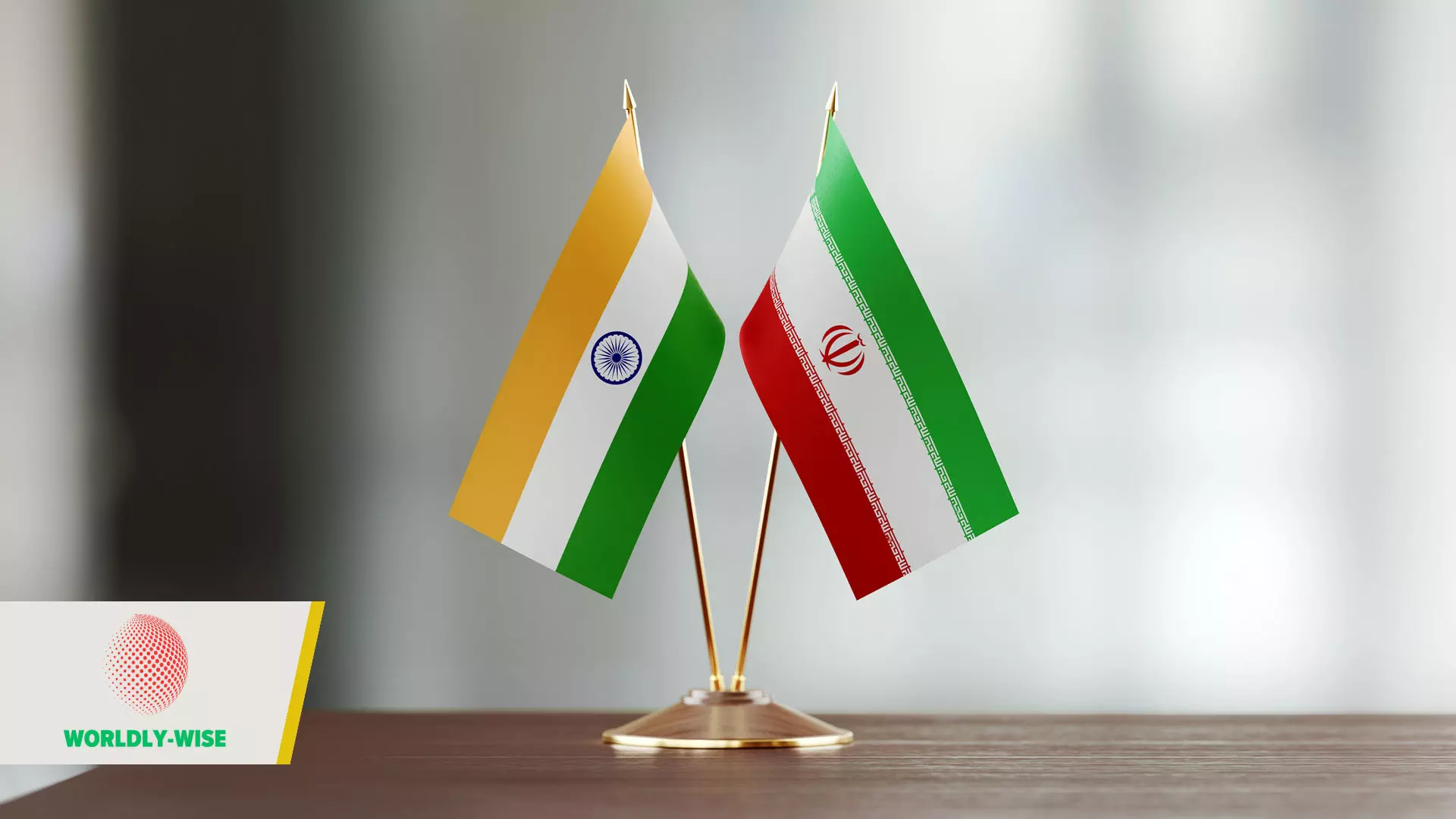
How US diktat has kept apart natural allies India and Iran
As India and Iran navigate evolving priorities, the key question is how they balance cooperation with competing pressures in an increasingly uncertain geopolitical landscape

India and Iran, two ancient civilisations with deep cultural and strategic ties, have seen their relationship shaped—and often constrained—by external geopolitical pressures, particularly from the United States.
The relationship, rooted in shared history, culture, and regional interests, ideally positions both nations as natural strategic partners. From language and cuisine to broader societal influences, the connections run deep.
For India, Iran offers a crucial land route to Afghanistan and Central Asia, bypassing Pakistan, with whom New Delhi shares a long-standing hostile relationship. For Tehran, India represents a major economic partner and a stable relationship largely free from historical tensions.
Strategic ties
Over the years, both countries have aligned on several regional issues, particularly in South Asia. Their cooperation has been driven by mutual strategic needs and geographic advantages.
Also read: Iran teases ‘secret’ underwater weapon as Khamenei warns US amid Gulf tensions
However, despite these favourable conditions, their partnership has been repeatedly tested. A major turning point came in the early 2000s when the United States, under the George W Bush administration, opposed Iran’s nuclear programme and imposed sanctions.
India’s decision to vote against Iran at the International Atomic Energy Agency in 2005, followed by similar votes in 2006 and 2007, marked a significant shift. These decisions came as New Delhi was negotiating a nuclear deal with Washington under the Manmohan Singh government.
Project setbacks
Several key India-Iran projects have either stalled or been abandoned due to sanctions and diplomatic pressures.
Also read: Iran backs India, China after Trump shares 'hellhole' post: 'Cradles of Civilization'
The Chabahar port project, once seen as a strategic gateway for India into Central Asia, has faced repeated hurdles. Although it received temporary sanction waivers during the Donald Trump administration, uncertainty persists, with India signalling caution in continuing its involvement.
India’s oil imports from Iran have also fluctuated sharply depending on US policy. Imports dropped significantly during sanction periods, rose after the 2015 nuclear deal under Barack Obama, and fell again after the deal was scrapped in 2018.
“India’s oil trade with Iran directly impinges on US diktat,” the podcast notes, highlighting the extent of external influence on bilateral trade.
Missed opportunities
The proposed Iran-Pakistan-India gas pipeline, once considered a potential “game-changer”, was abandoned in the mid-2000s. The project aimed to transport natural gas across the region, potentially strengthening economic ties and regional stability.
Also read: 'India's silence over attacks on Iran not pragmatism, but cowardice' | Interview
Similarly, the Chabahar-Zahedan railway project, which would have connected Iran’s port to Afghanistan, saw India step back due to financial constraints linked to sanctions. Iran has since proceeded independently.
Another major setback was India’s exit from the Farzad-B gas field project. Discovered by an ONGC-led consortium, the field holds significant reserves, but India could not finalise development agreements under the prevailing sanctions regime.
Autonomy debate
These developments raise broader questions about India’s strategic autonomy. The pattern suggests that New Delhi’s policy decisions have often been influenced by its relationship with Washington.
Also read: Iran war reaches stalemate, prospects of quick solution dim
While the India-US partnership offers its own advantages, the cost has been a diluted engagement with Iran, affecting long-term regional strategy.
Future course
The future of India-Iran ties will depend on how New Delhi balances its global partnerships with its regional priorities.
Re-engagement with Iran could offer strategic and economic benefits, especially in accessing Central Asia and securing energy resources. However, this would require navigating complex geopolitical alignments and potential diplomatic risks.
Also read: Mourning Khamenei: Lucknow’s ties with Iran run deeper than geopolitics
Whether India can reclaim a more independent foreign policy approach remains an open question, as global power dynamics continue to evolve.
(The content above has been transcribed from video using a fine-tuned AI model. To ensure accuracy, quality, and editorial integrity, we employ a Human-In-The-Loop (HITL) process. While AI assists in creating the initial draft, our experienced editorial team carefully reviews, edits, and refines the content before publication. At The Federal, we combine the efficiency of AI with the expertise of human editors to deliver reliable and insightful journalism.)