



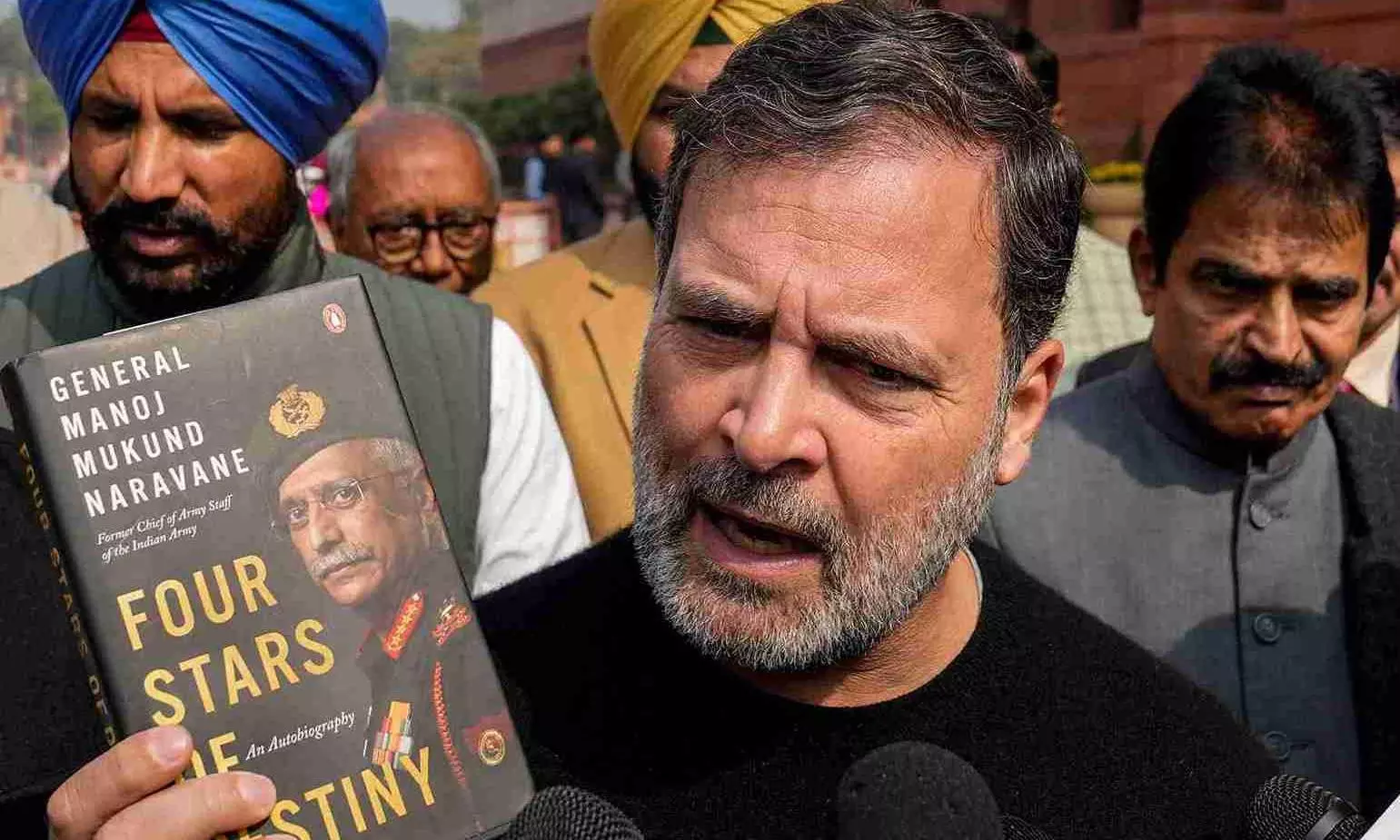
Govt considers 20-year cooling-off rule on retired officials amid Naravane memoir row
Centre considers 20-year cooling-off rule for retired officials as Naravane memoir controversy and Galwan references trigger debate

Amid raging controversy over former army chief General (retired) Manoj Mukund Naravane’s unpublished memoir ‘Four Stars of Destiny’, the Centre may consider introducing a 20-year cooling-off period for senior government officials, including military officers who held positions of power, before they can write a book after retirement.
The development comes at a time when the Government and the Opposition are at loggerheads over the accounts of the 2020 Galwan described in the memoir.
‘Formal order on cooling-off period expected soon’
According to a report in the Hindustan Times, the issue of Naravane’s memoir came up during a Cabinet meeting on Friday (February 14). The report, quoting officials, further stated that during the meeting several ministers expressed their views that there should be cooling off period for people who have held positions of power before they can author a book.
Also Read: Why General Naravane’s silence is raising tough questions
The officials, as quoted in the report, further stated that a formal order mandating the 20-year cooling-off period was expected to be issued soon. They further stated that the issue was not part of the official 27-point agenda of the cabinet but cropped up as part of the general discussion.
Epstein files row discussed in Cabinet meeting
The controversy surrounding the Epstein files recently released by the US Department of Justice also came up during the Cabinet meeting, reported the Hindustan Times, adding that Ministers stated that the government should maintain its stance on the issue instead of responding to the allegations raised by the Opposition.
Also Read: With Naravane backing Penguin, Rahul pivots to India-US trade deal
The Opposition has on several occasions sought to draw a connection between Union minister Hardeep Singh Puri and Jeffrey Epstein, pointing to a series of emails in the public domain. Denying the allegation,s Puri said that his interactions with Epstein were in the course of an official delegation of the International Peace Institute.
He further stated that he never travelled to Epstein’s private island, Little St. James, and ended all communication when he “realised what the guy was”.
How the memoir controversy started
The controversy over Naravane’s memoir surfaced on February 2 after Leader of the Opposition in the Lok Sabha Rahul Gandhi sought to cite portions of the yet-to-be-published book in the Lower House. The government strongly objected, contending that references could not be made to a work that had not been released.
Also Read: Delhi police probe global leak of Naravane's memoir before govt clearance
Rahul subsequently arrived in Parliament with a copy of the manuscript, asserting that the book was in existence. Shortly thereafter, a PDF version began circulating widely across social media platforms.
What the publisher said
“Any copies of the book currently in circulation, in whole or in part, whether in print, digital, PDF, or any other format, online or offline, on any platform, constitutes an infringement of PRHI’s copyright and must immediately be ceased. Penguin Random House India shall be exercising remedies available in law against the illegal and unauthorised dissemination of the book,” the publisher said in a statement on Monday.
Also Read: Rahul's speech: Brutal truth or 'bundle of lies'?
The statement was issued hours after Delhi Police registered an FIR and initiated an investigation into the alleged unlawful circulation of the manuscript in digital and other formats.
Naravane on the book’s status
On Tuesday, Naravane addressed the matter publicly for the first time, backing his publisher’s position that the book had not been published and that no copies were “published, distributed, sold or otherwise made available to the public” in print or digital form.
Also Read: As MM Naravane’s memoir sparks interest, his thriller makes it to Amazon bestseller lists
At the heart of the dispute is his account of developments on the Kailash range along the southern bank of Pangong Tso on August 31, 2020, as well as a reference to what is described as the absence of an immediate political directive on how the Army should respond to Chinese actions. The Defense Ministry is yet to grant clearance to the book.