



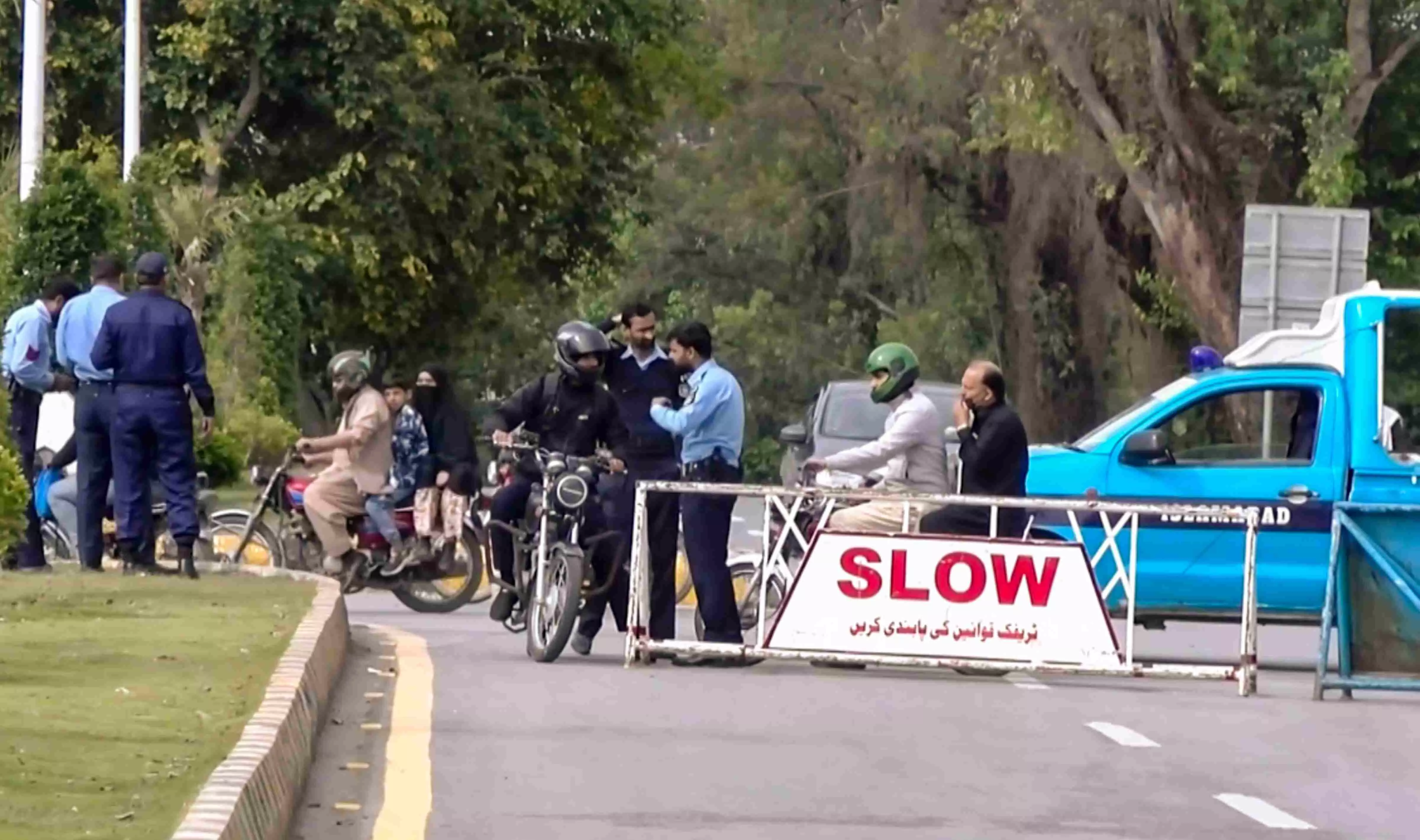
Security personnel check commuters at a barricade in Islamabad amid heightened security measures ahead of US-Iran talks. Photo: PTI
US-Iran talks in Islamabad stall as Tehran sets Lebanon ceasefire condition
Tehran says no negotiations will proceed unless US upholds Lebanon ceasefire commitments and Israeli strikes stop, casting doubt over Pakistan-hosted diplomatic meeting

The much-anticipated US-Iran peace talks set to be hosted by Pakistan in Islamabad have run into rough waters even before starting on Friday (April 18), with Tehran dismissing claims that its delegation has reached the Pakistani capital, stating that there would be no negotiations with Washington unless Israel stops its attack on Lebanon.
Talks uncertain before start
According to a report in Iran’s Fars news agency, Tehran has suspended negotiations until the US admits its commitments regarding the ceasefire in Lebanon.
Also Read: The war and ceasefire are Trump's, but Iran owns the Hormuz agenda
“Claims by some media outlets that an Iranian negotiating delegation has arrived in Islamabad, Pakistan, to hold talks with U.S. officials are completely false,” stated the report, quoting a source.
“Negotiations remain suspended until the United States upholds its commitments regarding the ceasefire in Lebanon and the Israeli regime stops its attacks,” it added.
Delegation uncertainty builds
According to media reports, earlier there were speculations that the Speaker of the Iranian Parliament, Bagher Ghalibaf and Foreign Minister Abbas Araghchi would lead the delegation. Notably, Ghalibaf is a former commander of Iran’s powerful Revolutionary Guard.
Also Read: Iran war: 'There are clear red flags in ceasefire deal'
However, the US has confirmed its participation in the meeting with the White House, stating that President JD Vance will lead the American delegation, adding that he will be accompanied by Trump’s envoy Steve Witkoff and senior adviser Jared Kushner.
Pakistan steps in as mediator
Meanwhile, Pakistan has positioned itself as a crucial intermediary in the West Asia conflict, which has disrupted the global fuel supply chain with Iran blocking the Strait of Hormuz. Islamabad’s ties with the US and Iran have shaped its role as a mediator between the two warring sides.
Also Read: White House approved Pak PM's appeal to Donald Trump on Iran ceasefire: Report
The development takes place against the backdrop of the escalating West Asia conflict. On February 28, Iran’s former Supreme Leader Ayatollah Ali Khamenei was killed in strikes by the US and Israel.
Iran retaliated by launching missile and drone strikes against Gulf countries and Israel. It also targeted US military bases in the region.
The conflict escalated further when Iran-backed Hezbollah entered the fray, leading to Israel’s strikes in Lebanon.
Fragile pause and uncertain path
The swift escalation of hostilities appears to have triggered a push for immediate diplomatic intervention, with countries such as Pakistan stepping in to contain the situation before it widens further.
Also Read: Worried by rising oil prices, US pushed Pakistan to broker truce with Iran: Report
Although the ceasefire has, for the moment, paused direct military engagement, its durability is in question. Iran has made it clear that any move toward talks will depend on how the US addresses its commitments and on developments unfolding in Lebanon, indicating that negotiations are unlikely to proceed without conditions.
At present, the US side appears prepared to move ahead, but uncertainty continues to surround Iran’s involvement, leaving the proposed discussions in Islamabad without a clear footing.