



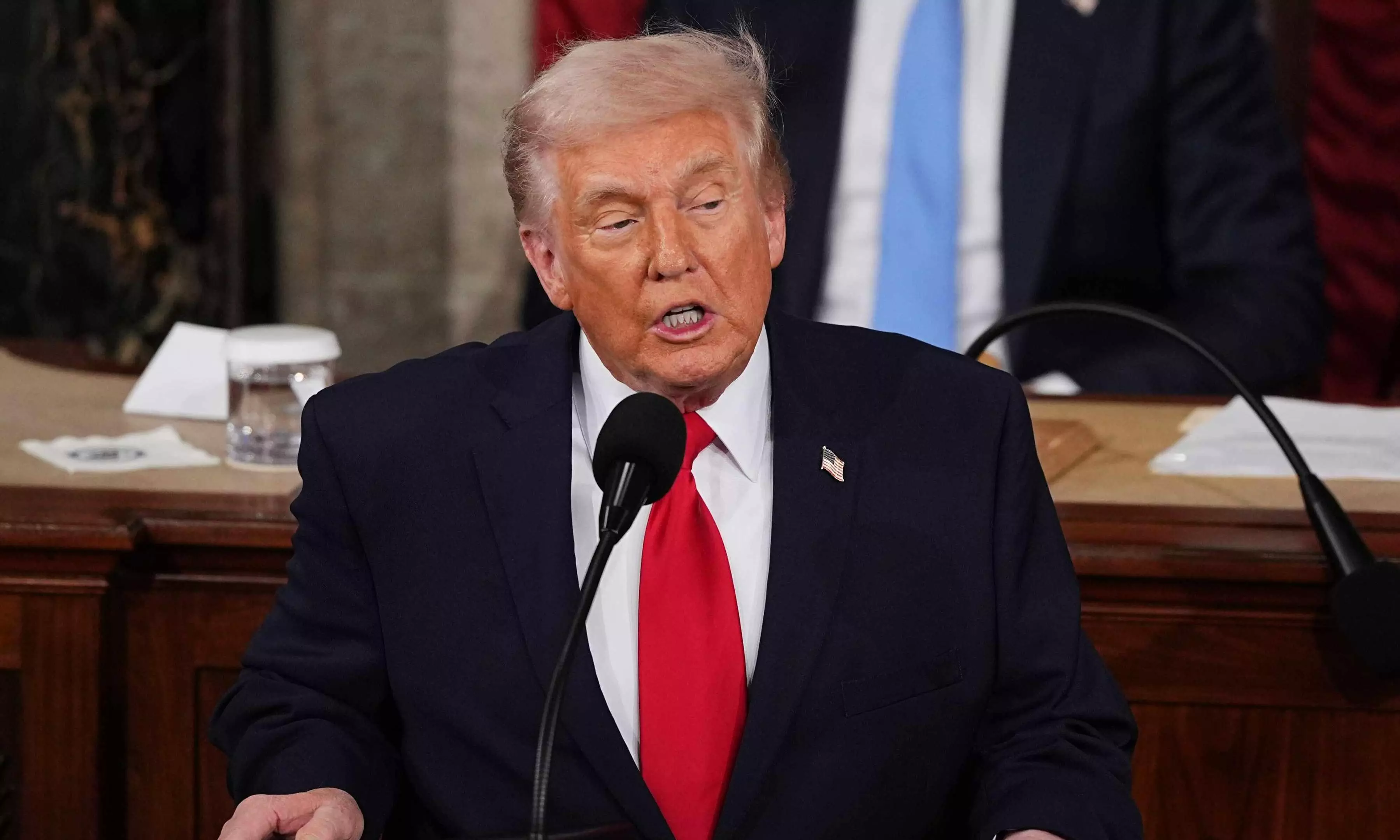
Trump’s ‘take Cuba’ threat sparks tensions as Havana warns of ‘impenetrable resistance’
Cuban President Miguel Díaz-Canel warns of strong resistance after Trump’s remarks on “taking Cuba,” as the island faces blackouts and rising unrest under US pressure.

US President Donald Trump’s threat to “take” and do anything with the country has triggered fresh tensions between Washington and Havana, with the latter warning of “impregnable resistance” in case of any aggression by the US.
The development comes at a time when Cuba’s creaking national power grid is struggling to function due to the Trump administration’s oil embargo, and the island’s million people grappled with yet another major power cut.
What Trump said
Earlier, speaking to reporters at the White House, President Trump said that he believes he would “have the honour of taking Cuba”, adding that he could do whatever he wants with it.
Also Read: Israelis drove decision to take action against Iran: US ex-counterterrorism official
"You know, all my life I've been hearing about the United States and Cuba. When will the United States do it?" I do believe I'll be...having the honour of taking Cuba.” Said Trump.
"I do believe I'll be...having the honour of taking Cuba. Whether I free it, take it -- think I could do anything I want with it, you want to know the truth. They're a very weakened nation right now,” he added as quoted by the AFP.
Cuba slams Trump
Lashing out at Trump over his threat, Cuban President Miguel Díaz-Canel on late Tuesday said in a post on X, that the Trump administration “publicly threatens” Cuba's government almost daily with overthrowing it, and any act of aggression “will clash with an impregnable resistance.”
Also Read: As ‘friends’ trump Donald on Hormuz, is the bully all alone now? | AI With Sanket
According to a report by AP quoting a source, the Trump administration is looking for Díaz-Canel to leave as the U.S. continues negotiating with the Cuban government. No details have been offered about who the administration might like to see in power, stated the report.
Geopolitical context
Trump's comments on Cuba came more than two months after his administration's military raid that captured then Venezuelan President Nicolás Maduro in January, and a few weeks after the launch of joint U.S.-Israeli military strikes against Iran on February 28.
The administration has effectively halted vital oil exports to Cuba, pushing the Caribbean nation to the brink.
Protests in Cuba
The Cuban people that Trump and Rubio say they want to help have been left reeling.
Overnight, activist groups from various countries delivered five tons of medical equipment, solar panels and other aid, according to Cuban state television, while crippling blackouts plague the island.
Also Read: Trump claims Iran’s Gulf strikes were a ‘surprise’; US intel docs say otherwise: Report
Rigoberto Zarza, European director for the Cuban Institute of Friendship with the Peoples, said that the aid, especially solar panels, will be crucial to assist health institutions.
“The support provided by this aid is of great importance, not only for what it represents materially and from a medical standpoint," he said.
Rising unrest
Mounting blackouts, along with persistent shortages of food, medicine and other essentials, are deepening frustration across Cuba, with signs of unrest becoming harder to ignore. In a rare outbreak of violence, demonstrators vandalised a provincial office of the Communist Party last weekend, marking a shift from largely peaceful expressions of dissent.
Also Read: Iran weighs 'China-only' terms for limited reopening of Strait of Hormuz
The incident in Moron, a town of roughly 70,000 east of Havana, led to the arrest of 14 people, according to the regional party chief, as cited by state-run newspaper Invasor. It comes amid a broader pattern of protests in which residents bang pots and pans at night, at times shouting "Libertad," or freedom.
Government response
Responding to the unrest, President Miguel Díaz-Canel acknowledged in a post on X "the discontent our people feel because of the prolonged blackouts."
"What will never be comprehensible, justified or admitted is violence," he said.
Fuel shortages have also forced gasoline rationing and disruptions to some hospital services, while Díaz-Canel confirmed recent talks with the United States.
(With agency inputs)