



Trump claims Iran’s Gulf strikes were a ‘surprise’; US intel docs say otherwise: Report
US intelligence reports suggest Trump was warned Iran could retaliate against Gulf allies, contradicting his claim that the strikes came as a surprise

US President Donald Trump’s claim that Iran’s strikes on the Gulf allies have come as a surprise has been contradicted by US intelligence reports, which stated that the Republican leader was informed that the current actions by Tehran were among the possible outcomes.
According to a Reuters report quoting sources, although pre-war intelligence assessments did not say that Iran’s response was “a guarantee, but it certainly was on the list of potential outcomes."
Trump repeats stance despite prior briefings
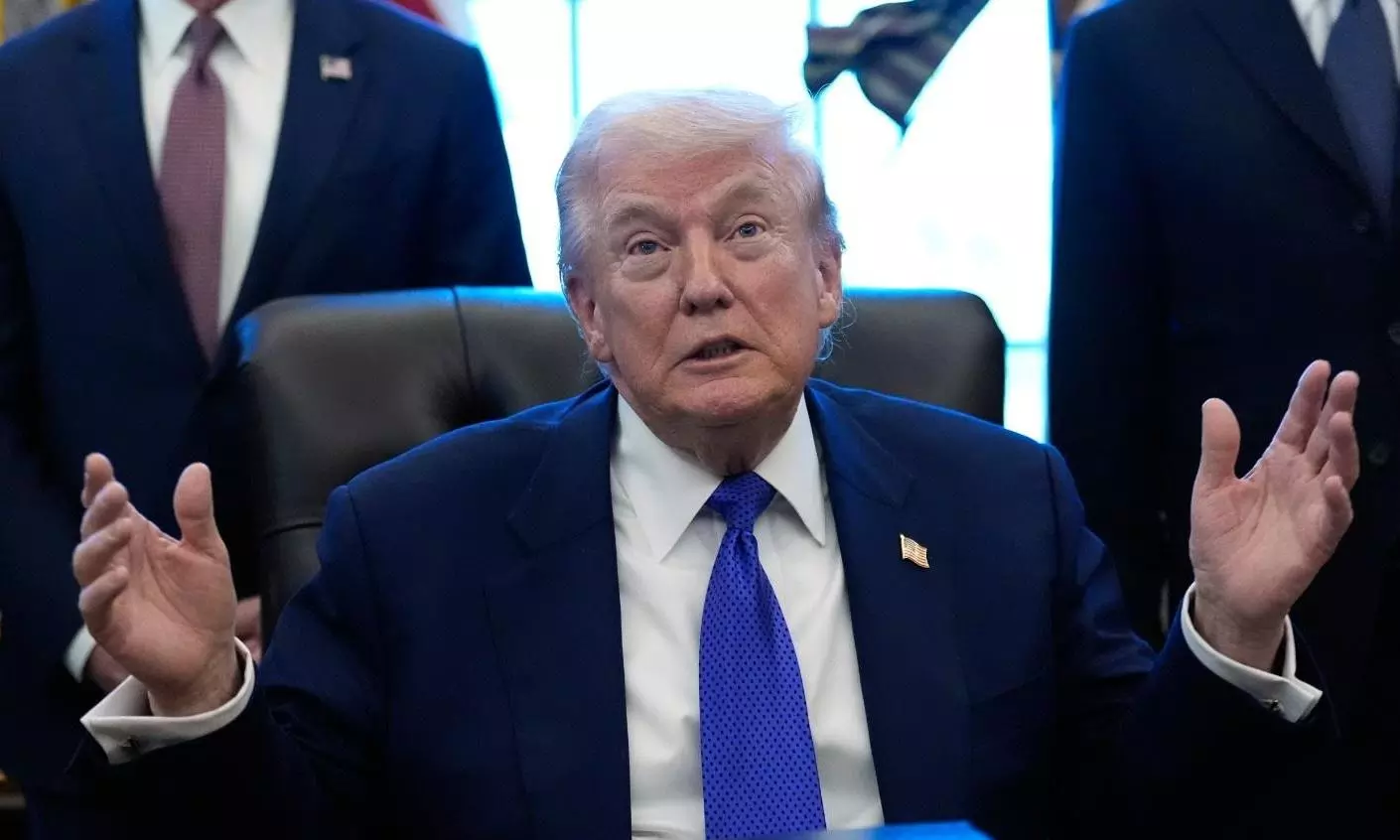
Trump’s remarks on Monday (March 16, 2026) that Iran’s retaliatory strikes against Qatar, Saudi Arabia, the United Arab Emirates, Bahrain and Kuwait had caught Washington off guard were delivered twice, including during a Kennedy Centre board meeting at the White House, even as prior briefings had outlined such scenarios among possible outcomes.
Also Read: Iran weighs 'China-only' terms for limited reopening of Strait of Hormuz
“They (Iran) weren’t supposed to go after all these other countries in the Middle East,” Trump said, adding, “Nobody expected that. We were shocked.” His comments came after earlier assertions from his administration that were not supported by US intelligence reporting, including claims that Iran was close to fielding a missile capable of reaching the US homeland and that it would require only two to four weeks to build and potentially use a nuclear weapon.
War justification and prior warnings
Those arguments, along with warnings of an imminent threat posed by Iran to US forces and interests in the region, have been cited by Trump and several senior aides as justification for the decision to join Israel in launching air strikes on Iran beginning February 28.
According to the report, Trump had also been briefed before the operation that Tehran could move to shut the Strait of Hormuz, a key global shipping route.
Strikes widen, oil route disrupted
Over the past two weeks, Iranian drones and missiles have struck targets across Gulf States, including U.S. military installations and an Emirati base hosting French troops, as well as civilian sites such as hotels, airports and energy infrastructure. Iran has also largely halted shipping through the Strait of Hormuz , a passage that carries roughly 20 per cent of global oil supply, pushing energy prices higher.
Also Read: US offers $10 mn bounty on Iranian leaders amid uncertainty over Mojtaba's condition
Democratic lawmakers, after attending administration briefings last week, said they were not presented with evidence of an imminent threat that would have necessitated the joint US-Israeli military action.
The White House did not immediately respond to requests for comment, while the Office of the Director of National Intelligence declined to comment.
Warnings of broader regional fallout
A US official said Trump had been warned ahead of the strikes that targeting Iran could widen the conflict, potentially prompting retaliation against Gulf capitals, particularly if Tehran viewed those governments as backing or enabling US operations.
Also Read: Iran FM says US first 'bullied' India over Russian oil, now 'begs' to buy it
Trump reiterated his position later that day during a signing event in the Oval Office, when asked whether he had been briefed on the risk of Iranian retaliation against Gulf countries.
“Nobody, nobody, no, no, no. The greatest experts, nobody thought they were going to hit,” replied Trump.
Assessments flagged likely retaliation
The report further stated said that before the US-Israeli strikes, officials had concluded that Israel’s plan to target senior Iranian leadership figures would likely trigger reprisals against U.S. military and diplomatic facilities.
The administration did not begin drawing down diplomatic personnel from several embassies in the region until after the air campaign was underway.
The same assessments also indicated that Iran “could” expand its response to include US allies in the region, stated the report.