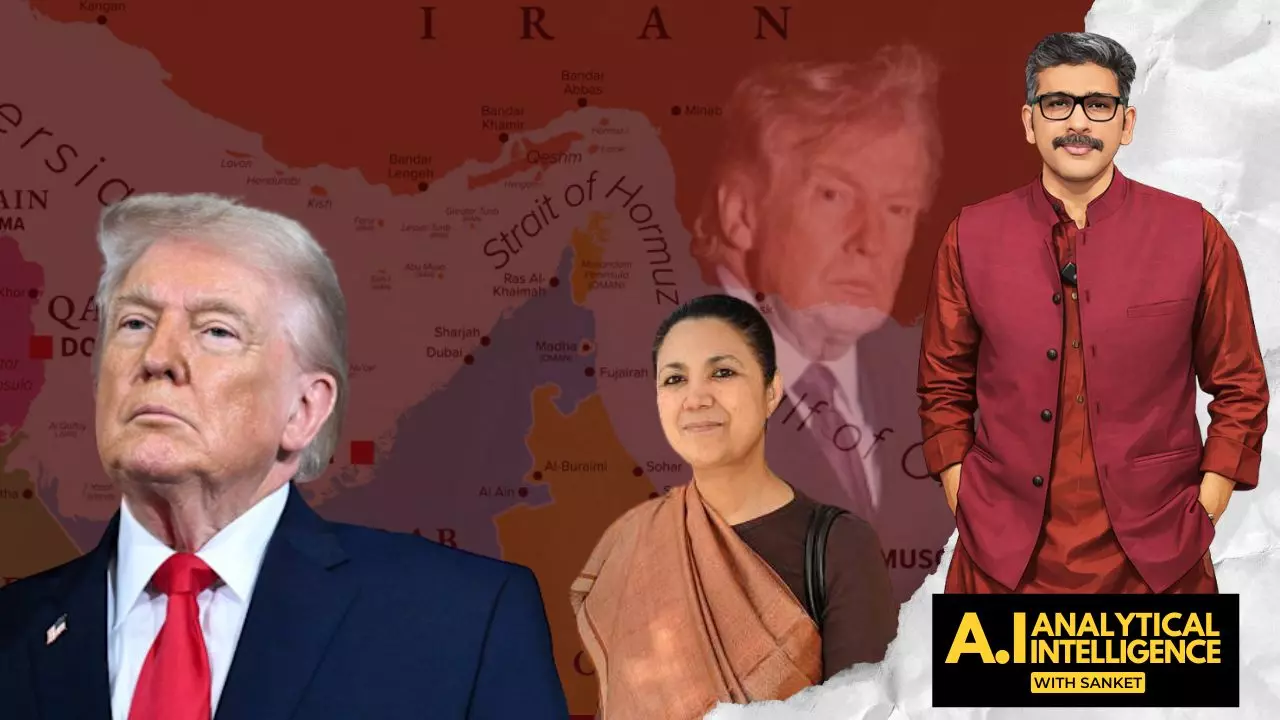
As ‘friends’ trump Donald on Hormuz, is the bully all alone now? | AI With Sanket
Is the US under Donald Trump headed for global isolation over the Iran conflict? Former diplomat Meera Shankar unpacks the shifting geopolitical landscape

As the US-led military action against Iran stretches beyond initial expectations, global responses have begun to shift. What started with support from key allies is now facing hesitation, ambiguity, and even resistance.
The Federal spoke to former ambassador to the United States, Meera Shankar, on whether Donald Trump is increasingly isolated on the global stage and how major powers are recalibrating their positions.
Do you agree with the view that Donald Trump finds himself isolated in this war, with neither allies nor adversaries willing to trust him?
Look, I think the Europeans initially said they support the war and that Iran cannot be allowed to have a nuclear weapon. So they said they support the military action by the United States.
Now, when the expectation that the initial military action and the assassination of Iranian leaders would lead to regime change has not come about, and it looks like there may be a more extended conflict, I think there are reservations which many of the European countries have expressed.
In response to Trump’s request for a coalition of navies and naval ships to escort shipping in the Strait of Hormuz so that oil shipments are not blocked, the response has been very tepid or ambiguous or negative.
Also read: Europe’s snub to Trump is a moral victory for Iran
Spain, of course, has been strongly against the war and said their position is consistent across Ukraine, Gaza, or Iran — they oppose this kind of military intervention. Other European countries had expressed support initially, but now leaders like Keir Starmer have said they will not be drawn into a wider conflict.
There are also signals of exploring de-escalation. This is significant. Germany has also said the war does not have the mandate of the UN or NATO, and they were not consulted.
The European Commission is exploring whether the UN can be involved in striking some kind of deal with Iran, similar to the Ukraine grain deal. But it’s unclear whether that will work because Iran is using the Strait of Hormuz as leverage.
Is this reluctance from allies effectively a vote of no-confidence in the war?
I think the Europeans are worried that there is no endgame — that they could get sucked into an open-ended conflict.
Their second concern is that this shifts attention away from Ukraine, where they are already bearing additional responsibility. Since the US has reduced its own military and financial support, Europe is stepping in more.
Also read: India rejects Iran tanker swap claim, calls reports ‘baseless’ amid Hormuz tensions
They are concerned that if they divert focus, the situation in Ukraine could deteriorate.
There is also anxiety about rising energy prices and the implications of loosening sanctions on Russia. While that may benefit countries like India, not all European countries support such moves.
Given Trump’s outreach to China and Russia, are we seeing a shift in traditional geopolitics?
Yes, clearly Trump has turned traditional geopolitics on its head. He seems more focused on striking deals with other great powers on spheres of influence.
Take China — he initially imposed tariffs as high as 145 per cent, but after China leveraged its dominance in rare earth supplies, he walked that back significantly. Now tariffs are much lower, and there is caution in how he engages with China.
Even in the US national security strategy, China is described as an economic competitor, but there is also an emphasis on building a mutually beneficial relationship if trade issues are resolved.
Also read: If US has the strongest Navy, why can’t it secure Strait of Hormuz alone?
Similarly with Russia, there is an attempt to reset relations. Trump has indicated that the Ukraine war need not have happened and is showing impatience to move towards a more transactional relationship, especially in areas like resources.
This reflects a broader strategy — trying to rebalance the US-Russia-China triangle, which currently tilts towards Russia and China being closer.
Do you think trust is the key issue here — especially with Trump’s rhetoric towards allies?
I think adversaries like China and Russia are quite clear-eyed. They operate on realpolitik, not idealism.
But traditional allies have faced harsh criticism and punitive actions from Trump — whether it is Canada or European countries. That creates a trust deficit.
Also read: Trump claims Iran’s Gulf strikes were a ‘surprise’; US intel docs say otherwise: Report
As a result, some countries are now talking about forming a “concert of middle powers” to expand their strategic space and not be overly dependent on major powers.
So yes, trust is a central issue, especially for allies who feel uncertain about US leadership under Trump.
(The content above has been transcribed from video using a fine-tuned AI model. To ensure accuracy, quality, and editorial integrity, we employ a Human-In-The-Loop (HITL) process. While AI assists in creating the initial draft, our experienced editorial team carefully reviews, edits, and refines the content before publication. At The Federal, we combine the efficiency of AI with the expertise of human editors to deliver reliable and insightful journalism.)