



Trump reveals how Maduro was captured, and US plans to ‘run’ Venezuela, sell its oil
Trump reveals his plans to exploit the leadership void to “fix” Venezuela’s oil infrastructure and sell “large amounts” of oil to other countries

Hours after an audacious military operation that plucked Venezuelan President Nicolas Maduro from power and removed him from the country, apparently on board a US warship, US President Donald Trump said on Saturday (January 3) that the United States would run the Latin American country at least temporarily and tap its vast oil reserves to sell to other nations.
A plane carrying the deposed leader and his wife landed in New York late Saturday afternoon.
The dramatic action capped an intensive Trump administration pressure campaign on the South American nation and months of secret planning resulting in the most brazen American action to achieve regime change since the 2003 invasion of Iraq. Legal experts immediately raised questions about whether the operation was lawful.
Also read: Will Nobel laureate Maria Corina Machado emerge as face of post-Maduro Venezuela?
Speaking to reporters hours after Maduro’s capture, Trump revealed his plans to exploit the leadership void to “fix” the country’s oil infrastructure and sell “large amounts” of oil to other countries.
Trump claimed the US government would help run the country and was already doing so, though there were no immediate signs of that. “We’re going to run the country until such time as we can do a safe, proper and judicious transition,” Trump said at a Mar-a-Lago news conference where he boasted that this “extremely successful operation should serve as warning to anyone who would threaten American sovereignty or endanger American lives”.
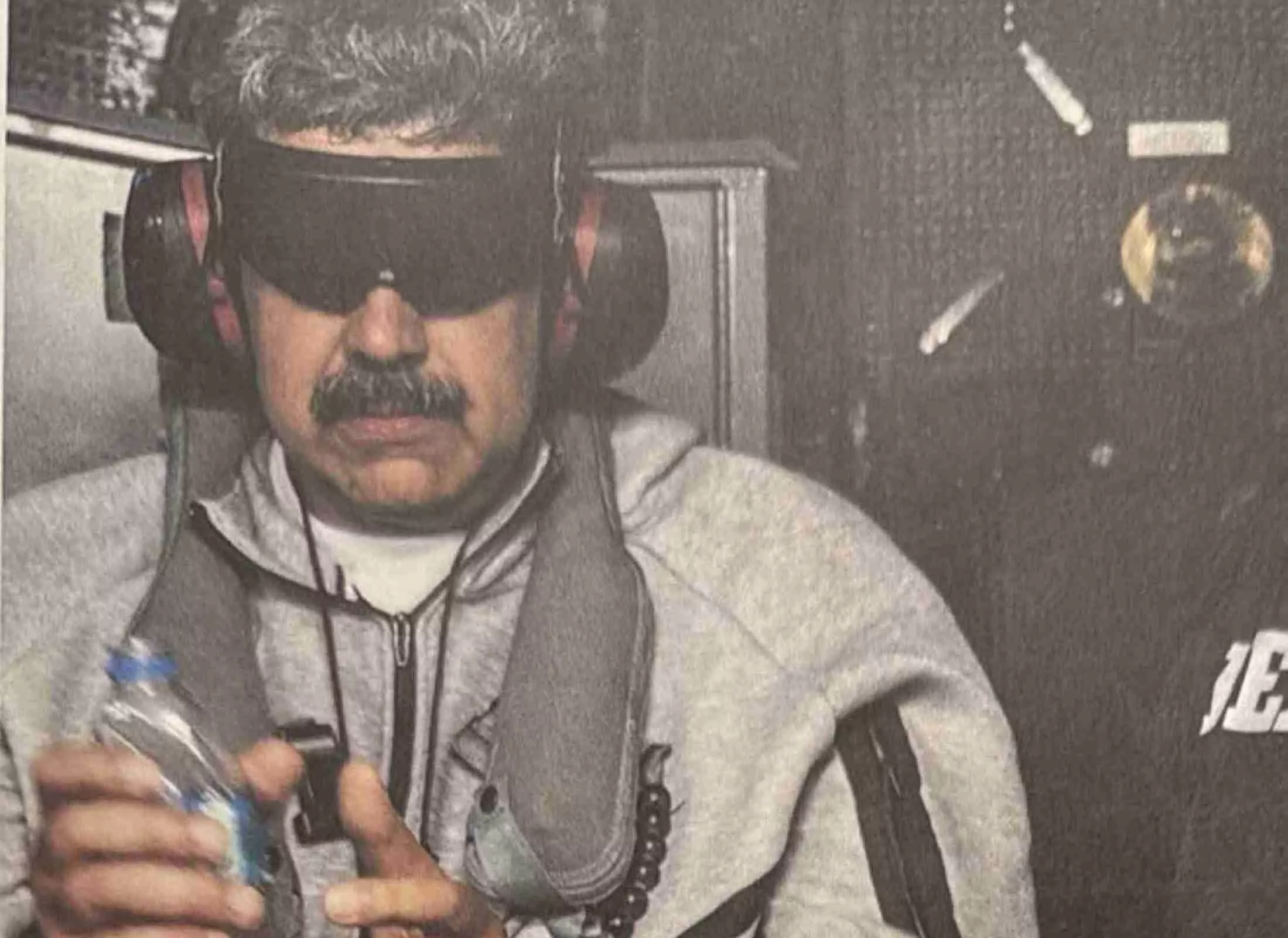
Trump posted a photo on social media showing Maduro wearing a sweatsuit and a blindfold on board the USS Iwo Jima.
How attack was carried out
The operation, termed “Absolute Resolve”, followed a months-long Trump administration effort to push the Venezuelan leader, including a major build-up of American forces in the waters off South America and attacks on boats in the eastern Pacific and Caribbean accused of carrying drugs.
Last week, the CIA was behind a drone strike at a docking area believed to have been used by Venezuelan drug cartels — the first known direct operation on Venezuelan soil since the US began strikes in September.
At the same time, US intelligence agencies were carefully studying President Maduro, learning minute details such as his eating habits while special forces secretly rehearsed a plan to forcibly remove him.
Also read: From bus driver to president: Maduro's remarkable rise before the fall
Trump, during a news conference at his Florida home on Saturday, laid out the details of the strike, after which he said Maduro and his wife, Cilia Flores, were flown by helicopter to a US warship.
The extensive planning included practice on a replica of the presidential compound, as well as US service members armed with what Trump said were “massive blowtorches” in the event the steel walls of a safe room needed to be cut open to extract the pair.
“He didn't get that space closed. He was trying to get into it, but he got bum-rushed right so fast that he didn't get into that," Trump said an interview earlier Saturday morning on Fox & Friends Weekend.
A carefully rehearsed mission
Gen. Dan Caine, chairman of the Joint Chiefs of Staff, said at Trump's news conference that US forces had rehearsed their manoeuvres for months, learning everything about Maduro — where he was at certain hours as well as details of his pets and the clothes he wore.
Caine said his forces were “set” by early December. “Not to get it right, but to ensure we cannot get it wrong.” Trump said on Fox that US forces had practised their extraction on a replica building. “They actually built a house which was identical to the one they went into with all the same, all that steel all over the place,” Trump said.
Also read: US claim of capturing Venezuela's Maduro signals dangerous return to regime-change politics
Trump said in the television interview that US forces held off on conducting the operation for days, waiting four days for cloud cover to pass.
Caine said that on Friday night, “the weather broke just enough, clearing a path that only the most skilled aviators in the world could move through,” adding that helicopters flew low to the water to enter Venezuela and were covered above by protective US aircraft.
Trump said “the lights of Caracas were largely turned off due to a certain expertise that we have,” but giving no further details.
The attack, which Defence Secretary Pete Hegseth described as part of “massive joint military and law enforcement raid,” lasted less than 30 minutes.
Venezuelans killed in brazen attack
At least seven explosions were heard in Caracas, and Venezuela’s Vice-President Delcy Rodríguez, who under law takes power, said some Venezuelan civilians and members of the military were killed.
In a televised address later Saturday on state television, she demanded that the US free Maduro and called him the country’s rightful leader. But Rodríguez also left open the door for a dialogue with the US when she said, “We are willing to have respectful relations.”
Also read: Explained: Why did US attack Venezuela?
Yanire Lucas, a Caracas resident whose house sits pressed up next to a Venezuelan military base struck overnight, said she began to hear explosions next to her house around 1.50 am.
Trump said a few US members in the operation were injured, but he believed no one was killed. Caine said one helicopter was struck by fire as it closed in on Maduro’s compound but it was able to safely fly on its return.
Few details about how the US will now run Venezuela
Trump said Maduro and Flores were flown by helicopter to a US warship and they landed in New York later on Saturday to face prosecution for a Justice Department indictment accusing them of participating in a narco-terrorism conspiracy.
However, the Justice Department released a new indictment Saturday of Maduro and his wife, Cilia Flores, that painted the regime as a “corrupt, illegitimate government” fuelled by a drug trafficking operation that flooded the US with cocaine. The US government does not recognise Maduro as the country's leader.
Also read: Russia, Iran condemn as EU, Ukraine back US strikes on Venezuela
Trump said at his news conference that the group of officials standing behind him, including Hegseth, Caine and Secretary of State Marco Rubio, will “be a team that's working with the people of Venezuela.”
The Republican president left open the possibility that US troops would have a presence in the country. “We're not afraid of boots on the ground if we have to,” he said, adding, "We had boots on the ground last night." The US will now “run” the country until a new leader can be chosen, Trump said.
“We're going to make sure that country is run properly. We're not doing this in vain," he said. “This is a very dangerous attack. This is an attack that could have gone very, very badly.”
Was it even legal?
The legal authority for the incursion, done without congressional approval, was not immediately clear, but the Trump administration promoted the ouster as a step towards reducing the flow of “dangerous drugs into the US”.
Trump touted what he saw as other potential benefits, including a leadership stake in the country and greater control of oil.
Lawmakers from both political parties in Congress have raised reservations and flat-out objections to the US attacks on boats suspected of drug smuggling near the Venezuelan coast. Congress has not specifically approved an authorisation for the use of military force for such operations in the region.
Also read: Maduro, wife aboard US warship, headed to New York for trial: Trump
Connecticut Rep. Jim Himes, the top Democrat on the House Intelligence Committee, said he had seen no evidence that would justify Trump striking Venezuela without approval from Congress and demanded an immediate briefing by the administration on "its plan to ensure stability in the region and its legal justification for this decision.”
The UN Security Council, acting on an emergency request from Colombia, planned to hold a meeting on US operations in Venezuela on Monday morning, according to a council diplomat, who spoke to AP on the condition of anonymity to discuss a meeting not yet made public.
(With agency inputs)