What’s behind Trump’s flip-flops on Iran war?
From threats to “obliterate Iran” to calls for peace within hours, Trump’s shifting stance fuels concerns over US credibility and possible market motives

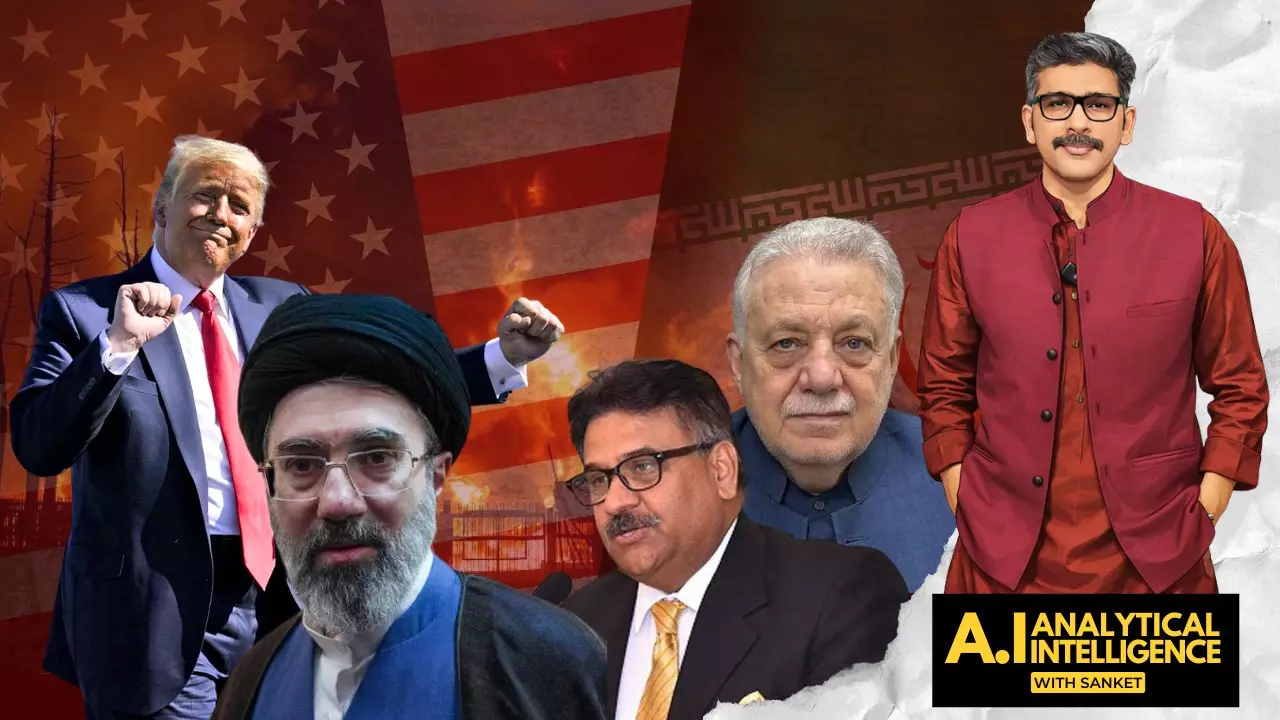
Over the past month, US President Donald Trump has alternated between threatening to “obliterate Iran” and offering to end the conflict even as critical issues like the Strait of Hormuz remain unresolved. The Federal spoke to strategic affairs expert Dr Waiel Awwad and former diplomat Anil Trigunayat, who offered converging yet distinct perspectives on what these contradictions reveal about US strategy and the evolving conflict.
Flip-flop pattern
Trump’s rhetoric has followed a repeated cycle—escalation in the morning, de-escalation by evening. He has spoken about targeting Iran’s leadership, oil hubs, and energy infrastructure, while also indicating willingness to withdraw.
Dr Awwad described this as erratic and reflective of deeper dysfunction. He argued that such statements have weakened America’s global standing, making it appear inconsistent and unreliable.
Also read: US burns $10,300 a second in Iran war, says SIPRI study
Trigunayat, however, framed it as part-confusion, part-compulsion. He said Trump “keeps on shifting his statements, shifting his goals,” especially as the war has not unfolded as initially expected.
War miscalculation
Both experts pointed to miscalculations at the start of the conflict. Dr Awwad claimed Trump was misinformed about the likelihood of a quick victory, believing Iran could be neutralised within days.
Instead, Iran’s retaliatory capabilities surprised Washington. According to Awwad, attacks on US assets in the region and disruptions in global oil routes created pressure on the administration to reconsider its approach.
Trigunayat echoed this, noting that the US entered the conflict “without any strategy or exit plan”. While initial strikes targeted Iranian leadership, they failed to break Iran’s resistance.
Israel’s role
A central theme in both analyses was the influence of Israel. Dr Awwad argued that Israeli leadership has long sought to draw the US into direct confrontation with Iran.
He suggested that whenever Washington shows signs of pulling back, Israel acts in ways that keep the conflict alive. This, he said, has been a consistent pattern.
Also read: Will Trump risk a ground invasion in Iran? | Capital Beat
Trigunayat reinforced this view, stating that the conflict involves “three actors, not two”. He said Israel is the only player with a clearly defined objective and has actively nudged the US towards escalation.
Market questions
Dr Awwad raised concerns about possible financial motivations behind Trump’s statements. He alleged that market fluctuations following presidential remarks could benefit powerful business interests.
He pointed to Trump’s increased wealth as indicative of potential gains linked to such volatility, suggesting that announcements may be timed to influence markets.
Trigunayat acknowledged that markets have reacted to Trump’s statements, noting that periods of perceived de-escalation have stabilised markets and may have indirectly benefited certain business interests.
Diplomatic breakdown
Trigunayat highlighted how the conflict disrupted ongoing diplomatic efforts. He pointed out that multiple rounds of negotiations between the US and Iran had nearly reached an understanding before military action began.
Also read: After the Strait of Hormuz, the world's next chokepoint could be Gate of Tears
This, he said, has severely damaged trust. “It is not possible to rely on statements alone,” he noted, referring to the gap between US rhetoric and action.
Dr Awwad added that America’s approach now appears less about negotiation and more about issuing demands, further complicating prospects for peace.
Exit dilemma
Both experts agreed that Trump is now searching for an exit strategy. Dr Awwad described the President as “buying time,” citing repeated deadlines and extensions as signs of hesitation.
He said Trump faces pressure from multiple fronts—domestic criticism, global economic fallout, and resistance from allies.
Trigunayat suggested that Trump may eventually “call it quits,” especially given the lack of international support and growing domestic dissatisfaction.
Future scenarios
Looking ahead, the experts outlined two possible paths. Trigunayat said the conflict could either wind down through a US withdrawal or escalate into a wider regional war.
He warned that escalation could lead to prolonged instability similar to past conflicts in West Asia, involving civil war-like conditions and guerrilla warfare.
Also read: Asian nations race for Russian crude oil as energy crisis deepens
Dr Awwad maintained that Iran is unlikely to surrender and has the capacity to sustain prolonged resistance. He said any resolution would depend on whether external powers choose de-escalation over expansion.
Regional fallout
The war’s impact is already being felt beyond the battlefield. Disruptions in the Strait of Hormuz have affected global energy markets, while tensions have drawn in regional players.
Dr Awwad argued that while certain sectors like oil and arms industries may benefit, the broader consequences are damaging.
Also read: Iran war: Forex reserves fall by USD 30 bn; will it increase India’s challenges?
He concluded that the real cost is being borne by the region’s people, with instability, economic strain, and uncertainty continuing to rise.
(The content above has been transcribed from video using a fine-tuned AI model. To ensure accuracy, quality, and editorial integrity, we employ a Human-In-The-Loop (HITL) process. While AI assists in creating the initial draft, our experienced editorial team carefully reviews, edits, and refines the content before publication. At The Federal, we combine the efficiency of AI with the expertise of human editors to deliver reliable and insightful journalism.)