



Day 6 of Iran war
Iran war: Is the multipolar world a myth?
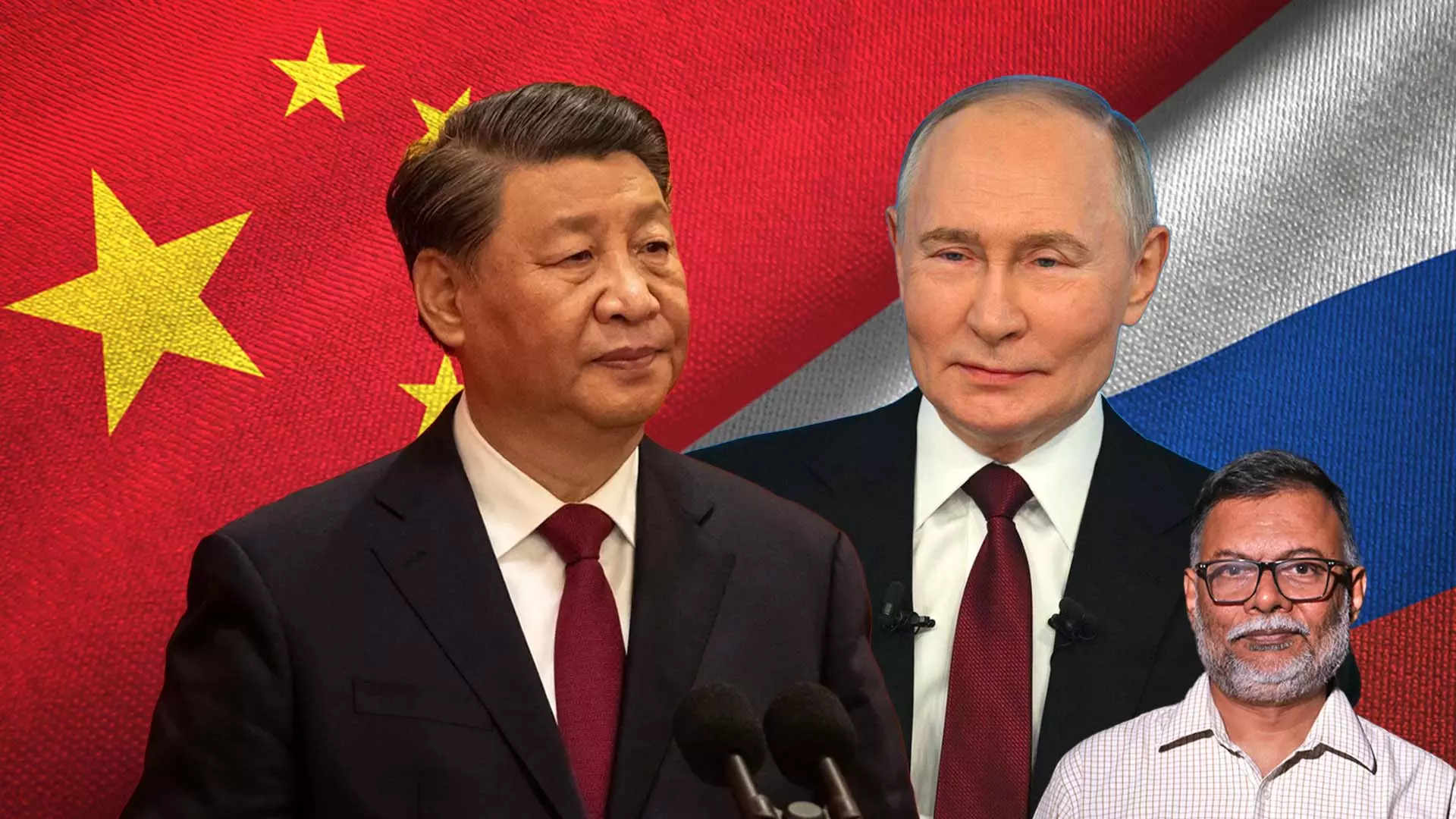
US-Israel strikes on Iran spark a bigger question: if the world is truly multipolar, why did no power deter the attack?

For years, experts have suggested that global power was shifting away from a US-led system towards a multi-polar order led by countries such as China, Russia and emerging powers in the Global South. However, the response to the attacks on Iran has revived the debate on whether that transition has actually happened.
The Federal spoke to Consulting Editor K S Dakshina Murthy about the geopolitical implications of the crisis and what it reveals about the balance of power in today’s world.
Does the Iran conflict show that multipolarity is still a theory rather than reality?
In one sentence, it completely buries the notion that the world is multipolar. It appears more like a wish list for various countries hoping that power is distributed across several nations.
This concept of multipolarity gained traction after 1998, when Russia proposed it nearly a decade after the disintegration of the Soviet Union. When the Soviet Union existed, the world was clearly bipolar, with the US on one side and the Soviet Union on the other.
After the Soviet Union collapsed, the US emerged as a unipolar power. Since then, there has been a steady effort to claim that power is gradually shifting and that multiple centres of power are emerging.
Also read: How many countries hit by Iran crisis so far? Here's a list
Over time, several countries were projected as potential power centres, including nations in the Global South such as India. Eventually, the focus came down to two main contenders — Russia and China.
Even if one assumes that the US, China and Russia together create a multipolar order, the missile war in Iran has exposed that this idea does not really hold. It clearly shows that the United States remains the dominant force. The US may have faced setbacks and created problems over the past 25 years, but it still lays down the ground rules and drives events globally. Few examples illustrate this better than Donald Trump.
Earlier, US presidents such as Bill Clinton, George W Bush and Barack Obama all asserted American power, but Trump has done so much more openly. He has essentially told the world that the US will act as it wishes, regardless of global opinion.
He has even suggested that domestic checks such as Congress do not matter to him. That approach has effectively put to rest the notion of multipolarity. What we are seeing today is still a unipolar world.
Do China and Russia lack the power to challenge the US?
Let us take China first. Over the past two decades, especially since the start of the 21st century, China has emerged as a major counterweight to the US, not just politically but also economically.
For example, China was the only country that seriously challenged Trump over reciprocal tariffs. It has vital resources such as rare earth metals, and through the Belt and Road Initiative it attempted to build a network of influence that could counter US power.
For a long time, China appeared extremely dominant on the world stage. But in recent years its behaviour in global crises has raised questions.
Also read: Explained: What is IRIS Dena and how the US-Iran conflict reached the Indian Ocean
Take Israel’s assault on Gaza. China was largely silent. In contrast, South Africa approached the International Court of Justice and accused Israel of genocide. China did not make a strong intervention.
Another example is Venezuela. Nicolás Maduro was unseated even though Venezuela had been supplying oil to China at discounted prices. Yet China did not strongly oppose the developments there. Now we have Iran, which is a close ally of China. In 2021, China and Iran signed a 25-year strategic partnership. Iran believed it had some level of security because China would support it.
But nearly a week after the US and Israel began bombing Iran, China has said very little. There have been small statements, but no major public opposition to Washington’s actions.
Some unverified social media posts claim China is sending arms to Iran, but those cannot be confirmed. Publicly, China has not acted in any meaningful way.
This has led analysts to ask whether China has become a ‘paper tiger’ — powerful on paper but limited in reality. As far as India is concerned, China often behaves like a regional bully rather than a global power centre. China did support Pakistan during Operation Sindor, but that may have been due to geography and the closeness between the two countries. In Iran’s case, no visible assistance has come from China so far.
Now let us look at Russia. Russia has also largely limited itself to statements calling for peace and restraint. One reason is that Vladimir Putin has developed a relationship with Trump, and Trump is trying to negotiate an end to the Russia-Ukraine war. Because of that, Putin does not want to antagonise Trump.
In effect, Russia has been neutralised. After the Soviet Union collapsed, Russia stayed relatively quiet until tensions rose in places such as Georgia and Ukraine. It tried to prevent these countries from joining NATO and even fought a short war with Georgia.
The Ukraine invasion was also part of Russia’s attempt to reassert its power. But it has not succeeded to the level that many expected. Russia once had strong allies in the Middle East, particularly Iran and Syria. Iran even supplied drones to Russia during the Ukraine war.
Also read: Gulf nations, Palestinians real losers in ongoing missile war
However, Syria’s Bashar al-Assad has been deposed and the country now has a pro-US, pro-Israel government. Russia has effectively lost Syria.
Now Iran, another key partner, is under attack and Russia has not intervened. That shows how both Russia and China are largely paralysed in this crisis.
Why has India taken a cautious stand?
India follows a fairly standard template in such situations. Whenever there is a major international conflict where it is difficult to take sides, India usually urges restraint, negotiations and peace.
That has been its default response in most global crises. Only rarely has India taken a strong position.
For example, when Iraq invaded Kuwait, India initially appeared to support Iraq, but later realised it had taken the wrong stance and quickly backed off.
In general, India avoids taking sides. This also reflects the extent of India’s power in global politics. India is essentially a mid-level power. It is nowhere near China or Russia in terms of global influence, and certainly not comparable to the United States. Even militarily, it does not match Israel in many respects.
India aspires to become a major power and often speaks about becoming a global leader or ‘Vishwa Guru’. But these ambitions are still far from reality.
India does have a reasonably good relationship with Iran, although like any bilateral relationship it has had tensions. Ayatollah Ali Khamenei occasionally criticised India on Kashmir and took positions contrary to India’s stance. But that partly stems from India voting against Iran at the International Atomic Energy Agency many years ago.
Also read: Why China may benefit from a short conflict in Iran
What is interesting now is that India has not even expressed condolences after Khamenei’s assassination. Opposition leaders and some analysts believe the government should have responded in some way. This shows the dilemma India faces. It can issue general statements calling for peace, but when events force countries to take a clear position, India finds itself constrained.
Another example involves an Iranian warship that was later sunk by the US near Sri Lanka. That ship had recently participated in a naval exercise in Visakhapatnam alongside vessels from many countries, including the US. Reports said Iranian sailors mingled with locals and even took selfies with people in the city. Soon afterwards, their ship was attacked and sunk. Yet, India has not reacted publicly to that incident either.
This again reflects the limits of India’s influence. In theory, India could challenge the US or any other power. But in practical terms, the balance of power shows that India cannot easily confront Washington.
Does global power still revolve around Washington?
Yes, very much so. After the Soviet Union collapsed, the US repeatedly took the lead in global conflicts. When Iraq invaded Kuwait, the US assembled an international coalition to counter Saddam Hussein.
The US also played a key role in resolving conflicts in the Balkans during the breakup of Yugoslavia.
Even during tragedies such as the 1994 Rwandan genocide, the global debate revolved around whether the US should intervene earlier. The pattern continued after the 9/11 attacks. The United States invaded Iraq despite opposition from countries such as France, Germany and Russia. Their resistance made little difference.
Since then, the US has intervened in several regions. It played a major role in the removal of Muammar Gaddafi in Libya and supported interventions in Syria. For a time, it appeared that Russia might reemerge as a balancing force, especially when it intervened in Syria and helped protect Bashar al-Assad.
But Russia’s strategic decisions — particularly the invasion of Ukraine — have weakened its position. China, meanwhile, has become an economic giant but still hesitates to challenge the US militarily or politically in global crises.
So, despite all the talk of a multipolar world, the current international system still revolves largely around Washington.
The content above has been transcribed from video using a fine-tuned AI model. To ensure accuracy, quality, and editorial integrity, we employ a Human-In-The-Loop (HITL) process. While AI assists in creating the initial draft, our experienced editorial team carefully reviews, edits, and refines the content before publication. At The Federal, we combine the efficiency of AI with the expertise of human editors to deliver reliable and insightful journalism.


