



Iran's plight reflects disunity in Muslim world | Worldly Wise
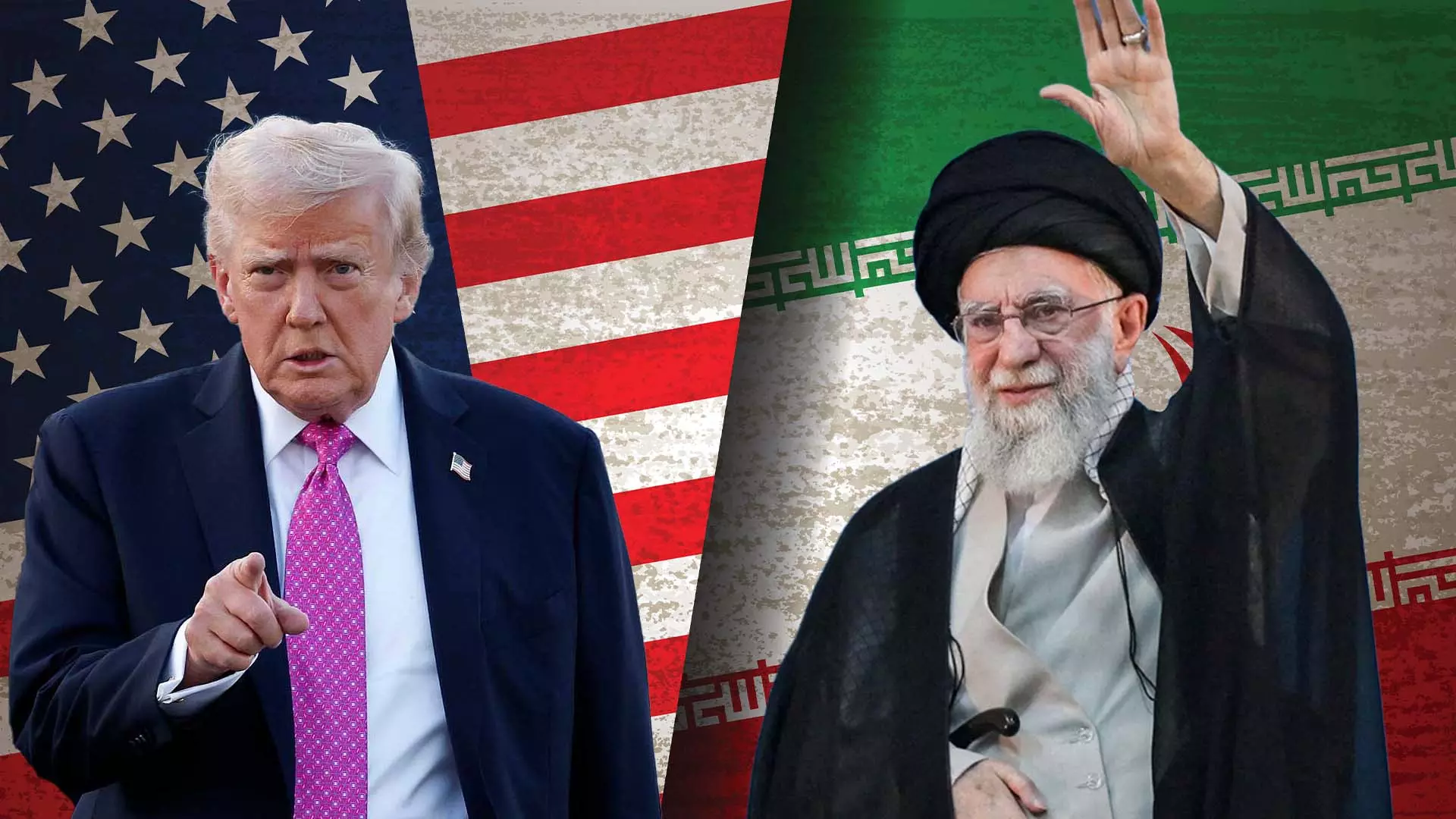
From nuclear pressure to street protests, Iran faces internal strain and confrontation with the US. What is Trump's real objective?

Iran is once again at the centre of global attention, facing widespread internal protests alongside mounting pressure from the United States and Israel. As tensions escalate across West Asia, questions are being raised about the durability of Iran’s regime, regional alignments, and the implications for India’s foreign policy.
The Federal spoke to KS Dakshina Murthy, Consulting Editor, to unpack the historical roots of the crisis, Donald Trump’s renewed pressure campaign, and what lies ahead for Iran and the region.
Why is the US, particularly Donald Trump, so strongly opposed to Iran?
The breakdown in US-Iran relations dates back to 1979, after the Iranian Revolution. That rupture has defined the relationship for decades. However, what intensified matters in more recent years was Iran’s openly hostile position towards Israel, particularly during the presidency of Mahmoud Ahmadinejad, who questioned Israel’s very existence around 2005.
That escalated an already adversarial relationship into something much deeper. The US-Israel relationship is extremely close, almost organic, especially in strategic terms. When Israel perceives a threat, it looks to Washington for backing, and that has shaped US policy for a long time.
Also read: India presses Iran for consular access to crew of seized oil tanker
The situation worsened after the US invasion of Iraq in 2003. That intervention signalled to the region that the US could strike anywhere in West Asia. Iran, sensing vulnerability, began preparing itself, including advancing its nuclear programme. Officially, Iran has always said its nuclear ambitions are peaceful, but the US and Israel used this to apply sustained pressure.
From the George W Bush era onwards, Iran faced mounting pressure to halt uranium enrichment. Iran resisted, arguing that Israel itself possesses nuclear weapons, even if it has never formally acknowledged them. From Iran’s perspective, nuclear capability became a matter of self-protection.
How did the nuclear deal change this dynamic, and why did it collapse?
The tension continued until Barack Obama became US president. Obama adopted a more conciliatory approach, which led to the nuclear deal under which Iran agreed to curb uranium enrichment and allow inspections by the International Atomic Energy Agency. European countries also signed on.
This deal deeply upset Israel, which has historically acted to prevent any regional rival from developing nuclear capabilities. Israel had earlier attacked nuclear facilities in Iraq and other countries. With the Iran deal in place, Israel felt blocked from acting.
Also read: Iran violence: Indian nationals return by commercial flights
That changed when Donald Trump came to power. Trump, an unpredictable right-wing leader with strong backing from pro-Israel groups in the US, took a far more aggressive stance. One of his first major actions was to withdraw from the nuclear deal.
After losing the 2020 election, Trump returned to office and resumed pressure on Iran. The situation escalated further after Israel’s assault on Gaza. Iran, seeking to maintain a balance of power, had built an axis involving Hezbollah, Hamas, and forces in Syria. Over time, Israel and the US managed to weaken this axis, leaving Iran relatively isolated.
How did recent military exchanges change the equation?
Around six months ago, Israel carried out missile strikes on Iranian nuclear facilities. Iran responded by launching missiles at Israel, an unexpected escalation. When it became clear that Israel alone could not decisively weaken Iran, the US stepped in.
Using its superior military capabilities, the US deployed bunker-buster bombs against key Iranian nuclear facilities, including Fordow, effectively crippling parts of Iran’s programme. The US and Israel now want to capitalise on Iran’s weakened position.
Also read: India mulls options on Iran's Chabahar port project amid US tariff threat
For them, “finishing the job” means regime change. The goal is to dislodge Ayatollah Ali Khamenei’s Islamic dispensation and replace it with a more liberal, US-friendly government. That explains Trump’s renewed pressure on Iran.
How serious is Iran’s current internal crisis?
Iran is facing widespread protests and a severe crackdown, including internet shutdowns and mass arrests. However, the Islamic regime is not a simple structure that collapses with the removal of one leader. It is a deeply entrenched system with multiple layers of authority.
Trump and his administration believe regime change is possible, and they have openly acknowledged working with protesters, alongside Israeli intelligence. This round of protests is more serious than earlier ones because it involves the bazaar, or small and medium traders, who have traditionally been a strong support base for the regime.
Also read: Trump should know why Iran is not Venezuela
Due to inflation, economic crisis, and sanctions, even this group is now protesting. Their anger is genuine, rooted in their inability to conduct daily business. This makes the situation particularly vulnerable for the Iranian government.
However, open interference by the US or Israel often proves counterproductive. There remains deep anti-US and anti-Israel sentiment in Iran. When protests appear externally manipulated, they lose legitimacy. This has happened before, and it is likely to happen again.
So while the crisis is serious, it is not yet at a point where the Islamic Republic faces imminent collapse.
Why is Iran so isolated in West Asia?
The roots lie in the Shia-Sunni divide. Iran is a Shia-majority country, while Saudi Arabia, its largest neighbour, is Sunni and monarchical. The Iranian Revolution, which overthrew a monarchy, deeply unsettled Saudi Arabia.
This divide deepened across the region, involving countries like Bahrain, Syria, and Lebanon. Iran’s Persian identity, distinct from Arab states, further widened the gap.
Over time, Saudi Arabia grew closer to Israel, viewing Iran’s nuclear ambitions as a greater threat. Despite the irony of Israel being a nuclear power itself, regional rivalries pushed Sunni states away from Iran.
Also read: Iran crisis: Recalling the fall of President Carter after 1979 Tehran hostage disaster
Even Qatar, which once benefited from Iranian support during the 2016 blockade, hosts a major US military base. When Iran later fired missiles near that base, it shocked Doha. Today, no major West Asian power openly backs Iran, making it appear highly vulnerable.
How difficult is India’s balancing act with Iran today?
India has largely stepped back from its relationship with Iran. Fifteen to 20 years ago, ties were strong. There was even a proposal for an oil pipeline running from Iran to India via Pakistan, which would have benefited all three countries.
However, US sanctions pressured India to abandon the project. That episode demonstrated India’s limited ability to resist US influence.
India has since sharply reduced oil imports from Iran and faces fresh pressure from Trump, including threats of 25 percent tariffs. Even the strategically important Chabahar Port project is facing obstacles.
Also read: In today’s global cacophony, India’s challenge is to act with quiet steadiness
Politically, India and Iran have rarely clashed, aside from occasional remarks on Kashmir. People-to-people ties remain strong, with many Indians studying and working in Iran.
But economically and strategically, India is constrained. If tensions escalate into military conflict, evacuations may be required. Otherwise, the relationship will continue at a minimal level. Unlike China, which continues to stand by Iran, India has been unable to defy US pressure.
(The content above has been transcribed from video using a fine-tuned AI model. To ensure accuracy, quality, and editorial integrity, we employ a Human-In-The-Loop (HITL) process. While AI assists in creating the initial draft, our experienced editorial team carefully reviews, edits, and refines the content before publication. At The Federal, we combine the efficiency of AI with the expertise of human editors to deliver reliable and insightful journalism.)


