Why backlash against ‘warrior Sita’ is telling of India’s discomfort with strong, independent women
One of the criticisms against the depiction of Sita, played by Sai Pallavi in the Nitesh Tiwari film, centres around her wielding a sword. The portrayal has triggered a wave of discontent and trolling, raising a larger question about how Indian society imagines, represents and polices ideal womanhood. But is Sita necessarily the patient, sacrificing and submissive wife who endures suffering without resistance?

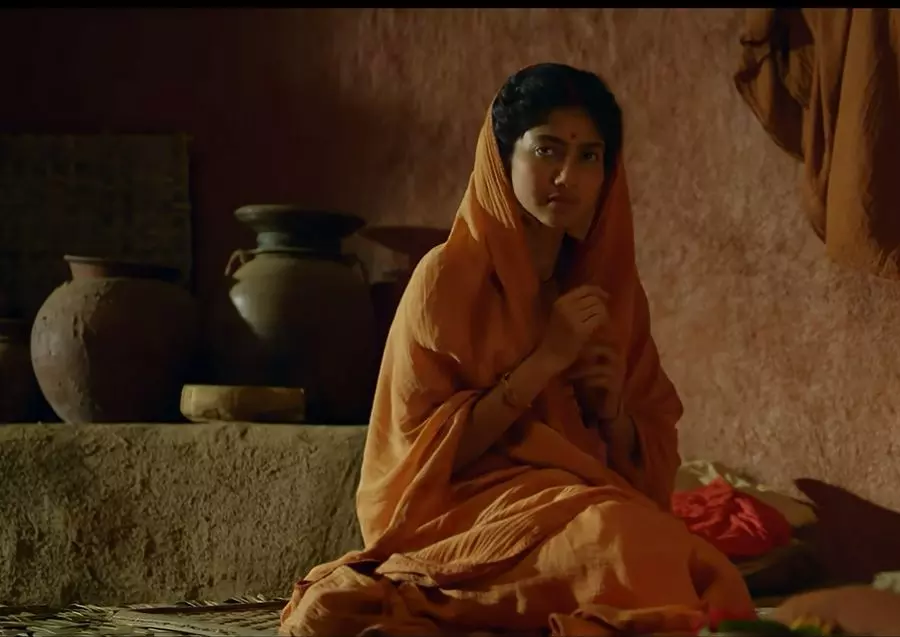
Even before the film was released, Sai Pallavi's appearance and manner were measured against an established visual and behavioural template of how a Hindu deity ought to look and sound. The actor, in effect, was being judged against an imagined checklist of physical and behavioural purity even before audiences had an opportunity to engage with her interpretation of the character.
The controversy over Sai Pallavi’s portrayal of a sword-wielding Sita in Nitesh Tiwari’s Ramayana: Part 1, which released in theatres earlier this month, takes an increasingly ugly turn, with Vishwa Hindu Parishad (VHP) leaders questioning the casting of the film’s lead actors, alleging a conspiracy to undermine Hindu traditions and threatening to disrupt screenings. In Bengaluru, where a recent attempt to protest against the film took place, the multiplex involved has not even registered a police complaint, apparently reluctant to antagonise those threatening disruption.
Kavindra Pratap Singh, VHP’s Uttar Pradesh chief, wonders whether films such as these are “part of a George Soros-funded toolkit to undermine Hindu traditions and beliefs”. (Soros, an American-Hungarian investor and philanthropist who survived the Nazi occupation of Hungary as a teenager, reportedly supports and donates to progressive and liberal political causes.) Questioning the casting itself, he takes a swipe at the actor playing Rama [Ranbir Kapoor] “for having dropped his towel to show his buttocks in his debut film [the Sanjay Leela Bhansali-directed Saawariya, which released in 2007],” while dismissing Sai Pallavi as unsuitable because she is known for her “Southern hot songs”.
Attempts to point out that Pallavi has largely stayed away from conventional item numbers, skin-show roles and the hyper-glamorous conventions of commercial cinema, preferring character-driven performances and folk or classical-based dance sequences, are met with a rather telling counter-question: “Why are you defending her and speaking for her? Media persons like you are directly contributing to the erosion of our sanskari culture!”
The objections do not remain confined to social media. Threats and attempts to disrupt screenings are reported, mostly in northern India, although Bengaluru too witnessed an episode last week.
“If Bollywood can brazenly hurt our feelings by denigrating our Gods and Goddesses, you think we will keep quiet? Every action has an equal and opposite reaction, doesn't it?” insists Jagannath Shashtry, who heads the VHP’s Karnataka chapter.
Meanwhile, the Bengaluru multiplex involved has not even bothered to register a police complaint. “Movies will come and go. We have to stay here and nobody wants to make enemies of the crocodile if one lives in the water,” is the explanation offered for the reluctance.
But beneath the threats, conspiracy theories and increasingly personal attacks on the actress lies a much larger cultural battle. It is about who gets to interpret India’s epics, which versions of the Ramayana are considered authentic and, perhaps most significantly, how women are expected to embody virtue, devotion and strength.
One of the criticisms against the depiction of Sita in the new film centres around her wielding a sword. The portrayal of ‘warrior Sita’ has triggered a wave of discontent and trolling, raising a larger question about how Indian society imagines, represents and polices ideal womanhood.
But is Sita necessarily the patient, sacrificing and submissive wife who endures suffering without resistance? Or can she also be a woman who exercises physical power, makes independent choices and takes charge of her own defence? The backlash against Pallavi’s portrayal brings these competing ideas of femininity into sharp focus.
It’s all in the telling
For Dr Ramprasad Mishra, who holds a doctorate on ‘Impressionism in Bhakti Poetry’, the controversy represents a clash between textual traditions and, equally, a loss of the democratic spirit through which the Ramayana has traditionally been narrated and experienced.
The Varanasi-based Hindi literature scholar’s understanding of the epic is rooted in family history. “My grandfather told Ram Katha for a living and my father too continued this tradition despite being a teacher in a government school. I know that they never stuck to one version of the epic. Depending on both the audience and their mood, the situation around and even the news cycle, they’d find a way of making each rendition bespoke and draw in the audience till I saw them laugh, cry and wonder like small children as they individualised the experience, identified with it and owned the narrative,” he recalls.
For Mishra, the Ramayana is never a static narrative to be consumed in one prescribed manner. Its power lies precisely in its capacity to accommodate different interpretations and invite audiences to bring their own experiences, emotions and imaginations to it. He illustrates this through the iconography of Ram Panchayatan, which depicts Ram, Sita, Lakshman and Hanuman. “The painting or sculpture has Sita, Ram, Lakshman and Hanuman portrayed. And despite only four characters, it’s called a Panchayatan [a gathering of five] because when you look at it you automatically become the fifth one. Depending on the fifth character’s state of mind, the same iconography can make her/him feel devotional, religious, spiritual, submissive or only react to it agnostically as a work of art.”
A depiction of the Ram Pachayatan at cinematographer Rakesh Solanky's Mumbai home. Photo: Yogesh Pawar
That freedom of interpretation, Mishra argues, is precisely what is lost when one version of the epic is elevated above all others and imposed as the only acceptable understanding. “It’s exactly like dictating that everyone follows one template on reacting to the Ram Panchayatan,” he says.
Yet, for some of the loudest critics of the film, there is little room for such interpretative flexibility. Veteran actor Mukesh Khanna, for instance, argues that neither Valmiki’s Ramayana nor Tulsidas’s Ramcharitmanas depicts Sita engaging in physical combat. In these familiar versions, he says, her strength is expressed through moral endurance, chastity and quiet suffering during exile and captivity, while Rama assumes the role of her protector.
Calling the depiction of Sita as a warrior a “Western feminist construct”, the actor, best known for playing Shaktimaan in the eponymous television series which aired on Doordarshan between 1997 and 2005, accuses the filmmaker of forcefully imposing an alien idea on an Indian epic. He also describes the portrayal as hurtful to Hindu sentiments, arguing that ‘Mata Sita’ represents chastity and piety.
Director Nitesh Tiwari, however, defends his creative interpretation by pointing to other Ramayana traditions, including the Sanskrit Adbhuta Ramayana and the 15th-century Odia Bilanka Ramayana. “These tellings offer a rather different image of Sita: not merely a figure of endurance but an active warrior and an embodiment of cosmic Shakti. In these versions, she assumes the fierce form of Mahakali and slays Sahasra Ravana, the thousand-headed demon king, when Rama is incapacitated.” The filmmaker’s argument, therefore, is that “a warrior Sita is not necessarily an invention of contemporary feminism but a character with precedents in India’s diverse epic traditions.”
For Mishra, the larger concern is that a society which once celebrated intellectual inquiry and a diversity of religious and literary expression is increasingly surrendering to “selective majoritarian memory”. He believes that a particular, relatively modern and domesticated interpretation of Sita, reinforced in the popular imagination by Ramanand Sagar’s hugely influential 1987 television series, comes to be treated as the definitive version.
“The danger,” he argues, “is that older traditions celebrating fierce female power are consequently pushed to the margins, as though their very existence were an affront to religious authenticity.”
Archetype of ‘Adarsh Bharatiya Nari’
Women’s Studies expert Dr Tejaswi Sevekari sees the controversy through another lens: the persistence of patriarchy and its insistence on defining ideal womanhood. “Sita has long been held up as the archetype of the ‘Adarsh Bharatiya Nari’ (ideal Indian woman), and policing her portrayal reflects anxieties about real-world gender roles,” she says.
The ideal woman, in this familiar construction, is expected to be obedient, patient, self-sacrificing and capable of enduring extraordinary suffering without questioning the circumstances that produce it. Her virtue is measured less by what she chooses to do than by how much she is willing to endure.
“Traditional patriarchal readings equate a woman’s virtue with obedience, patience, and self-sacrifice. When Sita picks up a sword, it disrupts a comfort zone where female strength is only acceptable if it remains passive and non-threatening to male authority,” Sevekari argues.
Also read: Is BJP losing its grip on Ram as Ramlila mandals want Dussehra stages free of politics?
It is this distinction between celebrated feminine virtue and unacceptable feminine agency that lies at the heart of the controversy. A woman who demonstrates courage through sacrifice and endurance is readily accommodated within the traditional ideal. A woman who exercises physical power, makes independent decisions or takes charge of her own defence presents a rather more uncomfortable proposition.
The argument being forwarded by some that Rama would never have permitted Sita to enter a battlefield is particularly revealing. Several online objections focus on the notion that a wife, even one possessing extraordinary abilities, should remain within the protective realm of her husband.
Sevekari believes this reflects a deeply entrenched social mindset that views women primarily as dependents to be protected rather than as equal partners capable of defending themselves and their families. “There is,” she points out, “an inherent contradiction in this position. India has a long tradition of worshipping the feminine divine in some of its most formidable manifestations: Kali, Chhinnamasta, Chandi and Durga. These are not meek, passive figures. They are powerful embodiments of destruction, resistance and the triumph of good over evil.” She further asks: “How can that be acceptable and this not be acceptable at the same time?” and adds, “ It’s as if patriarchy wants to box in and decide when, how much and no more for deities just as it does with mortal women.”
In other words, the feminine principle may be celebrated as an abstract divine force, but its expression through an actual woman exercising autonomy appears to require considerable qualification.
Sevekari draws attention to another contradiction that is particularly difficult to reconcile with the objections to Sita’s portrayal: the story of Kaikeyi in Valmiki’s Ramayana.
Long remembered in popular retellings as the queen whose demand for Rama’s exile sets the epic’s central events in motion, Kaikeyi is also a formidable woman who fights alongside her husband, King Dasharatha, in battle.
Sita has long been seen the archetype of 'ideal Indian womanhood', expected to be obedient, patient, self-sacrificing and capable of enduring extraordinary suffering without questioning the circumstances that produce it. Her virtue is measured less by what she chooses to do than by how much she is willing to endure.
According to the account cited by Sevekari, Dasharatha goes to war against the demon Shambar at Vaijayanta in the Dandak Forest, accompanied by his youngest queen. Kaikeyi is no ornamental presence in the royal chariot. She fights alongside the king, controlling the chariot and engaging the enemy.
On the first day of battle, when the axle-pin of the chariot wheel breaks, she reportedly places her hand in its position, keeping the vehicle moving while wielding a sword with the other. On the following day, when Dasharatha is grievously wounded and surrounded by enemies, Kaikeyi drives the chariot through enemy lines, twice evades pursuing asuras and tends to his wounds through the night.
A grateful Dasharatha offers her two boons, which she chooses to defer. Years later, influenced by her maid Manthara’s warnings that Rama’s coronation would jeopardise her son Bharat’s future, she invokes those promises, demanding Bharat’s coronation and Rama’s 14-year exile. Her demands set in motion the chain of events that eventually leads to the central conflict of the Ramayana.
Sevekari’s question is pointed: “How and why are those opposed to Sita wielding a sword, happy with the valour of another woman, Kaikeyi, from a generation before? This shows us the inconsistency of stand and the way patriarchy conveniently pushes narratives which suit it.”
The contradiction becomes even more interesting when one considers that Kaikeyi’s martial prowess is part of the very epic tradition that critics invoke to establish the limits of acceptable representation. Female courage is not necessarily absent from these texts. It is the selective remembrance and interpretation of such courage that deserves scrutiny.
A Sita too ‘Woke’
Actor Indira Krishnan, who plays Kaushalya in the film, also draws attention to the lesser-known traditions that portray Sita as possessing extraordinary strength from childhood. She points to folk retellings from Mithila in which Sita effortlessly moves the massive chest containing Lord Shiva’s divine bow, Pinaka, with one hand after her play-ball rolls beneath it. The chest is supposedly so heavy that thousands of men are required to move it. Witnessing her extraordinary strength, King Janaka decides that only a warrior capable of wielding the bow would be worthy of marrying her. This becomes the premise for the famous Swayamvara, in which Rama strings and breaks the bow.
Krishnan also refers to the Adbhuta Ramayana, where Sita’s cosmic power reaches its fullest expression when Rama and his army are overwhelmed by Sahashtramukha Ravana. Sita then assumes the fierce, multi-armed form of Mahakali and destroys the demon and his army herself.
“The filmmakers merely wanted to show Sita belonged to this warrior lineage where girls were trained in martial arts. Resistance to this idea shows how uncomfortable segments of society remain with women stepping outside domestic boundaries into spaces of physical power,” she sighs.
Also read: How a character’s success can limit the actor from experimenting on screen
For Krishnan, the trolling is not simply a disagreement over scripture but part of a broader cultural resistance to contemporary feminist interpretations. She describes it as “boorish patriarchy rejecting modern sensibilities”.
She also points to another objection raised against the film: scenes in which Sita questions Lakshmana’s aggression towards Shurpanakha. Critics dismiss this as a modern-day “woke” distortion of the epic. Ironically, the backlash comes at a time when internationally epics are being reinterpreted and cast in a way to make them more inclusive. One feature of Christopher Nolan’s The Odyssey, which released earlier this year, was inclusivity of casting; the other was his interpretation of the Homer classic as an “anti-war narrative”.
Taken together, the objections suggest that the discomfort is not confined to Sita’s use of a sword. It extends to her questioning male behaviour, expressing independent moral judgement and refusing to remain a silent participant in events unfolding around her.
It is worth remembering that the film had run into choppy waters even before its release. Sai Pallavi was trolled over her appearance, with questions even being raised about how Sita could possibly have curly hair. Many also thought her to be not “pretty enough” to be Sita. Her voice, too, had come under scrutiny, with some suggesting that a chaste woman cannot have a husky voice. Her appearance and manner were measured against an established visual and behavioural template of how a Hindu deity ought to look and sound.
The actress, in effect, was being judged against an imagined checklist of physical and behavioural purity even before audiences had an opportunity to engage with her interpretation of the character.
Despite the backlash, the film “crossed the Rs 1000 crore milestone in global box-office collections in just eight days after its release”. It has reportedly also broken opening results against South-east Asia and Nepal.
Not all criticism of the film’s treatment of Sita comes from the same ideological position. Some objections raise a legitimate question about the internal consistency of the storytelling itself.
Sociocultural historian Mukund Kule, for instance, believes that modern cinema sometimes mistakes the superficial trappings of female empowerment for meaningful character development. “There is a huge logical gap. If Sita is established as a skilled swordswoman fighting off demon armies, her subsequent passive behaviour during Ravana’s abduction feels inconsistent in her character graph,” he argues.
This is an important distinction, particularly because challenging patriarchal interpretations should not mean abandoning critical scrutiny of the filmmaker’s choices.
Sevekari, despite her opposition to the ideological policing of Sita, is equally critical of what she describes as superficial feminism. “True agency in storytelling would’ve required internal consistency rather than simply handing a female character a weapon for an action set-piece," she says.
Kule agrees, pointing out that even Valmiki’s Sita possesses considerable intellectual and moral agency without necessarily having to demonstrate physical prowess. “She argues fiercely with Rama when he decides to go into exile without her, insisting on accompanying him, and later confronts Ravana’s arrogance in Lanka through her words and unwavering moral conviction.”
Sita’s strength, in other words, is not dependent on a weapon. It is evident in her ability to make choices, challenge authority, hold her ground and refuse to surrender her sense of self under extraordinary circumstances.
That is perhaps the more interesting question for filmmakers attempting to reinterpret mythological women: how does one translate agency into a convincing, consistent character rather than reducing empowerment to an action sequence?
There is room to debate whether the film has successfully developed Sita’s character, whether its portrayal is dramatically convincing and whether its creative liberties serve the narrative. “But such criticism is very different from insisting that Sita cannot wield a sword because doing so violates an artificially narrow understanding of womanhood or religious tradition,” Kule differentiates and adds: “Ultimately, the battle over Sai Pallavi’s Sita is as much about contemporary India as it is about the Ramayana. It exposes a society negotiating between inherited notions of feminine virtue and changing expectations of women’s autonomy. It also raises uncomfortable questions about the selective ways in which tradition is invoked: why is a woman celebrated when her strength serves an established narrative, but questioned when it challenges familiar hierarchies?”
Also read: Why Ramayana row, demand for pre-release preview raise questions over our engagement with our epics
For centuries, India’s literary and religious traditions have accommodated multiple versions of the Ramayana, each reflecting the imagination, anxieties and aspirations of the communities that embrace it. Sita is a symbol of devotion and endurance, but she also appears in traditions as a figure of extraordinary power.
The insistence that only one of these representations is legitimate says less about the limits of the epic than about the limits some people are willing to impose on its interpretation.
Sevekari hits the nail on the head when she says: “Perhaps the real discomfort is not with Sita holding a sword. It is with the possibility that she might know when to draw it, why she needs to wield it and, most importantly, that she does not need anyone’s permission to do so.”