How a character’s success can limit the actor from experimenting on screen
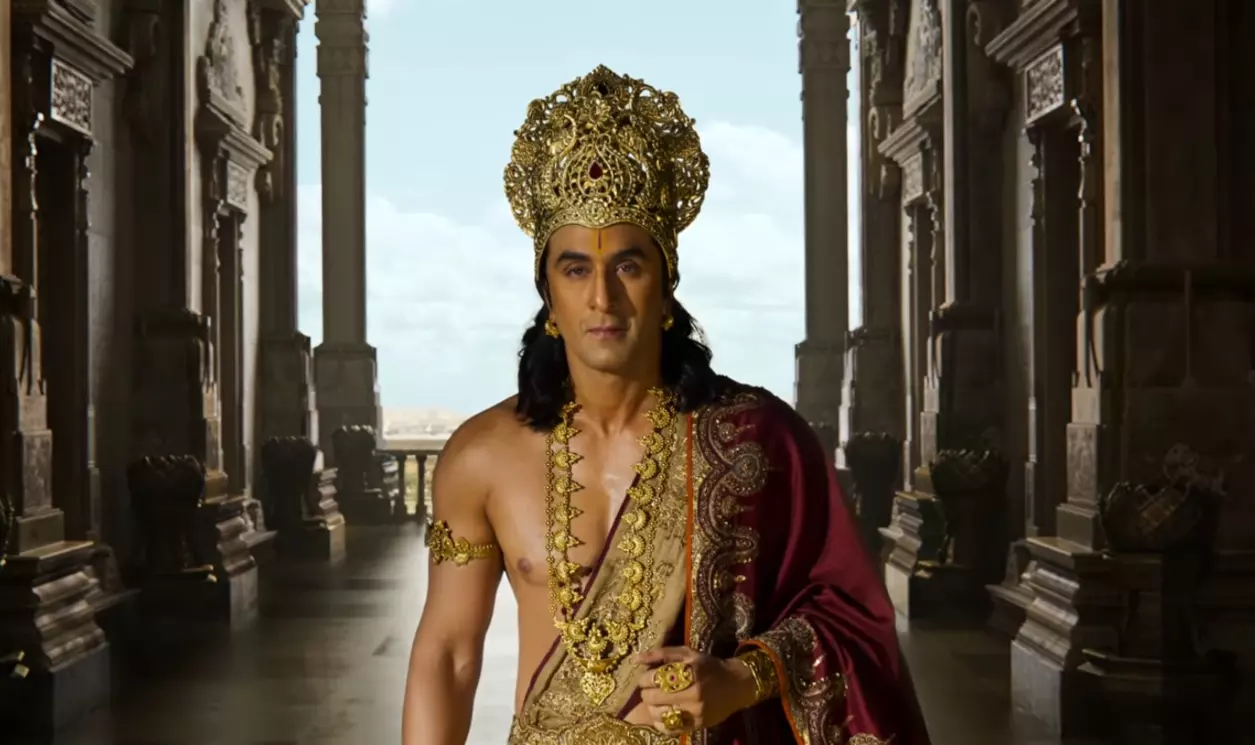
Shiv Sagar, grandson of filmmaker Ramanand Sagar, was recently quoted as saying that he found it difficult to accept Ranbir Kapoor as Ram in the upcoming film Ramayana, after watching him as Ranvijay Singh in the 2023 superhit, Animal, a revenge saga. An actor’s job is to inhabit a character convincingly. The curious paradox of stardom is that the better an actor succeeds, the harder it can become for audiences to imagine them as anybody else.

In the late 1980s Arun Govil captured the imagination of Indian television viewers across generations, playing the Hindu deity Ram in Ramanand Sagar’s adaptation of the epic Ramayan, aired on Doordarshan between 1987 and ‘88. The role brought him instant recognition and success. It also limited him in a way he had not anticipated — the character had become so deeply embedded in...
In the late 1980s Arun Govil captured the imagination of Indian television viewers across generations, playing the Hindu deity Ram in Ramanand Sagar’s adaptation of the epic Ramayan, aired on Doordarshan between 1987 and ‘88. The role brought him instant recognition and success. It also limited him in a way he had not anticipated — the character had become so deeply embedded in public imagination that it began to overshadow the actor. He recalls filmmakers telling him, “Your image as Ram is so strong, we cannot cast you as anyone else or give you a supporting role.” He adds: “That role may have captured the national imagination and I still have to dissuade many (including elderly) who want to touch my feet at airports and it [the image] helped me reach the Lok Sabha as a parliamentarian [he won from Meerut in the 2024 elections]. But that role became the biggest block in my acting career. Given a chance, I would’ve loved to play other characters. But it wasn’t meant to be.”
A look at Govil’s filmography after Ramayan shows him mostly being cast in the character of other Hindu deities or kings from mythologies and folklore; in the upcoming big screen adaptation of the Ramayana directed by Nitesh Tiwari, he plays Dashrath, the father of Ram.
An actor’s job is to become someone else, to inhabit a character so convincingly that the audience forgets the actor and remembers the character. The curious paradox of stardom is that the better an actor succeeds, the harder it can become for audiences to imagine them as anybody else.
That paradox has now surfaced again with Ranbir Kapoor’s casting as Ram in the Nitesh Tiwari directorial. Shiv Sagar, grandson of filmmaker Ramanand Sagar, was recently quoted as saying that he found it difficult to accept Kapoor as Ram after watching him as Ranvijay Singh in the actor’s 2023 superhit, Animal, a revenge saga with generous doses of violence.
“Personally, I cannot accept Ranbir Kapoor as Ram because after Animal we see him differently. When I look at Lord Ram and picture his beatific equanimous smile, I feel that a fresh face should have been taken,” he says. Yet Sagar is careful to separate his discomfort from Kapoor’s acting ability. “Ranbir has proven his mettle in different roles; he is a very good actor,” he says, suggesting that “the casting may have been influenced by the marketing value of a major star”.
That distinction is what makes the debate interesting. If an actor can convincingly play a violent, obsessive and morally troubling character in one film, why should that performance prevent him from playing a figure associated with restraint, righteousness, compassion and sacrifice in another?
The Ranbir Kapoor film has courted quite a bit of controversy even before its release, with Rameleela organisations demanding a pre-release preview of the film, and social media debating the hair and clothes of Sai Pallavi, the actor who plays Sita in the adaptation of the epic. Shiv Sagar’s comments on Rabir’s casting is only the latest addition to that discourse, but it widens the debate beyond one film, or even the issues associated with adapting a historical classic or an epic of religious importance. It highlights the dichotomy in the very nature of the actor’s craft.
Delhi-based film historian Dr Pragnya Jha puts the paradox neatly: “Actors are supposed to transform. Audiences, however, often carry an actor’s most memorable character into the next film. The more successful the performance, the heavier the baggage can become.”
The irony is hard to miss, says Dr Jha. “Ranbir Kapoor is now being questioned because some people cannot separate him from Ranvijay. Govil found himself trapped because people could not separate him from Ram.” She calls them mirror images. “One actor is considered too much like a character he has played. The other was once considered too much like the character he is about to play.”
Dipika Chikhlia, who played Sita opposite Govil, experienced a milder version of the same phenomenon. “Though I too got typecast, it was not to that extent,” she says. Working across Gujarati, Bengali and South Indian cinema helped.
Like Govil, Chikhlia also entered electoral politics during the early years of the saffron wave, becoming a Lok Sabha MP from Baroda in 1991. But she sees typecasting as something more complicated than a question of acting ability.
“Typecasting is not always about an actor’s ability to perform. It can be about the visual expectations attached to a character.” For Chikhlia, the image of Sita belonged to a particular idea of femininity at a time when mainstream Hindi cinema was celebrating a very different kind of heroine. “That was the era of the likes of Madhuri Dixit, Meenakshi Seshadri who were known for their dance moves and ‘bold’ costumes,” she says. “The audience is smart. They know that we can convincingly become different characters. But they simply can’t let go of the image of an actor outside the visual, emotional or moral universe of the role that made us famous.”
A scene from the '80s Ramayan.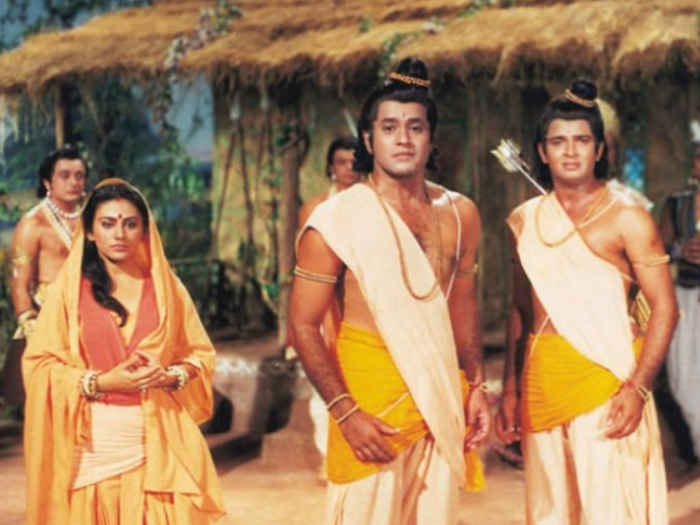
Yesteryear actor Kalpana Iyer experienced typecasting from the opposite end of the spectrum. She became closely associated with roles that involved dancing or were those of a seductress, but says she accepted what came her way because she wanted to work. “I didn’t have much of a say,” she recalls, talking to The Federal from Dubai, where she is now settled. “When I got to work, it was almost always as a dancer, as a [what was then popularly referred to as the] vamp.”
Coming from a non-filmy background, she had no agent or professional team to guide her. “I didn’t even have a secretary. I could only follow my instinct.” But she does not look back with bitterness. “I can’t complain, because I took what I got.”
For Iyer, remaining employed and relevant mattered more than fighting the image the industry had constructed around her. “Although I was perceived as a ‘bold’ actress, my personal outlook was quite conservative and that contradiction often left me misunderstood.”
Yet Iyer also offers the most direct challenge to the assumption that audiences are prisoners of typecasting. “We don’t give too much credit to the audience,” she says. “They do know that this is a role and that’s just about it.”
The actor would like to believe that over the years the casting system itself has changed. “Now people are more likely cast according to the script or the role,” Iyer says, pointing to the proliferation of casting directors. “Why should anybody be restricted to one kind of role, or one kind of image, or one kind of setup? Everybody should get to work with everybody.”
Yet the history of Hindi cinema suggests that typecasting has hardly disappeared. It has simply become more complicated.
Manoj Bajpayee’s experience after Satya (1998) is a useful example. His portrayal of Bhiku Mhatre was so powerful that the industry began to see him primarily through that prism. “The industry didn’t want to look at me as anything but a new villain,” he recalls. When Bajpayee, who has since proved his mettle across a range of characters, refused to keep accepting similar villainous roles, the consequences were tangible. “After Satya, for eight months I didn’t have any work” — the irony of a successful film leaving an actor jobless.
This is where typecasting stops being merely an aesthetic problem and becomes an economic one. An actor may want to surprise audiences, but producers have money at stake. A successful image is shorthand. A romantic hero arrives with audience expectations. A comic actor promises laughter. An action star promises spectacle. A villain known for menace needs less introduction.
The association can therefore be useful. The trouble begins when association becomes limitation. Actor Govinda has spoken about discovering that trap from inside his own comfort zone. “It gets to a point where you also begin to think this is your comfort zone. I was doing comedies and they were working, so I did an assembly line of those projects,” he recalls. When reminded of his portrayal of a dark, cold-blooded antagonist in the psychological thriller Shikari, he laughs. “You still remember that?” and recalls: “You know I’d even auditioned to play Abhimanyu in 1988 in BR Chopra’s Mahabharat [on television]?”
Like Govinda, Paresh Rawal, too, has known the fetters of successfully portraying a comic character. After Hera Pheri (2000), his Baburao Ganpatrao Apte became so popular that the character began following the actor. Rawal has described that image as “gale ka phanda (a noose around the neck)”. The audience’s affection is precisely what creates the problem. They do not necessarily want to see Paresh Rawal the actor. They want to see Baburao again. “That is the strange economy of screen memory. Audiences remember characters. The industry remembers what sold. Actors remember the freedom they had before the character became a brand.”
Mainstream actors are not the only ones to face the challenge.
Naseeruddin Shah, widely celebrated as one of Indian cinema’s most versatile actors, discovered that even critical respect can become a kind of prison. “I got typecast as a serious actor too early in my career and have struggled to shake off that mantle,” he reflects. “It was too heavy to lug around.” His experience is a reminder that typecasting is not restricted to villains, comic actors or those associated with romantic films. An actor can become trapped by seriousness just as easily as by glamour.
And yet the act-repeat formula does not always guarantee success. Shah Rukh Khan, credited with redefining romance on screen, delivered a superhit playing the scary, obsessed man in love in the 1993 Darr. Anjaam followed the next year, but couldn’t repeat the success of Darr. The obsessive lover was put to rest, but Khan found it far more difficult to shake off the image of the romantic hero.
Some actors have tried to push back against that brand. In a recent podcast, Ayushmann Khurrana said, “I don’t want to typecast myself”. His ambition is to keep surprising audiences: “I want to surprise my audience by doing as many films as I can and play different parts.” For him, the responsibility is straightforward. “I like challenges. I want people to throw any character at me and it is my responsibility to portray it with conviction.”
But an actor cannot escape an image alone, says actor Vikrant Chaturvedi, a familiar face and voice in the industry. “Someone has to give her/him the opportunity,” he says. Chaturvedi has worked across theatre, television, films and OTT. Yet typecasting has followed him too; the actor has mostly been seen playing negative characters.
The one time he was cast as a good guy in a mythological series, Vishnu Puran, there was another role running parallel in his life. “Then too I was rehearsing for Jesus Christ Superstar where I was plotting to get Jesus killed. Luckily, the series and the play were happening in what can only be described as parallel universes with no overlap whatsoever and I could do both.”
Typecasting has followed him even when he is heard rather than seen. Chaturvedi has dubbed in Hindi for Javier Bardem as Raoul Silva in Daniel Craig’s Skyfall, but says he is repeatedly approached for villainous voices. “Whether Hollow Man 2, 300, the Avatar films, X-Men Wolverine, Transformers or Mufasa: The Lion King – I’m only approached to dub for the bad guy’s voice.”
And that brings the filmmaker and casting director back into the story.
A fresh face comes without history. There are fewer associations to overcome and perhaps a greater chance that audiences will accept the character without seeing the actor underneath. A star, by contrast, brings recognition, marketing value and a ready-made audience.
The very face that can sell a film can also interfere with the illusion it is trying to create. “This is particularly complicated with mythological characters,” says Jha. “Ram is not simply another fictional role. For many Indians, he already exists in the cultural imagination, with physical and behavioural associations shaped by television, cinema, religious art and family memory.” Govil’s portrayal, she points out, remains an unusually powerful part of that memory.
Chaturvedi also shines a torch on the other side of typecasting. “In a movie where the heroine is stuck in the rain at a bus stop and seeks a lift from a car, the moment you saw a Prem Chopra or Ranjit in the driver’s seat, no backstory was needed. The audience immediately knew what was coming. It just saved so much time and footage.”
Also read: Why for Dalits in Uttarakhand there is a silver lining in ‘purification’ row after Kharge visit
So the question of whether Ranbir Kapoor can play Ram is legitimate as a question about audience perception. It is not necessarily a question about his ability to act. There is also a danger in assuming that choosing an actor who already resembles an audience’s idea of a character is always the safer option, Jha argues. “If filmmakers repeatedly cast according to established images, those images become even stronger. The hero must look heroic. The villain must look threatening. The romantic lead must look romantic. The comedian must remain funny. Cinema begins casting the memory of an actor rather than the actor himself.”
That is the central paradox of stardom: We want the recognisable face because it sells the film. Then, once the lights go down, we want to forget that face and believe in somebody else. Perhaps that is the real test of acting, says Chaturvedi. “Not whether audiences can immediately imagine an actor playing a particular character, but whether the actor can make them forget who they thought he was.”
Ranbir Kapoor’s Ram will eventually have to answer that question on screen. But if acting is the art of making us believe in someone else, perhaps an actor should not be imprisoned forever by the character who once made us believe in him most completely.