Delhi University's fourth-year research programme faltering under NEP
Introduced under the Undergraduate Curriculum Framework (UGCF) 2022, of the National Education Policy (NEP) 2020, the optional fourth year was projected as a gateway to postgraduate-level research, with a dissertation at its core

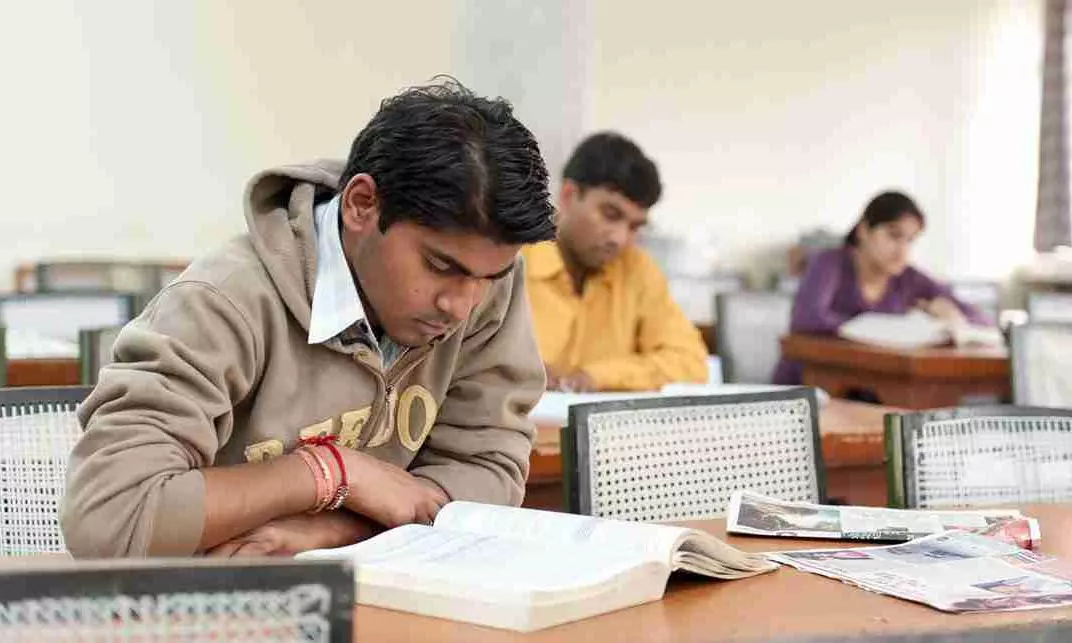
Delhi University’s (DU) ambitious attempt to turn the fourth year of its undergraduate programme into a research-focused academic experience is faltering, with teachers and students across colleges pointing to low attendance, erratic guidelines, unrealistic expectations and a lack of institutional seriousness.
Low attendance in fourth year
Introduced under the Undergraduate Curriculum Framework (UGCF) 2022, of the National Education Policy (NEP) 2020, the optional fourth year was projected as a gateway to postgraduate-level research, with a dissertation at its core. However, as the first full batch moves through the programme, several colleges report that many students who enrolled for the fourth year are barely attending classes or meaningfully engaging with dissertation work.
Also Read: Prof Manivannan: Politicisation is eroding universities’ democratic soul
“There are students who have enrolled in the fourth year, but many of them are not very willing to come to write the dissertation, which is a mandatory requirement for the fourth year. This is not specific to our college. This is a general tendency that we are witnessing across colleges, barring some campus colleges or some women’s colleges,” said Biswajit Mohanty, a political science teacher at Delhi University’s Deshbandhu College.
Assessment design draws sharp criticism
At DU’s Dyal Singh College, the scale of the problem is stark. Sachin Nirmala Narayana, who teaches English there, said that out of 36 students enrolled in the fourth year, only 10 were attending classes. He criticised the structure of the programme, particularly the assessment design.
“The university stipulates having a viva in both seventh and eighth semesters, which is a pea-brained idea.. In implementing NEP, DU is not looking for academic structure; it is only interested in ticking boxes,” he said.
Viva before dissertation raises questions of logic
With the seventh semester nearing its end, Narayana said students were nowhere near prepared. “Now the seventh semester is almost over, and no student is ready for the viva… A viva should be after the dissertation. What is the rationale or logic behind doing it before that?”
Also Read: Why SAU students are protesting over 'cover-up' of alleged campus gang rape
He warned that the lack of engagement could lead to compromised academic results. “With students not coming, we can expect to see AI-generated and sub-standard dissertations which are not exhaustive,” he said.
Unrealistic expectations placed on undergraduates
Yet, despite the student absenteeism, teachers argue that the fault is not of students, but the university administration, as the expectations placed on undergraduates are unrealistic. Mohanty pointed out that students are expected to complete coursework, methodology training and literature review in the seventh semester, followed by a full dissertation in the eighth.
Also Read: Delhi University VC Yogesh Singh uses X account, speeches to push BJP agenda
“In the eighth semester, they are expected to write a dissertation of maybe 120 pages. Writing a 120-page dissertation in six months is a difficult thing for an undergraduate student. To read 50 books for a literature review, is it humanly possible in six months?” he asked.
He said students are not being trained adequately for research. “You are not training them to read and write… This is not the way you prepare students for research work,” he said.
Supervision not counted as official workload
Faculty members also say the university has failed to account for the labour involved in supervising undergraduate research.
Monami Basu, an Economics teacher at Kamala Nehru College and an Academic Council member, said dissertation supervision does not form part of official workload calculations. “There are no dedicated periods in our timetable or in our work week for research students. It is just assumed that we will do it in our spare time," she said.
Teachers stretched thin, supervision turns haphazard
With full teaching schedules and administrative responsibilities, Basu said meaningful supervision becomes nearly impossible. “Most teachers are not able to give the requisite number of hours which should be given for it to be called proper supervision, especially when these are undergraduate students doing a dissertation. It is completely haphazard. There is no seriousness involved,” she said, adding that frequent and shifting guidelines have further destabilised the process.
Also Read: Delhi HC slams DUSU candidates over the use of luxury cars in poll campaign
“The guidelines for research are being issued almost every week,” Basu said, referring to a now-withdrawn requirement that students submit video proof of research progress. “A 30-minute video was suddenly required to prove that the student is doing research, which was finally withdrawn after we protested. Students are really confused,” she said.
Students complain of mismatched supervision
Students echo these concerns. A fourth-year Economics student from Shyam Lal College said he was allowed to choose his dissertation topic but not his supervisor, leaving him paired with a guide whose expertise did not match his subject.
Also Read: DUSU polls: ABVP secures three of four posts; NSUI wins one
“Earlier, the university had asked for video proof of progress, so we were asked to shoot two 10-minute videos about our topics. A photo with our supervisor was also taken to show that we are meeting. It’s all fake and happening only because the university is coming up with strange rules, because it has no idea how to go about this,” he said. When asked about his dissertation topic, the student took several seconds to recall it, underlining his lack of engagement with the research work.
‘Research year feels like any other year'
A fourth-year English student from Miranda House said she and many of her classmates were not attending college regularly because of overlapping academic demands. “It’s very erratic; everything has piled up just before the exams. Most of the supervisors have just asked us to submit a research design and other things for 200 marks, and that’s it. Most of the people in my class are not attending classes,” she said.
Also Read: DUSU election results: ABVP wins 3 posts including President, NSUI gets VP
She said students had entered the fourth year expecting a dedicated research phase. “We were told this was going to be our research year, so we thought it would be just research. But it’s like any other year, plus research. We’re feeling quite backstabbed,” the student said.
According to her, the combination of core papers, a general elective and dissertation work has made attendance unviable. “We have three core papers and a GE. These are hefty papers, and along with research work, it leaves us little time to do anything else, so it’s not feasible to attend classes,” she said.
Faculty blame institutional apathy
While teachers acknowledge that student disengagement is real, they argue that it is a symptom of a deeper institutional failure. “You cannot even blame them for not showing seriousness because the administration itself is not showing any seriousness in this,” Basu said.
Asked why students were required to appear for a viva before submitting their dissertations, Delhi University’s Dean of Academic Affairs, K Ratnabali, said, “There are specific outcomes for semester 7 and 8 separately. Viva voce is prescribed at the end of both semesters in relation to the assessment of those outcomes…”
Key concerns remain unanswered
She did not respond to questions on students’ complaints that heavy coursework left them little time for research, nor did she address allegations by teachers and students that the university was ill-prepared for the fourth year. On concerns that dissertation supervision is not counted as workload, Ratnabali said, “I would like to rephrase it as - it is not considered as part of direct teaching workload but within the weekly hours prescribed by UGC, similar to the norm followed in the University departments for supervising research.”