IndiGo crisis in for the long haul as pilot shortage threatens FDTL compliance
With shortfall of 657 pilots, IndiGo’s promise to meet flight duty time norms by Feb 2026 appears unrealistic; DGCA may have to cap flights, monitor operations

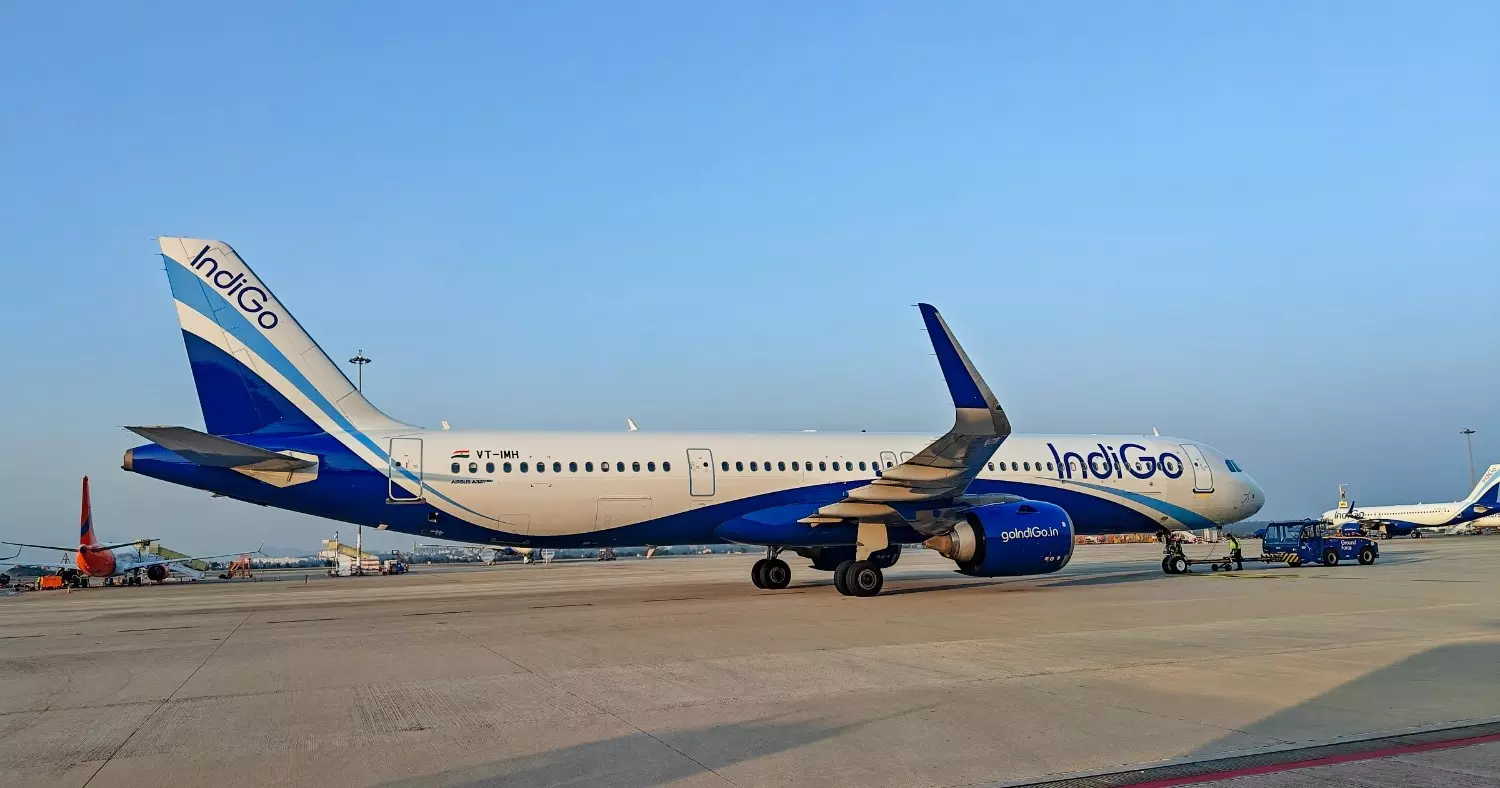
The possibility of IndiGo complying with the new Flight Duty Time Limitation (FDTL) norms by February 10, 2026 – as it has assured the Directorate General of Civil Aviation (DGCA) – seems remote. Even the aviation regulator is sceptical and has ordered a 10 per cent cut in its flights till March 28, 2026 (winter schedule).
The DGCA waived FDTL compliance until February 10 after IndiGo assured it would stabilise operations (FDTL-compliant) by hiring additional pilots. The FDTL norms mandate 48-hour weekly off and two night landings for pilots to ensure adequate rest for them.
Also read: Why IndiGo is just the tip of India’s monopoly iceberg | Talking Sense With Srini
By the time the DGCA relaxed the FDTL, the airline had already grounded thousands of flights (over 5,000 flights by December 12 ) since December 1, stranding thousands of passengers across the country.
But taking the airline on its word can be perilous as Civil Aviation Minister Ram Mohan Naidu has learnt to his discomfort.
Misleading compliance report
Speaking to a national TV news channel in New Delhi on December 11, the minister made three shocking revelations:
(i) IndiGo had submitted its FDTL compliance report in November, indicating that it was ready for the deadline of December 1. But when the deadline came, it chose to spread chaos.
Also read: IndiGo’s extreme market muscle makes it too big to fail or regulate
(ii) The airline officials had met the DGCA two days before the December 1 deadline, but “they never mentioned anything about this (likelihood of grounding the flights to adhere to the FDTL norms)”, even when specifically asked if they had any problem with the FDTL implementation.
(iii) The airline had not hired a single pilot in the past six months to ensure a smooth transition.
No other airline grounded flights as IndiGo did.
Prime facie, IndiGo’s assumption to stabilise its operations by February 10 is based on its declaration to the DGCA that it intends to induct 158 pilots by then. This is against its own assessment of a pilot shortfall of 161, the need for 4,712 pilots against the current strength of 4,551.
Also read: IndiGo crisis: When competition watchdog stops barking, it spells trouble
Multiple national dailies have also reported that IndiGo told the DGCA it would induct another 742 pilots by December 2026, including 50 overseas pilots, taking the total additional pilots to 900 by the end of 2026.
Aviation experts raise doubts about IndiGo’s claims. But before that, here is the timeline for FDTL compliance.
The DGCA issued the FDTL on January 8, 2024, a revised one of April 2019. It was to be complied with from June 1, 2024 but litigation led to its delay till November 1, 2025. When the deadline came, all airlines complied except for IndiGo. When the DGCA cracked its whip a month later, from December 1, the airline played truant, causing havoc.
Aviation experts sceptical
Here are why aviation experts are sceptical about IndiGo’s claims.
IndiGo’s annual report of FY25 says it has a fleet of 434 planes (mostly A320 and A321 airbuses). Taking this as the baseline, aviation experts say it would take up to a year or more for the airline to induct a sufficient number of pilots to be FDTL compliant.
Also read: DGCA to station personnel at IndiGo headquarters to monitor ops
Praveen Paul, former aviation consultant, says the industry best practice is a maximum of 25-28 days of flying an aircraft in a month, which varies between 12-16 hours flying in a day (taking into account the turnaround time). On the higher side (the normal trend in airlines), this works out to be about 450 flying hours a month.
He further reasons that, since the FDTL caps 100 hours of flying in a month for pilots, an aircraft (in air for about 450 hours a month) needs a minimum of five crew sets (captain and first officer each) to operate. The industry best practice normally buffers in an additional crew set for an aircraft to manage contingencies like training, medical leave, annual leave etc. Thus, it takes six crew sets or 12 pilots (captains and first officers) to take care of an aircraft.
As IndiGo operates a fleet of 434 (annual report of FY25), it would need 5,208 pilots (434 planes x 12 pilots) – the bare minimum – to be FDTL-compliant.
Against this, IndiGo told the DGCA last week that its pilot strength is 4,551 (mentioned earlier).
That is a massive shortfall of 657 pilots (5,208 minus 4,551) to run its existing fleet in FDTL-compliant mode.
There are other issues.
Limited supply, long induction time
IndiGo may be cash-rich (Rs 7,258 crore of profit-after-tax and cash balance of Rs 48,171 crore in FY25), but that doesn’t mean it can easily induct 657 pilots. Here is why.
The DGCA’s annual Handbook of Civil Aviation Statistics shows, it never inducted such a large number of pilots even in a full fiscal year in recent times. Its net induction of pilots was 631 in FY24, 616 in FY23, 57 in FY22 and (-) 283 in FY21 (pandemic lockdown fiscal).
The availability of such a large number of pilots is another concern.
The DGCA’s annual report of FY25 says it approved 1,347 commercial pilot licenses (CPLs) in 2024 – the second highest in a single year over the past seven years, after 1,622 in 2023.
But all the CPL holders are not available for hiring by IndiGo.
Aviation experts say, many don’t pursue a flying career after earning CPLs (conservative attrition rate of 20-25 per cent), some prefer to fly personal planes of High-Net-Worth Individuals (HNIs) or join small chartered flight operators, some stay back at flying clubs etc. Then, there are other domestic airlines (Air India, Air India Express, SpiceJet, Akasa Air) and neighbouring countries’ airlines (Bangladesh, Sri Lanka, the Middle East) competing for those pilots.
Long training process
Assuming that IndiGo beats all and inducts CPL holders in adequate numbers, here is another problem.
Rajeev Kumar, former pilot and instructor, says the CPL holders need months of further training to be able to fly IndiGo’s airbuses. The rookie pilots must undergo ground classes, simulator training, supervised flying, tests etc. to be ready to fly an airbus. All these would take “a bare minimum of 7-9 months”, he adds.
That would mean even if IndiGo gets its pilots by February 10, it would be another 7-9 months before they would be ready – by which time it would be December 2026, and make the IndiGo FDTL-compliant.
Until then, the DGCA doesn’t have much of a choice. Having allowed IndiGo to grow too big to regulate, it can watch helplessly and be at the mercy of the airline.