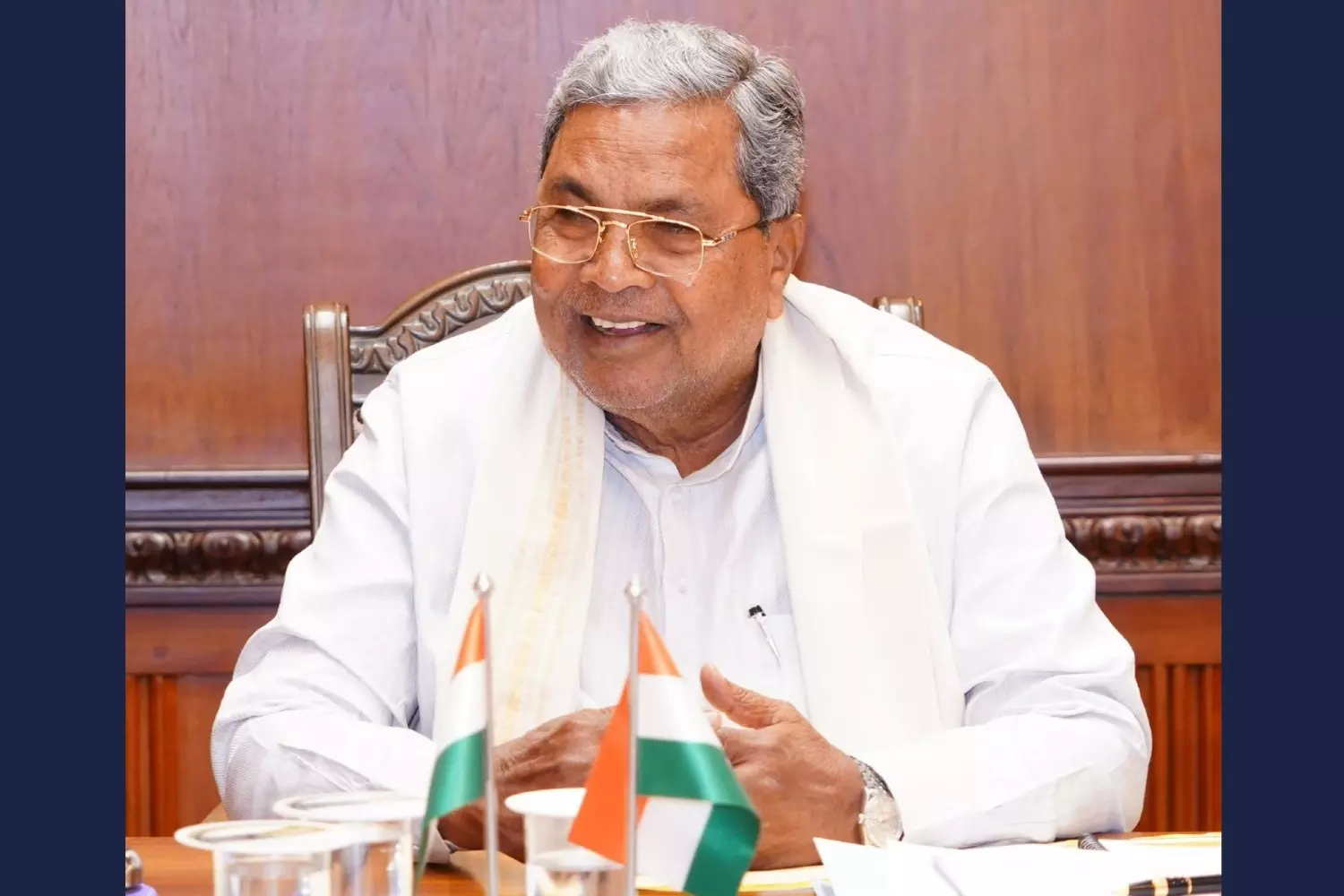
Karnataka Budget 2026: Siddaramaiah raises federalism pitch, flags fund allocation disparity
The Karnataka Budget 2026-27 highlights an important issue: fiscal federalism, or the financial relationship between the state and the Union government

Presenting the Karnataka Budget 2026-27 on Friday (March 6), Chief Minister Siddaramaiah said that Karnataka, despite being one of India’s most economically productive states and a major contributor to national tax revenues, is facing increasing financial pressure due to certain central taxation policies and resource-sharing mechanisms.
The Budget argued that high-performing states like Karnataka should receive adequate support to sustain economic growth.
Impact of GST on state’s finances
Using a metaphor from the Mahabharata, the Chief Minister said that “the cow that yields abundant milk requires proper care”, stressing that weakening strong states could affect the country’s overall economic progress.
Also read: Karnataka Budget 2026 highlights
Siddaramaiah has consistently emphasised the need to protect India’s federal structure and has frequently criticised the Narendra Modi government on issues related to Centre-State relations. He has continued to raise concerns over disparities in tax devolution and the allocation of funds to states. In the past, he has also held protests and meetings in Delhi.
He recently wrote to Tamil Nadu Chief Minister MK Stalin, stressing the need to strengthen India’s federal structure and initiate a national debate on Centre-State relations. Raising concerns over growing administrative and financial centralisation, he expressed Karnataka’s support for efforts to protect the rights of states and called for greater unity among southern states.
Now, his Budget also openly highlighted the impact of the Goods and Services Tax (GST) on state’s finances. With the introduction of GST, several state-level taxes were merged into a single national tax system, reducing the independent taxation powers of states. As a result, Karnataka now depends heavily on GST for its revenue. According to the Budget, nearly 43 per cent of the state’s own tax revenue comes from GST, making the state more vulnerable to policy changes made at the national level.
Also read: Siddaramaiah writes to Stalin backing renewed Centre-State relations debate
Recent GST rate rationalisation has further complicated the situation. The state estimates that these GST rate changes could lead to a revenue loss of nearly Rs 10,000 crore this year and about Rs 15,000 crore next year for Karnataka, according to the Budget. It also highlights concerning trends in national GST collections. Revised estimates for 2025-26 show that GST revenues may decline by about 11 per cent compared to earlier projections. The Union government’s estimates for 2026-27 suggest a further drop. Overall, this could result in a revenue shortfall of around Rs 1.3 lakh crore in the current year and nearly Rs 2 lakh crore in the next financial year, which may also reduce the share of taxes transferred to states.
Such developments have increased financial pressure on states because their revenue depends heavily on GST collections. While states face revenue losses due to rate changes, the Union government continues to earn significant income from taxes on sin and luxury goods, which go entirely to the Centre. In response, Karnataka and seven other states submitted a joint memorandum to the GST Council, seeking safeguards and compensation to protect state revenues during GST rate rationalisation.
Distribution of Central tax revenues
Another important issue raised in the Budget concerns the distribution of Central tax revenues among states. According to Siddaramaiah’s record 17th Budget, Karnataka’s share in tax devolution declined significantly under the 15th Finance Commission, falling from 4.713 per cent under the 14th Finance Commission to 3.647 per cent. This nearly 23 per cent reduction has reportedly resulted in a cumulative financial loss of around Rs 65,000 crore over the six-year award period.
Also read: Karnataka to ban social media for Under-16s
The state government argues that this formula disproportionately affects economically stronger states that contribute significantly to the national economy. In addition, the Budget points out that special grants of Rs 5,495 crore and state-specific grants of Rs 6,000 crore recommended by the 15th Finance Commission have not yet been released by the Union government. Such delays and omissions challenge the principle of cooperative federalism, which requires timely financial coordination between the Union and the states.
The Budget notes that the 16th Finance Commission has slightly increased Karnataka’s share in tax devolution to 4.131 per cent, which the government describes as a partial improvement. However, the state argues that this increase does not fully compensate for earlier losses. Karnataka has therefore urged the commission to adopt a more balanced formula that recognises both equity and efficiency, suggesting that excessive weight given to “income distance” in the current formula penalises economically stronger states. The state has recommended that fiscal performance and contributions to the national economy should also be considered when determining tax devolution.
The Budget also raises concerns about weakening certain Centrally sponsored programmes. In particular, it criticises the Union government for reducing support for the Mahatma Gandhi National Rural Employment Guarantee Scheme (MGNREGA). According to the state government, weakening this programme threatens the rural population’s right to employment and increases the financial burden on states that must step in to support livelihoods.
Karnataka’s strong fiscal performance
These financial challenges are closely linked to Karnataka’s large welfare commitments, particularly the state government’s guarantee schemes. Such programmes require significant financial resources, and the state argues that reduced Central transfers and policy changes have increased pressure on the state’s finances. By connecting welfare spending with federal financial constraints, the budget frames these social programmes not merely as political promises but as part of a broader debate about financial fairness for states within the Indian Union.
Despite these challenges, the Karnataka Budget 2026-27 says the state has maintained strong fiscal performance. The state’s own revenues are expected to grow by about 8.3 per cent in the revised estimates for 2025-26 compared to the previous year, showing efforts to strengthen revenue mobilisation. The government also said it has maintained fiscal discipline and managed its liabilities carefully while continuing to invest in development programmes.
The Budget also calls for greater consultation between the Union government and states in areas beyond taxation, including international trade policy. As a state with strong global links in exports and investment, Karnataka says its views should be considered during trade negotiations that affect regional industries. The Budget also carries a political message by highlighting revenue losses, GST constraints, delayed grants and reduced central support for some schemes. The state argues that these issues reflect the growing centralisation of financial powers. At the same time, the government said it will continue development efforts and called for unity across political parties to protect Karnataka’s financial interests.