



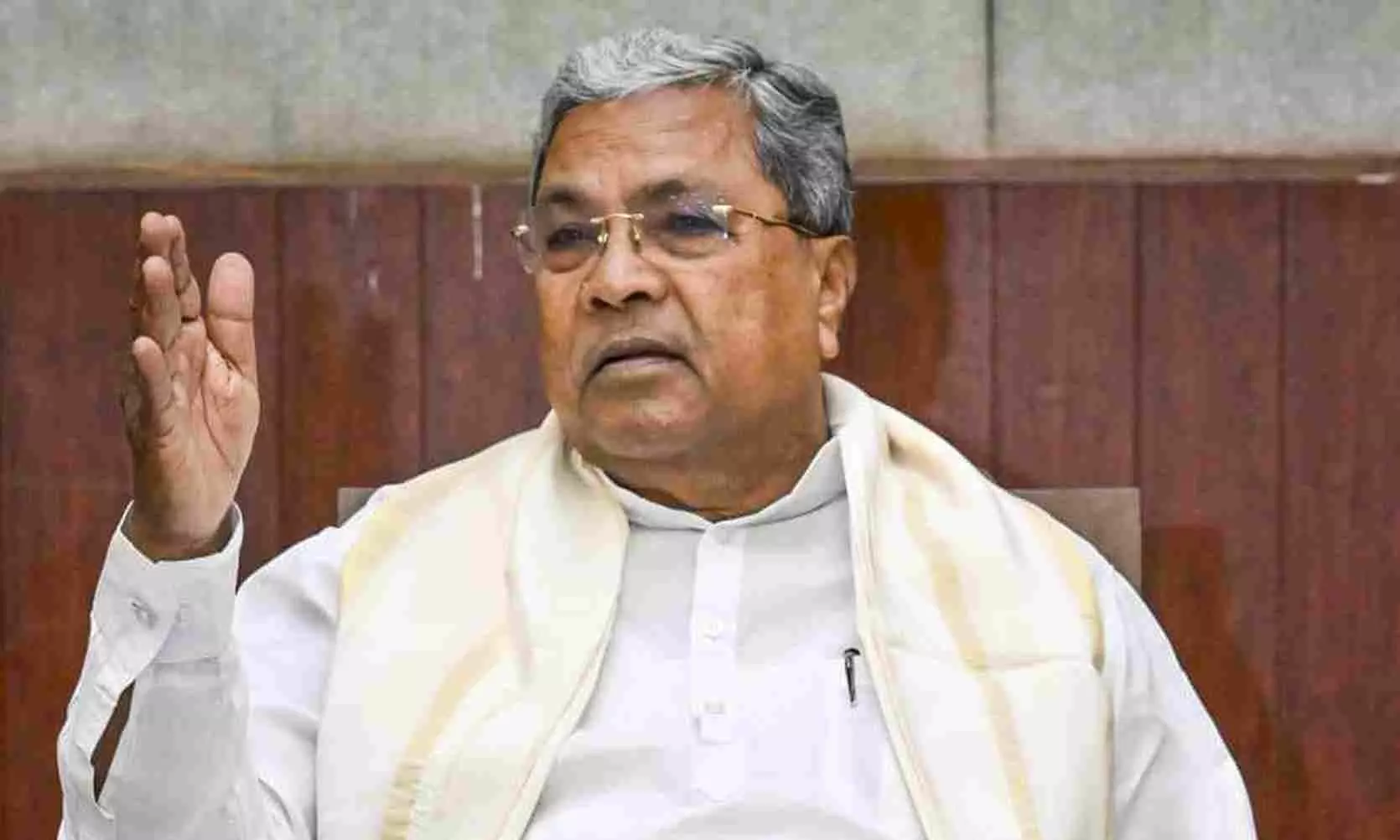
Karnataka to ban social media for children under 16: CM Siddaramaiah
Chief Minister Siddaramaiah announces proposal in Budget speech amid rising concerns over screen addiction, privacy risks, and online safety for minors

Karnataka Chief Minister Siddaramaiah on Friday (March 6) announced that the state government will ban the use of social media for children below 16 years of age, citing growing concerns over excessive smartphone usage and its impact on young users.
The announcement was made while presenting the 2026–27 state Budget in the Karnataka Legislative Assembly. The Budget, estimated at around Rs 4.20 lakh crore, is expected to prioritise welfare schemes and infrastructure development in Bengaluru and other backward regions.
Siddaramaiah said the proposed restriction is intended to address increasing worries about children spending long hours on social media platforms and digital devices.
The Chief Minister had earlier discussed the issue with university vice chancellors, seeking their views on whether mobile phones should be restricted for children under the age of 16.
Idea under discussion for months
The proposal follows earlier deliberations within the state government on regulating young people’s exposure to digital platforms.
State IT and Biotechnology Minister Priyank Kharge had told the Assembly earlier this year that the government was examining ways to promote responsible use of artificial intelligence and social media among young users.
Also Read: Banning social media for children will not solve problem: Psychologist | AI With Sanket
Health Minister Dinesh Gundu Rao had also raised concerns about the health effects of prolonged screen exposure on children.
Meanwhile, BJP MLA and former minister Suresh Kumar had urged the government to take the issue seriously, warning that unregulated social media use could negatively affect education and family life.
Part of a wider global debate
Karnataka’s proposal comes amid a growing international debate on regulating children’s access to social media.
Countries such as Australia have introduced strict measures limiting younger users’ access to certain platforms, while policymakers in the United Kingdom and Finland are exploring similar safeguards.
Also Read: Social media ban for Under-16s: Is Australia-style law feasible in India?
In parts of Europe, including France and Spain, schools have already imposed restrictions on smartphone use in classrooms to reduce distractions and improve student focus.
Experts caution against simple bans
However, experts say regulating children’s digital exposure is more complex than imposing outright bans.
India’s Economic Survey 2025–26 has flagged excessive smartphone use among young people as a rising concern, linking it to sleep disorders, anxiety, reduced attention spans, and academic stress.
Cybersecurity specialists also warn that children often share personal information online without fully understanding privacy risks. Online grooming, data harvesting, and manipulation through algorithms are emerging threats, particularly as artificial intelligence tools become more widespread.
Also Read: Andhra govt mulls ban on social media use for children under 16
At the same time, digital platforms also provide learning resources, creative opportunities, and entrepreneurial exposure for many young users.
Because of this, policymakers globally are increasingly considering a balanced approach — combining age-based safeguards, stronger privacy protections, parental controls, and digital literacy initiatives alongside regulatory measures.
As Karnataka moves ahead with its proposal, the debate highlights a broader challenge: how to safeguard children online while ensuring they continue to benefit from the opportunities of the digital world.