Telangana’s hate speech Bill borrows Karnataka’s failure and deepens its flaws
The Bill’s central term, “disharmony”, is defined nowhere; no Indian statute renders “ill-will” measurable; upon this undefined foundation, the Bill builds a criminal regime

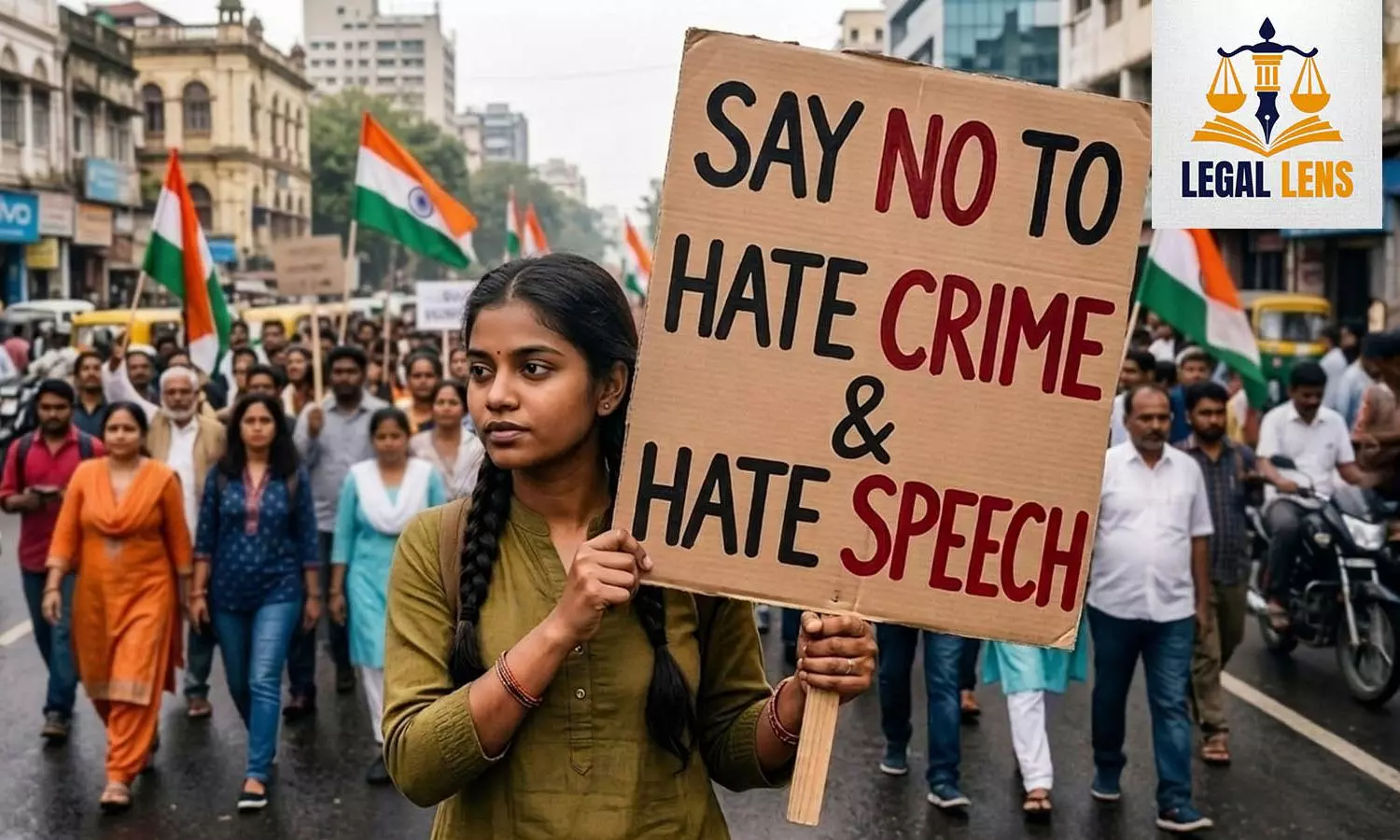
The Telangana Hate Speech and Hate Crimes (Prevention) Bill, 2026, was introduced in the Legislative Assembly on March 29. IT and Industries Minister D Sridhar Babu tabled it on behalf of Chief Minister A Revanth Reddy. Transport Minister Ponnam Prabhakar piloted the debate. The very next day, the Assembly referred the Bill to a Select Committee.
The referral followed objections from members across party lines. The BJP, AIMIM, CPI, and even sections of the ruling Congress raised serious concerns. The BRS, whose legislators were suspended from the House, weighed in from outside. Working president KT Rama Rao called the Bill a draconian tool to curb free speech.
That a government-backed Bill was sent for further scrutiny within a day of its introduction tells its own story. The constitutional problems, however, run deeper than the embarrassment of its first day.
Vague terms, harsh penalties
The Bill defines hate speech as any expression, spoken, written, or electronic, intended to cause disharmony, enmity, or ill-will. The targets of such expression are persons, communities, or groups identified by religion, race, caste, sex, gender, sexual orientation, disability, or place of birth. The stated purpose, preventing communal hatred, is beyond reproach. The difficulty lies in the drafting.
Also read: FCRA amendment gives Centre sweeping powers over NGOs, with no oversight built in
The Bill’s central term, “disharmony”, is defined nowhere. No Indian statute or court has rendered “ill-will” measurable. Yet, upon this undefined foundation, the Bill builds a criminal regime. All offences are cognisable, meaning police can arrest without a warrant. All offences are non-bailable, meaning the accused has no right to release. First offenders face one to seven years in prison and a fine of Rs 50,000. Repeat offenders face two to ten years and a fine of Rs 1 lakh.
Key Issues with the Telangana Bill
Vague Definitions
- Terms like “disharmony” and “ill-will” are undefined, making enforcement arbitrary.
- Risk of violating Article 19(1)(a) (free speech) due to vagueness.
Harsh Penal Regime
- Cognisable and non-bailable offences (arrest without warrant, no right to bail).
- First offence: 1–7 years imprisonment + Rs 50,000 fine.
- Repeat offence: 2–10 years imprisonment + Rs 1 lakh fine.
Content Removal Without Oversight
- A single government-appointed officer can block/remove online content.
- No court order, independent harm standard, or appeal mechanism required.
- Echoes unconstitutional Section 66A of IT Act struck down in Shreya Singhal case (2015).
Organisational Liability & Burden Shift
- Organisations held liable for members’ speech unless they prove ignorance/due diligence.
- Reverses normal burden of proof.
- Raises concerns of collective punishment and chilling effect on political parties.
Immunity for Officials
- Government officers enforcing the law are shielded from accountability.
- Weakens checks against misuse and arbitrary action.
Overlap with Existing Laws
- India already has provisions under Bharatiya Nyaya Sanhita, Representation of the People Act, SC/ST Act, and IT Act.
Karnataka’s rejected model
The Bill is, in substance, a reproduction of the Karnataka Hate Speech and Hate Crimes (Prevention) Bill, 2025. Karnataka passed that Bill during the winter session in Belagavi in December 2025. Governor Thaawarchand Gehlot reserved it for Presidential consideration under Articles 200, 201, and 254 of the Constitution. He cited three constitutional problems. These were possible conflict with central legislation, violation of fundamental rights under Articles 14, 19, and 21, and executive powers he called subjective and draconian. The Bill has stalled before the President.
What Karnataka could not push through its Governor, Telangana now attempts with similar provisions. A comparative analysis by The News Minute found near-identical definitions, penal structures, organisational liability frameworks, and content-takedown powers. One difference: The Telangana Bill limits preventive measures to known repeat offenders, while the Karnataka Bill casts a wider net. This is a marginal distinction. It does not address the structural defects common to both.
One officer, no court order
The most troubling provision concerns content removal. A Designated Officer, appointed by and answerable to the state government, can direct any platform or intermediary to block or remove content. No court order is needed. No independent standard of harm must be met. No right of appeal exists before the removal takes effect. One functionary, accountable only to the government of the day, decides what citizens may say and access online.
Also read: Telangana Speaker’s actions test anti-defection law’s evidentiary limits
The Supreme Court has confronted this architecture before. In 2015, in Shreya Singhal v. Union of India, the court struck down Section 66A of the Information Technology Act. That provision had criminalised online speech causing “annoyance” or “inconvenience”, terms as undefined as “disharmony”. The court held that vagueness in a speech-restricting law is a constitutional violation under Article 19(1)(a). The Telangana Bill invites the same objection.
Guilt by association
Another contentious provision deals with organisational liability. If an accused person belongs to an organisation, whether registered or not, the organisation and its office-bearers are also liable. They can escape only by proving they had no knowledge of the offence or had exercised due diligence. CPI MLA Kunamneni Sambasiva Rao posed the question plainly in the Assembly. If one party member makes a statement, he asked, should the entire party be held accountable?
This reversal of the normal burden of proof is compounded by two further features. A complaint alleging intention to cause disharmony, without proof of actual incitement, is enough to trigger the criminal process. And the Bill insulates government officials pursuing cases under its provisions from any legal action. BJP MLA Payal Shankar flagged this anomaly. If the enforcing officer is immune from accountability, the check on arbitrary action is only notional.
Existing law already covers this ground
India already has substantial law on hate speech. The Bharatiya Nyaya Sanhita, 2023, contains Section 196 on promoting enmity between groups, Section 299 on outraging religious feelings, and Section 353 on public mischief. The Representation of the People Act penalises communal appeals during elections. The SC/ST Prevention of Atrocities Act protects Scheduled Castes and Tribes. The IT Act and its Rules govern digital content takedowns.
Also read: How the Official Secrets Act has become a colonial relic in the AI age
The Supreme Court addressed this question directly in Pravasi Bhalai Sangathan v. Union of India (2014). India has sufficient laws, the court observed. The problem lies in non-implementation. The court asked the Law Commission to examine the matter. The Commission’s 267th Report (2017) recommended two new penal provisions. Crucially, those recommendations tied the offence to an incitement standard: fear, alarm, or provocation of violence. The Telangana Bill’s definition is broader than any existing provision or Law Commission recommendation. The Select Committee must ask whether this breadth is a strength or a vulnerability.
The task ahead
To produce a law that survives constitutional challenge, the Select Committee must do several things. It must define “disharmony” and “ill-will” with the precision the Supreme Court’s free speech rulings demand. It must require proof of actual incitement, not merely alleged intention. It must place content-removal powers under judicial oversight with a right of appeal. It must drop the reversal of burden of proof for organisations. And it must show which specific gap in existing law the Bill addresses.
Also read: From 2G to coal, why India’s biggest ‘scams’ keep ending in acquittals
A hate speech law is only as credible as its safeguards. Without them, the Bill need not become law to do its work. The uncertainty it creates about what speech is criminal is itself a restraint on speech. That chilling effect is not a flaw of careless drafting. It is the oldest instrument in the censor’s toolkit.