Tata Sons at a crossroads: RBI listing, Chandrasekaran’s term
Chandrasekaran’s proposed third term comes as Tata Sons confronts an RBI listing rule and a shareholder divide

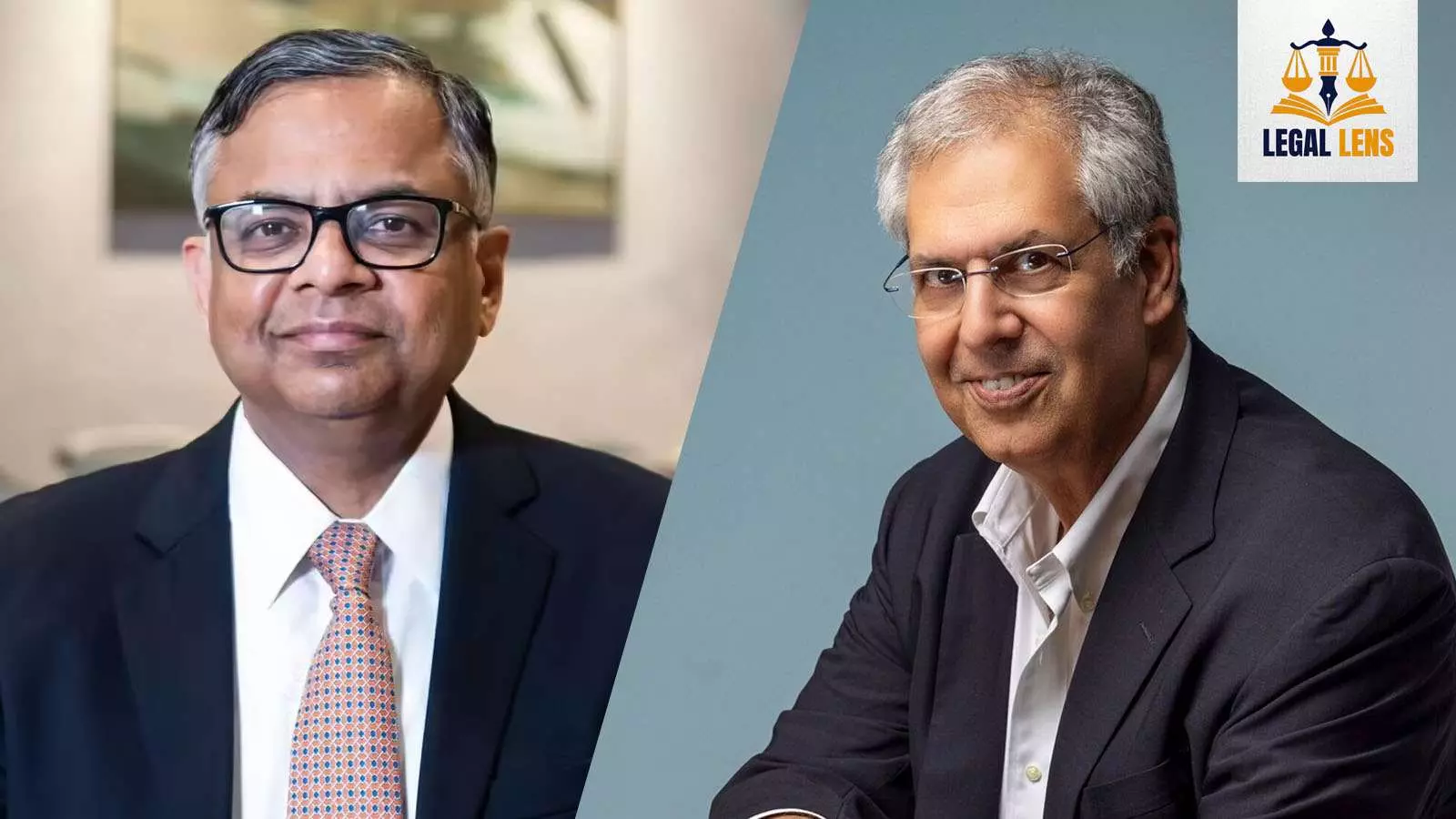
Tata Sons sits at the centre of the Tata group as its principal investment holding company and promoter. Many Tata companies, including Tata Consultancy Services, Tata Motors and Tata Steel, are listed on stock exchanges, but Tata Sons itself remains privately held. Philanthropic Tata Trusts own 66 per cent, while the Shapoorji Pallonji Group, or SP Group, owns about 18.4 per cent.
N Chandrasekaran has been Executive Chairman of Tata Sons since 2017. His present five-year term ends on February 20, 2027. In August, he said he would not seek another term. However, on September 17, the Tata Sons board voted by a majority to reappoint him for another five years after he agreed to reconsider his decision.
Also read | Tata Sons board approves 5-year extension for Chandrasekaran; Tata Trusts calls it 'illegal'
The same meeting also considered another question with potentially long-term consequences: How Tata Sons should respond after the Reserve Bank of India (RBI) rejected its attempt to leave a regulatory category that carries a stock-market listing requirement.
Why has Chandrasekaran’s proposed third term become contentious?
Chandrasekaran’s August announcement had started a succession process. Tata Trusts accepted his decision and said a selection committee would identify a successor.
The position changed at the September 17 Tata Sons board meeting, where four directors supported Chandrasekaran’s reappointment while Noel Tata, Chairman of Tata Trusts and one of its nominee directors on the Tata Sons board, opposed it.
Tata Trusts subsequently said the resolution was invalid under Tata Sons’ Articles of Association because appointment or reappointment of the chairman requires the necessary support of Trust-nominated directors. That is the Trusts’ stated legal position.
The timing makes the dispute significant. Tata Sons must simultaneously decide how to respond to the RBI’s decision and whether it will ultimately have to open part of its ownership to public investors. There is, however, no public evidence that Chandrasekaran was reappointed specifically to oversee a listing.
Why does the RBI regulate Tata Sons when it is not a bank?
The RBI regulates banks as well as non-banking financial companies, or NBFCs.
Tata Sons belongs to a specialised NBFC category called a Core Investment Company, or CIC. Such a company principally holds investments in businesses belonging to the same corporate group.
Tata Sons owns substantial stakes in Tata companies, which brings its investment-holding activity within the RBI’s regulatory framework.
Why did the RBI place Tata Sons in the ‘Upper Layer’ of NBFCs?
In 2021, the RBI introduced a system under which NBFCs face progressively tighter regulation according to their size and financial significance. It created base, middle, upper and top layers.
Tata Sons was among 16 NBFCs placed in the first Upper Layer list on September 30, 2022.
The principle behind the system is sometimes described as systemic risk. Put simply, financial difficulty in a very large or closely connected company can potentially affect lenders, investors, markets or other companies.
Upper Layer NBFCs therefore face additional governance and disclosure requirements. One of them is that they must list their shares on a stock exchange within three years of identification. The RBI also requires them to move towards disclosure standards similar to those of listed companies even before listing.
Also read | Chandrasekaran’s exit: A reset for Tata Sons or a deeper governance issue?
In June 2026, the RBI simplified the classification system. An NBFC with assets of at least ₹1 lakh crore under its latest audited accounts now falls within the Upper Layer criterion. Tata Sons remains above this threshold.
Why did Tata Sons seek to exit this regulatory category?
Tata Sons substantially reduced its borrowings and applied in 2024 to surrender its registration as a Core Investment Company.
The distinction was important because the listing requirement flowed from its position as a regulated Upper Layer NBFC. If the RBI permitted Tata Sons to leave that framework, the basis for applying the listing rule could change.
The RBI continued to classify Tata Sons as an Upper Layer NBFC while considering the application. It rejected the request in a communication dated September 11.
The central bank has since filed a caveat in the Bombay High Court. A caveat asks the court to hear the person who filed it before granting certain relief to the other side. It would allow the RBI to be heard if Tata Sons challenges the decision and seeks interim relief. It does not mean Tata Sons has decided to go to court.
Does the RBI decision mean Tata Sons must launch an IPO immediately?
The decision means Tata Sons continues to be regulated as an Upper Layer NBFC, so the listing requirement attached to that classification continues to apply.
That does not make its shares immediately tradeable. Listing requires corporate decisions, regulatory filings and a decision on how shares will reach public investors. Tata Sons can also examine whether regulatory discussions or legal remedies remain available.
Its three-year listing deadline, calculated from the September 2022 classification, fell in September 2025. However, its application to surrender registration was pending before the RBI during part of this period.
Tata Trusts says the September 17 board meeting agreed that all available options should be examined rather than treating listing as the only course.
If Tata Sons lists, how much would have to be offered to public investors?
An initial public offering, or IPO, is the process through which shares are first offered to public investors before trading begins on a stock exchange.
Tata Sons could issue new shares, which would reduce the percentage owned by existing shareholders, a process called dilution. Alternatively, existing shareholders could sell some of their own shares. An IPO can combine both methods.
The government relaxed the rules for exceptionally large companies in March 2026. For a company valued above ₹5 lakh crore after the issue, the rules prescribe a minimum public offer linked to ₹15,000 crore and 1 per cent of the company, while also imposing an overall minimum of 2.5 per cent.
Also read | N Chandrasekaran steps down as Tata Sons chairman; succession process to begin
If public ownership starts below 15 per cent, it must rise to at least 15 per cent within 5 years and 25 per cent within 10 years.
The reason for allowing a smaller initial sale is practical. A substantial public float, meaning shares held outside the controlling group, helps investors buy and sell shares and allows trading to establish a meaningful market price. But requiring a company worth several lakh crore rupees to put 25 per cent of its shares into the market immediately could create an exceptionally large offer.
If Tata Sons were valued at ₹10 lakh crore, for example, 2.5 per cent would represent about ₹25,000 crore. The figure is illustrative because Tata Sons does not yet have a stock-market valuation.
Why do Tata Trusts and the SP Group disagree?
Their positions are now publicly stated.
Tata Trusts says it has not agreed to listing and wants alternatives examined. It has pointed to a unanimous Tata Sons board decision taken in March 2024, when Ratan Tata was alive, that the company should remain unlisted.
The SP Group has backed listing. Its 18.4 per cent holding is valuable but consists of shares in a private company without a continuously quoted market price. Listing would establish a market value and make publicly held shares easier to trade.
For Tata Trusts, which owns 66 per cent, listing raises different questions involving control, disclosure requirements and the eventual ownership structure.
Is listing the only option for Tata Sons, and what happens next?
Another proposal now provides an alternative route.
Noel Tata placed before the September 17 board meeting an SP Group proposal under which part of its Tata Sons holding could be monetised to raise at least ₹25,000 crore over 18 months.
One possible mechanism is selective capital reduction. In simple terms, Tata Sons would pay for part of the SP Group’s shares and those shares would then be cancelled. Such a transaction would require approval from the National Company Law Tribunal (NCLT).
Also read | 15 highlights from Chandra's 40-year Tata career: Engg fresher to group chief
Tata Sons therefore faces several connected decisions: Whether it can find a regulatory route that satisfies the RBI without listing, whether it challenges the regulator’s decision, whether a listing process begins, and how the SP Group’s demand for liquidity is addressed.
Alongside them sits the leadership dispute. Chandrasekaran remains Executive Chairman until February 20, 2027 under his existing term. The contested issue is whether he continues for another five years after that.
The RBI decision, the shareholder disagreement and the leadership question have now converged. How Tata Sons resolves them will determine both who leads the company and whether, for the first time, public investors gain direct access to shares in the company at the heart of the Tata group.