



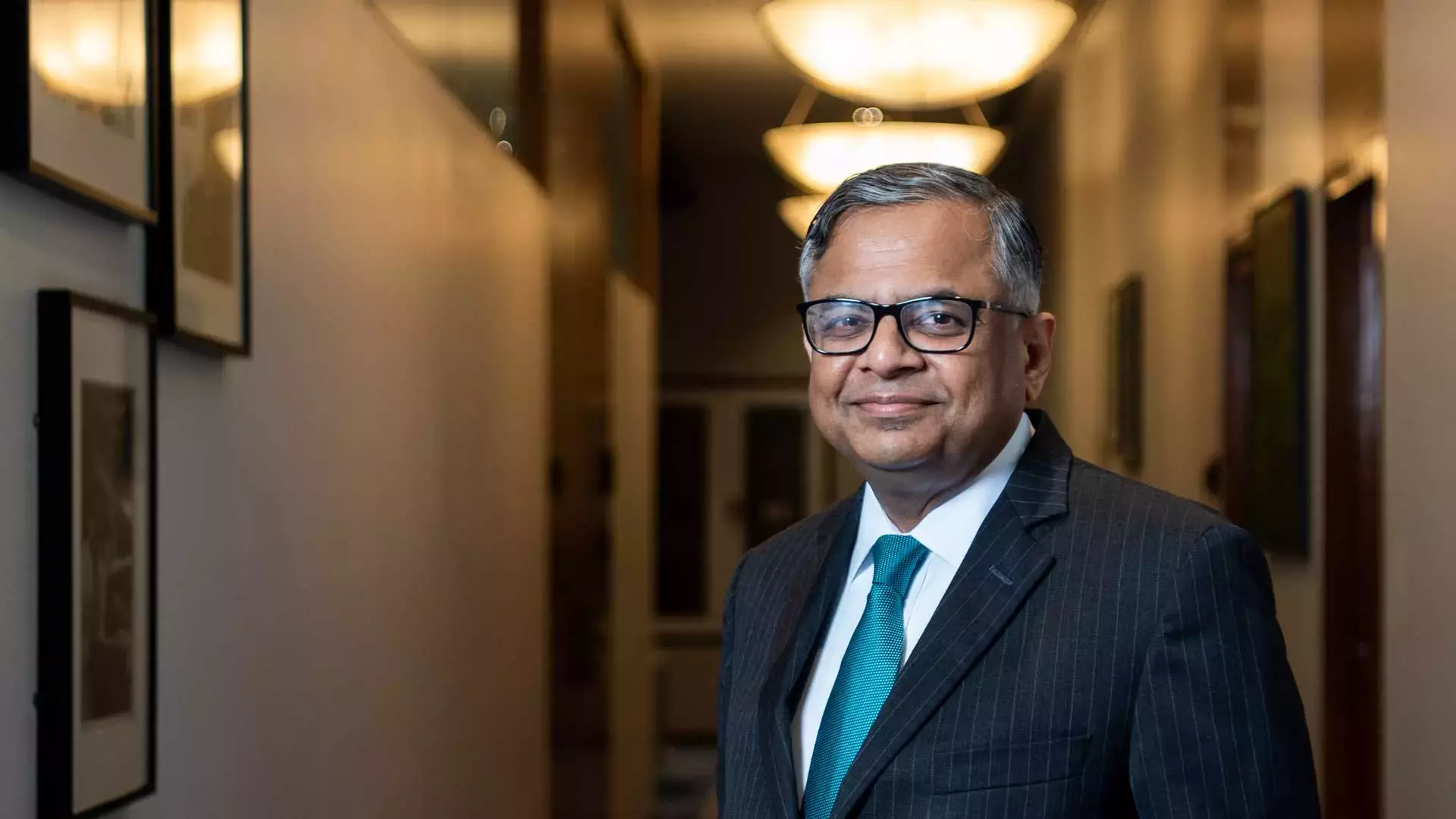
15 highlights from Chandra's 40-year Tata career: Engg fresher to group chief
From a young engineering recruit at TCS to the man at the helm of Tata Sons, N Chandrasekaran’s journey is packed with tech, scale, boardrooms and big bets

N Chandrasekaran’s Tata story began in 1987, when he joined Tata Consultancy Services (TCS). Nearly four decades later, he leaves behind one of the most remarkable leadership journeys in the Tata group — from the corridors of TCS to the top job at Tata Sons.
Also read | N Chandrasekaran steps down as Tata Sons chairman; succession process to begin
Here are 15 moments that define the Chandra era.
1. The TCS beginning
Chandrasekaran joined TCS in 1987, starting a career that would keep him within the Tata fold for nearly four decades. He joined the tech firm after completing his master’s in computer applications from REC-Trichy (now NIT).
2. A techie rises through the ranks
He worked his way up through TCS, gaining experience across technology, operations and global business before reaching the top.
3. The e-business bet
As TCS’s e-business division took shape around the turn of the millennium, Chandra helped drive an early bet on the internet economy. The business scaled to $500 million in five years.
4. Taking TCS global
The company expanded its global delivery network, with development centres across markets including Hungary, Uruguay and China.
5. CEO at 45
In 2009, at 45, Chandrasekaran became TCS CEO and managing director, succeeding S Ramadorai.
6. Global Top 10 — ahead of schedule
Under his leadership, TCS achieved its “Global Top Ten” ambition in 2009, a year earlier than planned.
7. The $10-billion milestone
TCS crossed $10 billion in annual revenue in 2012, a landmark for the Indian IT giant.
8. 'Default is Digital'
Chandra pushed TCS to anticipate the digital wave rather than merely react to it, making digital transformation a central part of its strategy.
9. Disrupting TCS from within
TCS iON, launched in 2011 for small and medium businesses, was one of the products of this disruptive thinking.
10. Automation enters the mainstream
In 2014, TCS launched ignio, a cognitive automation platform designed to detect and resolve enterprise IT problems autonomously.
11. The Tata Sons call
In January 2017, the Tata Sons board appointed Chandrasekaran as executive chairman. He formally took charge on February 21.
12. From IT to the whole Tata empire
His brief suddenly expanded from running a technology powerhouse to steering a sprawling group spanning autos, steel, power, consumer businesses, hotels and more.
13. Rebuilding Tata’s aviation play
Under his chairmanship, the group made a major push into aviation, culminating in the return of Air India to the Tata fold and the subsequent consolidation of its airline businesses.
14. Betting on the next big thing
His Tata agenda increasingly embraced electronics, semiconductors, electric vehicles, digital businesses and new-age manufacturing. The group has also stepped up its AI ambitions, with Chandra describing AI as the “next big infrastructure”.
15. Forty years, one Tata journey
From a TCS recruit in 1987 to chairman of Tata Sons, Chandrasekaran’s career is, in many ways, a story of Tata’s own transformation — from traditional industries to technology, globalisation and emerging technologies.
For Chandra, the numbers tell only part of the story. The bigger legacy is the shift in the Tata group’s ambitions: think bigger, move faster and place technology at the heart of the next chapter.