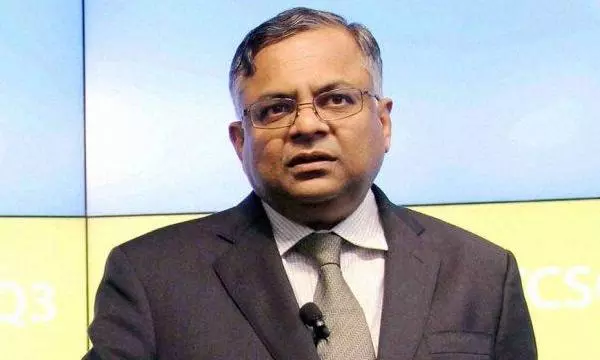
Chandrasekaran’s exit: A reset for Tata Sons or a deeper governance issue?
As Chandrasekaran prepares to step down, questions over Tata Sons’ governance, succession and its relationship with Tata Trusts are back in focus. What observers think?

How did a dissenting voice on the Tata Sons board derail the proposed extension of N Chandrasekaran’s tenure despite unanimous backing from Tata Trusts and the Nomination and Remuneration Committee? The question has come into sharper focus after Chandrasekaran announced that he will step down as chairman of Tata Sons in February 2027, bringing a fresh layer to the leadership and governance questions that have clouded the group.
Corporate observers see his departure less as a forced exit and more as a leadership reset. However, it brings into focus the underlying differences between Tata Sons management and Tata Trusts.
Also read: 15 highlights from Chandra's 40-year Tata career: Engg fresher to group chief
One dissenting vote?
Corporate governance expert Shriram Subramanian, founder and MD of proxy advisory firm InGovern, said the episode should not be reduced to one director simply voting against the chairman’s continuation.
Noel Tata, chairman of Tata Trusts, is a nominee of the Trust, which owns about 66 per cent of Tata Sons. Subramanian said the Tata Trust nominee also has veto power, making the dissent significant in the context of the Trust’s relationship with Tata Sons.
“Since the nominee of Tata Trust also has veto power, it is not just a single dissenting shareholder. It is important to know that whatever Noel Tata conveys on board discussions at Tata Sons is actually the thinking of Tata Trust,” Subramanian told The Federal.
Also read: Tata Sons Chairman N Chandrasekaran’s reappointment deferred amid disagreements: Report
He also pointed out that the “unanimous” decision referred to the recommendation of the Nomination and Remuneration Committee, which is a sub-committee of the board, and not necessarily the decision of the full board. According to Subramanian, there was “definite dissonance” within the Tata Sons board and a clear misalignment between the management of Tata Sons and Tata Trusts.
Leadership reset
Subramanian said Chandrasekaran had chosen to resign “on his own terms”, adding that the timing also needs to be viewed against the Tata group’s policy that executive directors generally serve only until the age of 65. Chandrasekaran will turn 65 in 2029.
Shailesh Haribhakti, chairman of Shailesh Haribhakti Associates and a corporate governance veteran, described the departure as an opportunity to reset the group’s leadership. “A professional person doing the best he can,” Haribhakti said of Chandrasekaran, adding that his exit would facilitate a leadership reset.
Also read: Equal number of AI agents and employees in three years at TCS, predicts N Chandrasekaran
He said the Tata group has earned its “license to operate” through its long-standing societal impact and its commitment to delivering sustainable value to stakeholders. But, he added, an institution of this scale has to evolve as circumstances, laws and regulatory frameworks change. “Governance will need to be strengthened,” Haribhakti said, predicting that the group could emerge from the current transition “future-ready”, ready to take on greater challenges and risks under a new leader.
Tata’s governance structure
The announcement has once again brought the relationship between Tata Sons and Tata Trusts into focus. Haribhakti said the group’s current structure has stood the test of more than a century, but acknowledged that there are regulatory and structural issues that need to be addressed.
“There are issues which are regulatory in nature, which will have to be addressed,” he said, while cautioning against looking at the current situation only through the lens of what could have been avoided or done differently. Instead, he said, the focus should be on the outcome and on ensuring that the group remains strong.
Meanwhile, Subramanian sees some parallels between the current situation and the circumstances surrounding Cyrus Mistry’s exit from Tata Sons. In both cases, he said, there were differences over the vision of the group between the Tata Sons chairman and the trustees of Tata Trusts.
Also read: Ahead of board meeting, Tata Trusts rejects claims over 1989 share deal
The key similarity, according to him, is the disagreement between the Trust leadership and the chairman of Tata Sons. While Mistry was removed from the board, Chandrasekaran has chosen to resign and remain in office until the end of his current term.
Will Tata group companies be affected?
The announcement led to a decline in Tata group stock prices on Wednesday, but Subramanian said minority shareholders of the listed companies need not be alarmed.
He said the listed Tata companies have their own boards and strong management teams. He therefore does not expect Chandrasekaran’s departure to affect their operations or financial performance.
The listing or non-listing of Tata Sons, he added, does not directly affect public shareholders of the listed Tata companies. Its implications are more relevant to Tata Sons’ minority shareholders, including the Shapoorji Pallonji group, which holds around 12 per cent, and the seven listed Tata group companies that collectively hold a stake in Tata Sons.
Who will succeed Chandrasekaran?
With Chandrasekaran staying on until February 2027, succession is now the immediate priority for Tata Sons. Haribhakti said the group has a wide pool of talent to choose from, both within the organisation and globally. He expects the selection process to be carried out professionally and with “the greatest diligence”.
Also read: Noel Tata, two others block Mehli Mistry's reappointment as trustee, deepening rift at Tata Trusts
The immediate test will be the succession process.
''The board needs to act “post haste” to identify a successor and ensure a smooth transition, given the importance of the Tata Sons chairman’s position to the wider group,'' said Subramanian.