How the anti-defection law lost its bite, and why Tamil Nadu will prove it
Four AIADMK MLAs have resigned, joined TVK and will contest the by-elections; the law that was meant to stop them does not

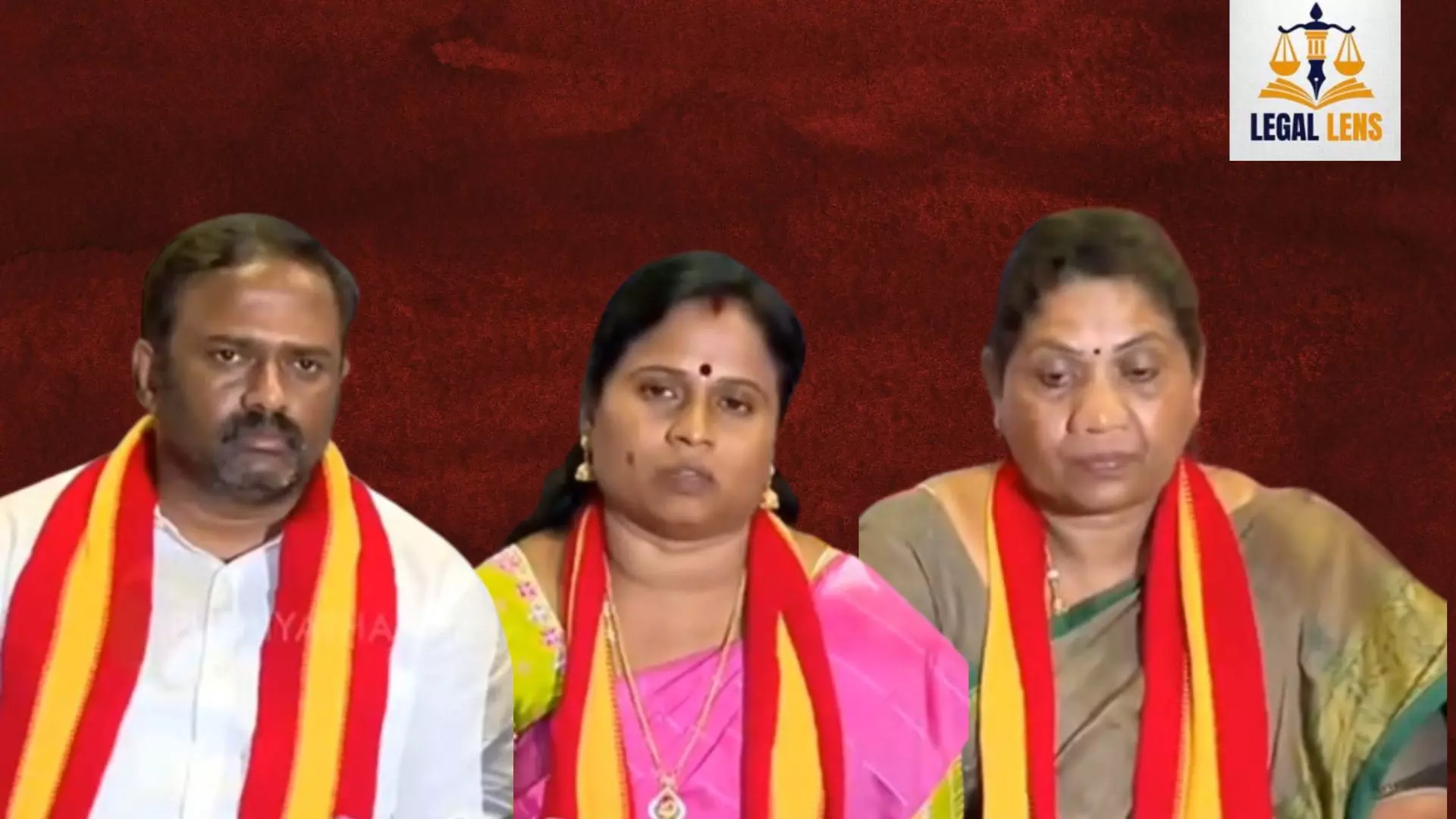
The anti-defection law was passed in 1985 to make crossing the floor expensive. It warned the defectors that they would lose their seats and their right to be ministers as penalty for their defection. Four decades on, the threat has hollowed out. The Constitution itself contains the escape route, and Tamil Nadu’s latest drama is about to show exactly how it works.
On May 25, three AIADMK legislators walked into the Tamil Nadu secretariat, handed in their resignations, and within hours joined Chief Minister C Joseph Vijay’s Tamilaga Vettri Kazhagam (TVK). Speaker JCD Prabhakar accepted the resignations the same afternoon. Maragatham Kumaravel, S Jayakumar and P Sathyabama had, 12 days earlier, defied an AIADMK whip to vote with the TVK government in the trust vote of May 13. That evening, Edappadi K Palaniswami’s AIADMK had filed disqualification petitions against 25 of its MLAs, and the three were among them. The remaining 22 pleas, the Speaker said, were pending with no deadline. The next morning, Esakki Subaya, the AIADMK MLA from Ambasamudram, became the fourth to resign, also bound for TVK.
By-elections will now be held to five seats: Madurantakam, Dharapuram, Perundurai and Ambasamudram, vacated by the AIADMK four, and Trichy East, vacated earlier by Vijay, who contested two seats and retained Perambur. TVK is expected to nominate the four defectors. The AIADMK will object that the disqualification petitions are still pending. The legal answer is uncomfortable. The Constitution lets them.
What the Supreme Court said
The leading authority is a 2019 Karnataka case. Seventeen Congress and JD(S) MLAs resigned to bring down the HD Kumaraswamy government. The Speaker rejected their resignations, disqualified them, and barred them from contesting fresh elections. The Supreme Court sustained the disqualifications but struck down the bar. Two principles emerged.
First, a resignation does not erase a disqualification petition already filed. The Speaker can rule on the petition even after the member has quit. The conduct that triggered it, voting against the party whip, happened when the legislator was still a member, and that cannot be wiped out by a later resignation.
Also read: If TVK brings AIADMK rebels into Cabinet, we'll reconsider support: CPI(M)
Second, even if disqualified, the MLA cannot be barred from contesting a fresh election. The anti-defection law fixes no period of disqualification, and the Speaker cannot invent one. The election law that lists the grounds for rejecting a nomination does not include defection. A defector disqualified today can file his nomination tomorrow.
There was a third question Speaker Prabhakar faced and chose not to use: Whether to accept the resignations at all. Under Article 190(3)(b), as rewritten in 1974, the Speaker must satisfy that a resignation is voluntary and genuine before accepting it. The proviso was inserted by the 33rd Constitutional Amendment against the backdrop of an era in which MLAs were being pressured into resigning. The most prominent example was the Navnirman agitation in Gujarat earlier in 1974, when street protests against the Chimanbhai Patel government forced mass resignations and the dissolution of the assembly. Speakers were given the power to inquire, and to refuse.
The Karnataka Speaker used that power in 2019 to reject the 17 MLAs’ resignations as not voluntary. Speaker Prabhakar took the opposite route. He accepted the first three the same afternoon. The fourth, Subaya, arrived with a typed letter, which Prabhakar declined as non-conforming. Subaya stepped out, returned with a handwritten one, and Prabhakar accepted within minutes. The proviso designed to test voluntariness was reduced to a check on stationery.
That leaves only one consequence of disqualification: The disqualified MLA cannot be made a minister. The Constitution added this bar in 2003, through the 91st Amendment. It looks stringent. It is not.
The escape clause
The Constitution says, in Article 164(1B), that the bar on ministerial office runs from the date of disqualification “till the date on which the term of his office as such member would expire or where he contests any election to the Legislative Assembly of a State before the expiry of such period, till the date on which he is declared elected, whichever is earlier”.
Translated into plain English, the moment the disqualified MLA wins a fresh election, including a by-election to the seat he vacated, the ministerial disability disappears. They can take the oath the same day.
Also read: Trust vote won, but AIADMK's fracture is the real story
This was not a judicial loophole. It is what the Constitution-makers wrote. They assumed that if voters returned the defector to the assembly, they had endorsed the act of defection. The trouble with that assumption is what happens when the ruling party itself sponsors the defection and then sponsors the by-election: With funds, with the symbol, with the state machinery. The voter is presented with a fait accompli. Karnataka in 2019 supplied the proof.
Eleven of the 17 disqualified MLAs were re-elected on BJP tickets that December; 10 were inducted into the Yediyurappa cabinet two months later. The Madhya Pradesh script ran sharper. The 22 Scindia loyalists resigned in March 2020. A dozen were sworn in as ministers that July, under Article 164(4)’s six-month grace period for non-legislators. They returned through the November 2020 by-elections.
What this means for the AIADMK four
Trace the two outcomes. If Speaker Prabhakar does not decide, no formal disqualification ever attaches. The four contest the by-elections as TVK candidates, and if they win, may be sworn in as ministers immediately. The ministerial bar never engages.
If he disqualifies them, the consequence is barely different. The order cannot un-seat them (they have already resigned), cannot bar them from contesting (Patil settled that), and attracts only the Article 164(1B) bar, which lifts the day they are declared elected. If the results come in first, the bar never engages; if the order comes first, it lasts a few weeks. The law denies them neither a return to the assembly nor ministerial office for more than a few weeks.
Why Tamil Nadu is different
What sets Tamil Nadu apart is the position of the Speaker. In Karnataka and Madhya Pradesh, the Speaker belonged to the party that was losing legislators; the Supreme Court had to force him to act. The Speaker had every reason to drag his feet on the resignations and rush the disqualification petitions, because his party stood to gain from both.
Also read: Vijay's floor test win: Is AIADMK going the Shiv Sena way?
In Tamil Nadu, the geometry is reversed. Speaker Prabhakar belongs to the TVK, the party the four resigning MLAs have joined or are joining. He himself crossed over from the AIADMK to the TVK earlier this year. He had every reason to accept the resignations quickly, which he did, and to leave the disqualification petitions pending, which he has signalled he will.
Could the AIADMK go to court to force his hand? Yes. But the courts will at most direct him to decide within a reasonable period. They cannot direct him to disqualify. And as shown above, even a disqualification order produces almost no real consequence by the time the by-elections are done.
The only check left
The anti-defection law of 1985 and the ministerial bar of 2003 were meant to make defection costly. Both end the moment the defector wins the re-election. The voters’ verdict at the by-election is the constitutional substitute for the punishment the law was meant to impose. The machinery that organised the defection is then deployed to manage that verdict.
This is why Operation Lotus worked in Karnataka and Madhya Pradesh, and why its Tamil counterpart will probably work in the short term. The only real check is voters’ memory. Karnataka voters returned the BJP to 66 seats from 104 in 2023, four years after the operation. The five by-election constituencies will be the most reliable test of a question the Constitution has half-resolved: can a legislator quit one party, join the ruling one, and ask the same voters to return them under the second banner?
The Speaker may not decide for months on the disqualification petitions. The Constitution does not offer remedies to the parent political party, apart from offering legal redress through the courts to ensure the Speaker decides them expeditiously. The 91st Amendment does not punish those he could have disqualified, once they win again. The electorate in a democracy has the last laugh. Their vote decides whether a defection was principled and legitimate.