Sabarimala case: Can Constitution override religious customs? 9 judges to decide
A nine-judge bench convenes to resolve India’s most contentious clash between faith and fundamental rights; the stakes extend far beyond a single shrine in Kerala

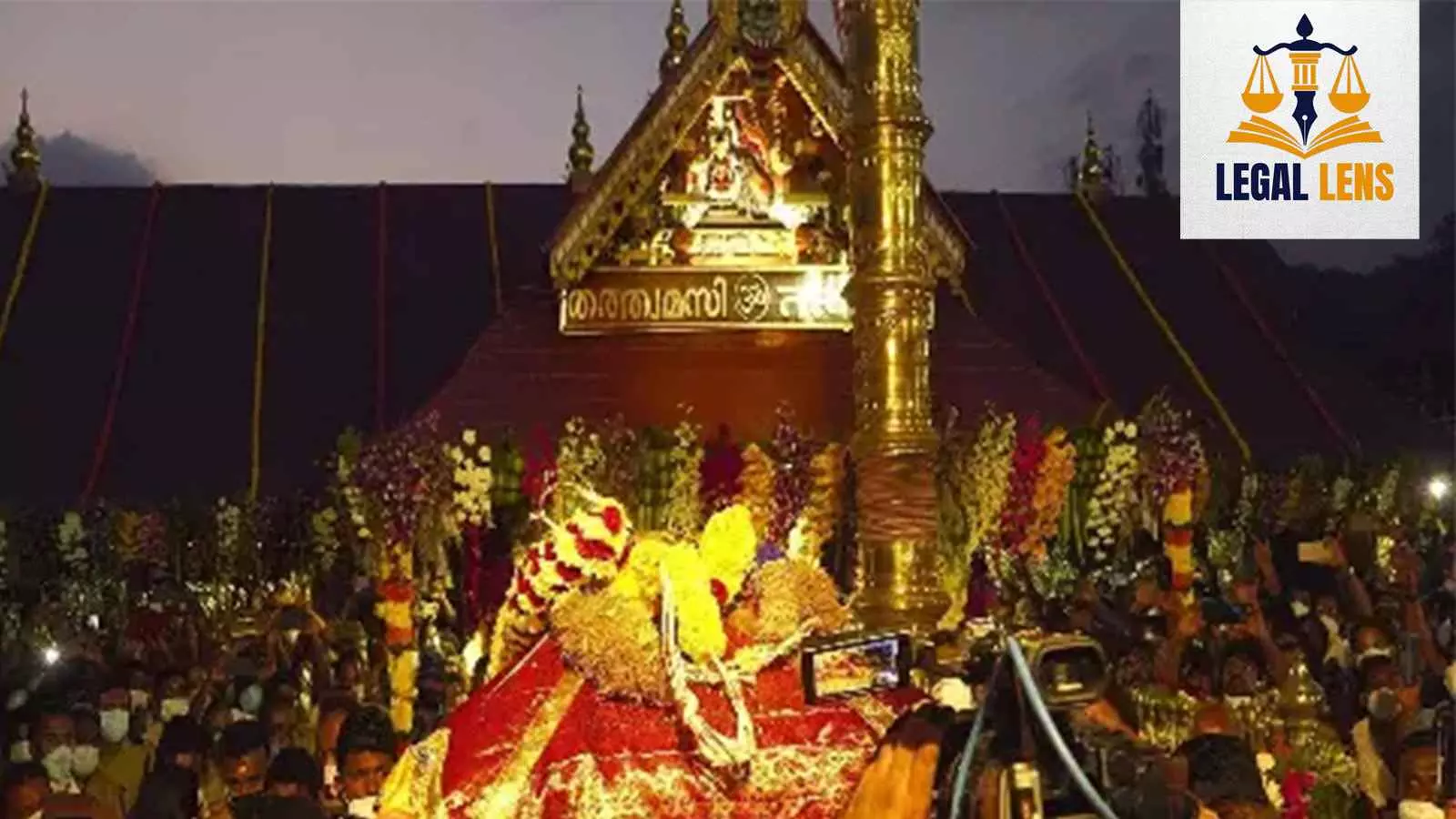
On April 7, 2026, a nine-judge Constitution Bench of the Supreme Court convenes to hear arguments in one of the most consequential cases in India’s post-independence legal history. It is the second such bench to sit this year. The first, on the definition of ‘industry’ under the Industrial Disputes Act, reserved judgement on March 19. The Sabarimala bench takes up a question of far greater social reach. Eight years after a five-judge bench divided 4:1 to permit women of all ages to enter the Sabarimala temple, the matter returns to court. The stakes extend far beyond a single shrine in Kerala.
The bench and its composition
Chief Justice of India Surya Kant will preside over a bench comprising Justices BV Nagarathna, MM Sundresh, Ahsanuddin Amanullah, Aravind Kumar, AG Masih, Prasanna B Varale, R Mahadevan, and Joymalya Bagchi. The composition, formally notified on April 4, reflects deliberate representational balance. Justice Nagarathna is the sole woman. Justice Masih brings a minority-community perspective. Justice Varale, an SC community member from Maharashtra, adds yet another dimension. The bench draws from different regions and legal traditions of the country.
Also read | Women’s entry into Sabarimala moves to centre stage ahead of Kerala Assembly polls
Notably, CJI Surya Kant himself was a member of the earlier nine-judge bench in February 2020 that upheld the reference's maintainability. He now leads the bench that must decide the substance.
The 2018 judgement: What was decided?
On September 28, 2018, a Constitution Bench led by then Chief Justice Dipak Misra struck down the practice barring women aged 10 to 50 from entering the Sabarimala temple in Kerala. The majority held, 4:1, that devotees of Lord Ayyappa did not constitute a separate religious denomination under Article 26. The exclusion violated Article 25, which guarantees every individual the right to freely profess and practice religion. Rule 3(b) of the Kerala Hindu Places of Public Worship (Authorisation of Entry) Rules, 1965, which permitted the exclusion, was declared unconstitutional.
Justice Indu Malhotra, the sole dissenter and the bench’s only woman member, held that the court should not interfere in matters of religious tradition held sacred by a community’s believers. Her dissent anticipated arguments that are now central to the review.
The judgement triggered immediate and widespread protest across Kerala. On January 2, 2019, two women, Bindu Ammini and Kanaka Durga, entered the shrine, and are intervenors in the present review proceedings. The entry provoked intense social backlash. More than 50 review petitions followed, filed by parties ranging from Kantaru Rajeevaru, the temple's chief priest, to the Nair Service Society and the National Ayyappa Devotees (Women's) Association.
A review that became a reference
On November 14, 2019, a five-judge review bench led by then Chief Justice Ranjan Gogoi took an unusual course. By a 3:2 majority, the bench declined to decide the review on its merits. Instead, it referred overarching constitutional questions to a larger bench. The majority reasoned that the case raised questions common to pending matters in other faiths: Muslim women’s access to mosques and dargahs, Parsi women’s right to enter fire temples after marrying outside the community, and the practice of female genital mutilation (FGM) among the Dawoodi Bohra community.
Justices RF Nariman and DY Chandrachud dissented sharply. They held that the reference exceeded the permissible scope of a review petition and would have dismissed the review outright. Their dissent underscored a fundamental tension: was the Gogoi bench engaged in judicious expansion or strategic deferral?
On February 10, 2020, a nine-judge bench led by then Chief Justice SA Bobde upheld the reference’s maintainability. It then re-framed the questions into seven precise issues. The Gogoi bench’s original formulations had drawn sharp objection from senior counsel on the ground that they were too vague to admit of adjudication without specific facts. The Bobde bench settled them afresh.
Seven questions, multiple faiths
The seven questions framed by the Bobde bench go to the core of India’s constitutional architecture on religion. They ask: what is the scope of Article 25? How do individual rights under Article 25 interact with the collective rights of religious denominations under Article 26? Are Article 26 rights subject to Part III guarantees beyond the express limitations of public order, morality, and health? What does “sections of Hindus” in Article 25(2)(b) mean? How is constitutional morality to be distinguished from social or community morality?
Also read | CPI(M) shifts stance on Sabarimala women's entry issue as Ayyappa Sangamam nears
The seventh question is procedurally pointed: can a person with no connection to a religious denomination challenge that denomination’s practices through a PIL? The original 2006 petition was filed by the Indian Young Lawyers Association, whose members are not Ayyappa devotees. The answer will shape PIL standing in religious freedom litigation.
Tagged to the review are 66 matters. These include: petitions challenging the restriction on Muslim women entering mosques and dargahs; the rights of Parsi women who marry outside their community to access fire temples; the validity of excommunication among Dawoodi Bohras; and a 2017 petition seeking a ban on FGM. In February 2023, a Constitution Bench separately referred the Dawoodi Bohra excommunication question to this nine-judge bench.
The positions of the parties
Solicitor General Tushar Mehta has informed the court that the Union government supports the review petitions. The Centre thus urges the court to revisit the 2018 ruling.
The Travancore Devaswom Board, which administers the Sabarimala temple, has filed written submissions urging the court to adopt a “community-centric” understanding of religion under Article 25. It argues that the essential religious practices (ERP) doctrine, under which courts assess whether a practice is integral to a faith, represents impermissible judicial overreach. The Board contends that religious beliefs must be assessed through the eyes of the community that holds them, not by externally imposed judicial standards of rationality.
The All India Muslim Personal Law Board has intervened to argue that judicial scrutiny of religious practice amounts to encroachment on Articles 25 and 26. The Akhil Bharatiya Sant Samiti, representing 127 sects of Sanatan Dharma, has sought to intervene on the same basis. Courts, it argues, are not competent to adjudicate matters of faith.
On the other side, the original petitioners, now respondents, oppose the review and seek to uphold the 2018 judgement. Bindu Ammini and Kanaka Durga are represented by Senior Advocate Indira Jaising. Senior Advocate K Parameshwar and Advocate Shivam Singh serve as court-appointed amicus curiae.
What hangs in the balance?
The nine judges are being asked to do something constitutionally ambitious: lay down a framework governing the relationship between individual rights and denominational autonomy across all faiths. Their ruling will affect not just the Sabarimala shrine, but the right of Muslim women to pray in mosques, the position of Parsi women in inter-faith marriages, and the legality of FGM among Dawoodi Bohras.
Also read | Sabarimala Temple: How millions of women joined hands for gender equality
Two competing visions of constitutional law are in contest. One holds that Part III’s guarantees of equality, dignity and non-discrimination must prevail over religious custom whenever they are irreconcilable. The other holds that religious communities are constitutionally entitled to govern their internal affairs on their own terms. Under this second view, judges overstep when they scrutinise practices whose foundation is faith rather than civic conduct.
The hearing schedule is rigorous. Parties supporting the review argue from April 7 to 9. Parties opposing the review argue from April 14 to 16. Rejoinder submissions follow on April 21, with the amicus concluding on April 22. Whether this timetable can contain arguments of this breadth is itself an open question.
When CJI Surya Kant opens the proceedings on April 7, the Supreme Court will be confronting a question it has deferred for eight years: who decides what a religion requires of its adherents, the community that practices it or the Constitution that governs them all?