



Modi wants ‘Team India’ to be energy independent, but how are the states placed?
PM urges states to encourage alternative sources and schemes such as GOBARdhan but not all of them are making similar progresses in green energy

The conflict in West Asia is showing no signs of abatement, and adverse repercussions are being increasingly felt in the energy sector across nations, with India being no exception.
On Friday (March 27), Prime Minister Narendra Modi called a meeting with chief ministers of various states to review the situation and urged them to go into alternative energy sources more, including biofuels, solar energy, electric, piped natural gas (PNG), and encourage initiatives such as GOBARdhan (compressed biogas).
Also read: Strait of Hormuz crisis: Why Iran’s toll plan is big global concern
The PM appealed to the states to work as “Team India” to deal with the situation. The goal is to reduce dependence on imported fuel and achieve self-reliance in the energy sector.
GOBARdhan scheme under focus
Following Modi’s talks, the lesser-known GOBARdhan (Galvanising Organic Bio-Agro Resources Dhan) initiative has come into focus. It is a flagship “Waste to Wealth” programme which was announced in February 2018 to manage and convert cattle dung and solid waste in farms into compost, fertiliser, biogas, and bio-compressed natural gas (Bio-CNG). It was launched in April that year by the Department of Water and sanitation under the Ministry of Jal Shakti.
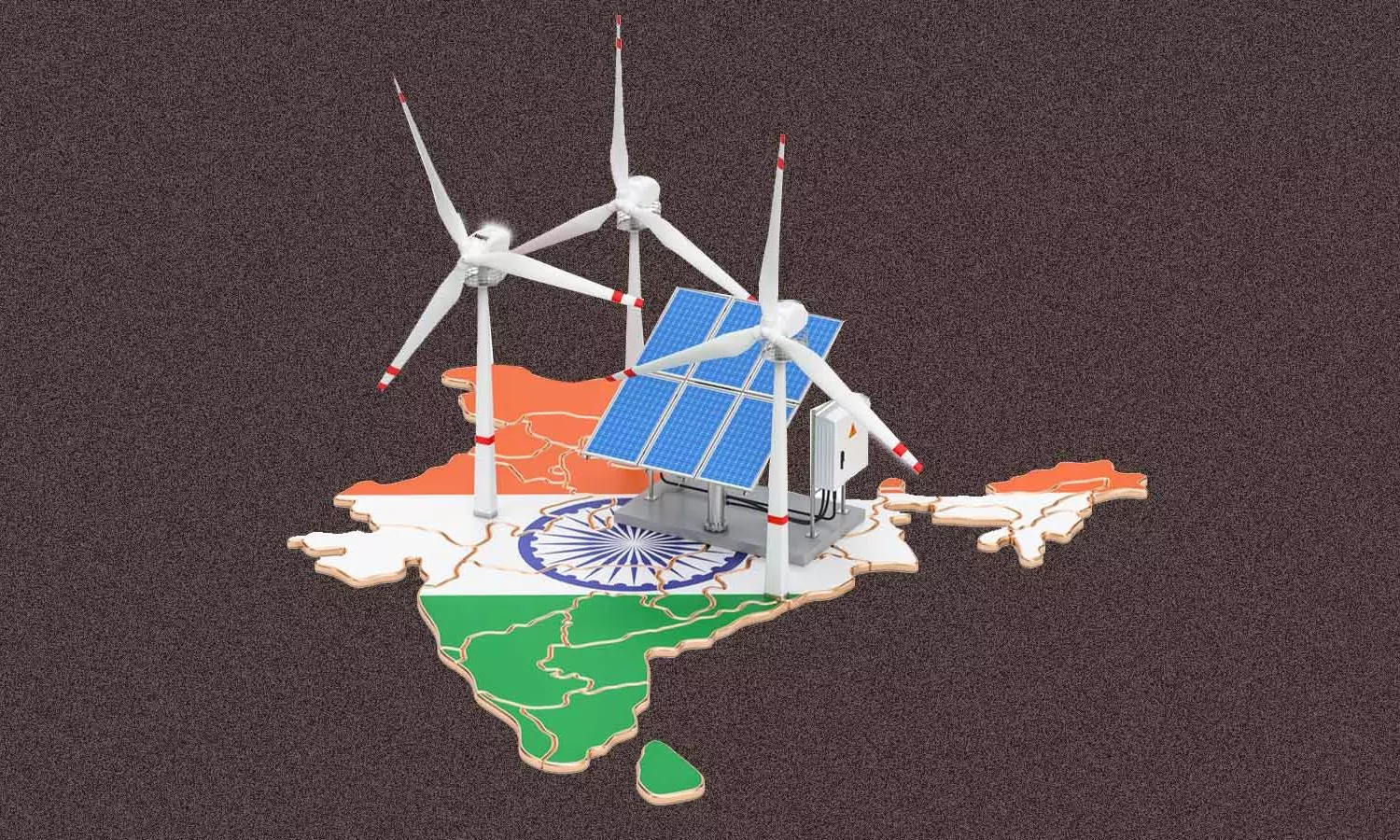
A map on how Indian states are doing in terms of transitioning to green energy (AI generated)
The main goal of the initiative is, besides supporting villages in managing cattle and agricultural waste, to encourage treating waste as a resource for rural cleanliness, to promote a clean environment by capturing methane and curbing vector-borne diseases.
The GOBARdhan Bio-CNG Plant project in Indore is a glaring example of converting organic waste into biogas and other valuable by-products. The government is also giving financial incentives (up to Rs 50 lakh per district) to set up community cluster-based biogas plants.
A look at GOBARdhan implementation:
According to the government statistics, as of January 27, 2026, the states reported a total of 189 functional CBG projects and 979 community or cluster biogas plants, respectively.
Also read: Global supply shock from US-Iran conflict may push beer prices up in India
Uttar Pradesh is leading in the installation of CBG, while Chhattisgarh has emerged as a national leader in community biogas plants. Additionally, Madhya Pradesh, Gujarat, Maharashtra, Karnataka, Haryana, and Tamil Nadu are also significant contributors to this list.
Alternative fuel resources
India has also been focusing on several other alternative fuel resources in the days before the latest war started. One of the major pillars of the alternative energy plan is biofuels.
Ethanol
The country has significantly raised ethanol blending in petrol, reaching nearly 20 per cent by early 2025. Pure ethanol (E100) is also being used at selected retail locations.
Efforts are also ongoing to blend biodiesel with diesel, with a target of five per cent blending in another four years.
Under the Sustainable Alternative Towards Affordable Transportation (SATAT) initiative, India is promoting CBG (compressed biogas) as an automotive fuel.
Green hydrogen
The Centre is also implementing the National Green Hydrogen Mission to make India a global hub of production, usage and export of Green Hydrogen and its derivatives. The target is to produce 5MMT (million metric tonnes) per annum by 2030.
Electricity
Electricity is another area in which the government has made a major emphasis. It has encouraged the purchase of electric vehicles of various forms (two-wheelers, three-wheelers, four-wheelers and also multi-wheelers) under various initiatives such as FAME-II, EMPS and PM E-DRIVE. Focuses are also being put on expanding charging infrastructure so that the transport sector is made fossil fuels-free.
Natural gas, methanol, solar, wind and even nuclear
Other sources of alternative energy that can be utilised are natural gas, methanol, renewable electricity through solar and wind power, and even nuclear energy over the long term.
How the states are doing
While there is a plethora of plans to promote and put to use alternative energy, how the states are actually placed in adopting the alternative energy sources, which puts them in a position to tackle a threat to the supply of energy imports, something which is currently being witnessed.
Also read: India's oil reserves: How long can the country sustain a supply shock?
Some states are leading players across various green energy fields, while some are sector-specific leaders. There are others who are emerging in these areas, besides some which are lagging behind.
Leading players
Being home to a robust sugar industry, Maharashtra is a leader in ethanol blending. It also pursues a strong EV policy and focuses on upgrading the charging infrastructure quickly. The state also grows CBG under the SATAT scheme, besides expanding city gas distribution, which facilitates the supply of PNG, something the Centre is strongly prioritising.
Gujarat is another state which is fast advancing in alternative energy. While it is emerging as a major hub in green hydrogen (its Kutch project has propelled it forward), it has also been transforming into a premier industrial-scale biofuel and refinery hub, thanks to huge investments in green energy, waste-to-energy plans, and advanced refining technologies. It is also fast growing into an EV-manufacturing hub and effectively implementing the GOBARdhan plan.
Karnataka has already earned a name for itself as India’s EV capital for its Bengaluru-based EV startup ecosystem. One of the positive outcomes of its EV initiatives and suitable policies is the active integration of solar energy with green mobility to set up a sustainable transportation ecosystem. It is also advancing pilot projects in green hydrogen.
Also read: Over 2 million tonne of Indian LPG, LNG cargo stranded in Persian Gulf
Tamil Nadu has also pursued strong green energy goals, with a strong EV manufacturing base, has potential in wind energy and green hydrogen, besides making quick strides in Bio-CNG and industrial decarbonisation.
Sector-specific leaders
Uttar Pradesh is the country’s leading ethanol producer, which is also making great strides forward in the implementation of the GOBARdhan scheme. It is also adopting EV policies, but the progress has remained uneven.
Punjab is focusing on biofuels from crop wastes and using CBG plants to tackle the issue of stubble burning. The EV ecosystem there has remained limited, however.
Haryana is another state which is showing significant progress in India’s green energy transition. It is home to Asia’s first 2G ethanol plant in Panipat, which transforms agricultural waste into fuel. Its EV growth receives a major boost from the National Capital Region, which itself is emerging as a premier EV hub. Haryana is also seeing a rapid growth of its gas infrastructure, transitioning from LPG (Liquefied Petroleum Gas) to PNG and CNG.
Andhra Pradesh is emerging as a green hydrogen hub and is eyeing massive integrated solar and wind-backed clean fuel projects in another decade.
Emerging players
Rajasthan has the potential to emerge as a major leader in hydrogen, while Madhya Pradesh can scale the heights in biofuels and ethanol adoption. Telangana can also make significant progress in EVs and in green hydrogen, similar to Kerala, which has already made a mark in personal EV adoption and is moving towards transforming its public transportation.
Also read: Iran war tests India's macroeconomic resilience, government data shows
Assam is also rapidly putting forward its green energy agenda by adopting a clean energy policy. It has also made a mark in 2G green energy,
States such as Bihar, Jharkhand, West Bengal and many of the northeastern states need to improve their industrial base and alternative energy infrastructure to catch up with the leading ones. Chhattisgarh is eyeing a transition to clean energy but is still dependent on fossil fuels. However, it has made significant progress in the implementation of the GOBARdhan programme. Odisha, which otherwise has to do a lot of work, is making advancements in terms of green hydrogen.