BJP expands UP panel, brings back old guard as Yogi eyes third term in 2027
By bringing back sidelined veterans Murli Manohar Joshi and Vinay Katiyar, the rejig seeks to bridge factional rifts and address growing discontent among the party’s core supporters

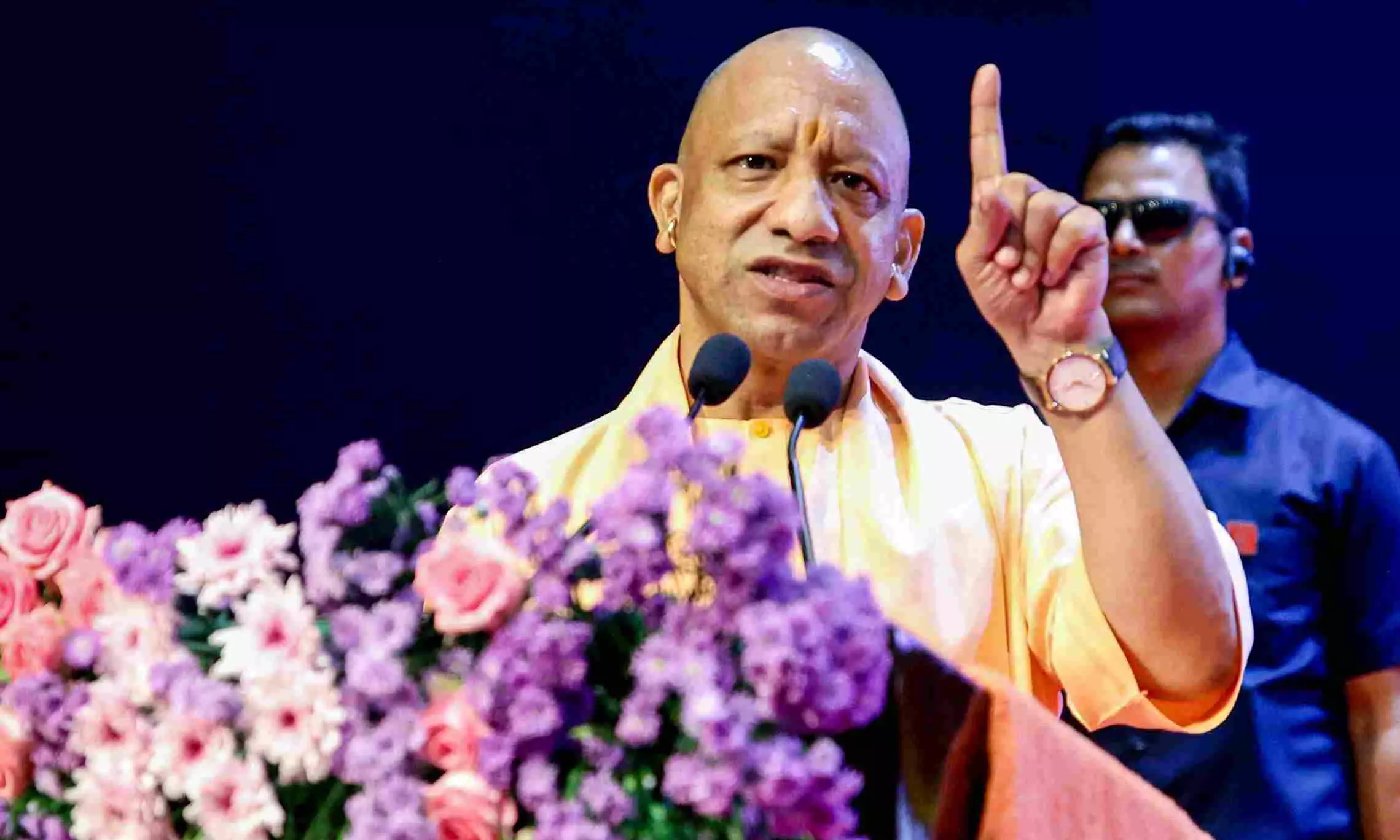
Batenge nahi, toh katenge nahi (If we’re undivided, we’ll not fall apart) was the clarion call given by Chief Minister Yogi Adityanath during his address to the recently constituted state executive committee of the party, which was inaugurated by Union Home Minister Amit Shah in Lucknow on Friday.
Shah, too, exhorted party workers to toss their resentments into the Gomti River. It was an unmistakable message to bury internal differences and project unity after a string of electoral setbacks in the 2024 Lok Sabha elections and the recent MLC polls.
Big panel, bigger political message
The political messaging was as symbolic as the unusually expansive 712-member state working committee constituted earlier this week. Besides its sheer size, the inclusion of party stalwarts such as Murli Manohar Joshi and Vinay Katiyar, long relegated to the political margins, has also sparked speculation that all may not be well in the saffron camp.
Also read | Will Nishads steer Akhilesh Yadav’s PDA boat to power in 2027 UP elections?
Political analysts and observers note that a string of electoral setbacks, friction within district units and growing disillusionment among its core voter base have made the party jittery about securing a third term. In that light, they see the BJP’s organisational restructuring as an attempt to reconcile competing political ambitions and assuage disgruntled sections of its core support base.
“CM Yogi wants to leave no stone unturned to secure a third term. More than for the party, the elections will be a referendum on his political ambitions, as he sees himself at the helm of national politics. Presumably, he wants everyone on his side. Even Amit Shah,” veteran political commentator Ratan Mani Lal told The Federal.
Resentment within the party had been simmering since early 2025 over organisational control, ministerial representation and leadership preferences. Sharp factional rivalries over the election of district unit leaders, coupled with resentment among upper-caste leaders over Pankaj Chaudhary’s appointment as state president, have laid bare the emerging fault lines within the party cadre.
Party workers say the idea of constituting a massive state executive committee was, therefore, a political imperative to keep the party’s house in order ahead of a crucial Assembly election.
Numbers to mask internal discord
While the previous committee, constituted ahead of the 2022 Assembly elections, had 445 members, the party has added 267 members this time, taking the total to 712.
The committee comprises 548 regular members, 30 permanent invitees and 134 special invitees. The new committee not only features Prime Minister Narendra Modi, Defence Minister Rajnath Singh, CM Yogi Adityanath and both deputy chief ministers as permanent invitees but also brings back sidelined veterans such as Murli Manohar Joshi and Vinay Katiyar.
Other prominent names include Union ministers Jitin Prasada, Hardeep Puri and BL Verma, as well as Smriti Irani, Rekha Verma, Harish Dwivedi, Laxmikant Bajpai, Mukhtar Abbas Naqvi and Sadhvi Niranjan Jyoti.
“The entire exercise is nothing but an attempt to build a political narrative that all is well within the party and that it stands united. This political messaging is particularly important for the BJP at a time when it fears that organisational disunity could cost it the Assembly elections,” said political analyst Sashi Kant Pandey.
BJP anxious over Purvanchal losses
Factional rivalries and competing ambitions, however, are only one part of the larger political story behind the rejig. The BJP has become increasingly apprehensive about its eroding foothold in Purvanchal, which has long been its stronghold.
Political experts say the unease stems from a series of setbacks in recent years, with the Samajwadi Party steadily expanding its footprint in the region at the saffron party’s expense.
“The MLC elections also showed that Akhilesh Yadav’s PDA strategy is gaining traction. A region-wise analysis of the results makes it pretty clear that the SP almost swept the region. The BJP could have lost Gorakhpur, too, had it been a bipolar contest without an independent candidate in the fray,” Pandey said.
As a result, the party has given Purvanchal the highest representation, with the Gorakhpur region accounting for 120 members. It is followed by Kashi (Varanasi) with 108 members. Awadh has 104, Kanpur 79, West UP 70 and Braj 67.
Bringing the old guards back
More importantly, the party has been compelled to re-engage old stalwarts and political heavyweights from the region, including Murli Manohar Joshi and Vinay Katiyar, in an effort to reclaim its political legitimacy there.
Also read | 'BJP keeping its options open, not committing Yogi for another term'
Joshi’s inclusion, in particular, is striking, especially given that he has been unapologetically critical of PM Modi and his policies. He was also a dissenting voice who questioned the alleged police brutality during the recent Gen-Z protest.
The party, however, appears willing to bury past hatchets and invoke the political legacy of the 92-year-old Joshi, hoping to reclaim some of the organisational capital and ideological heft he still commands among the BJP cadre and its core voter base.
“Joshi has been a towering leader of the region. In Varanasi and adjoining areas, he was a force to reckon with. Despite his old age, he still commands considerable influence,” Lal said.
Caste calculations behind the rejig
Another factor behind the rejig is the ruling party’s growing anxiety over the erosion of support among its core voter base: Brahmins and Baniyas.
The elevation of Kurmi leader Pankaj Chaudhary as state president, alongside a Thakur chief minister, had already fuelled resentment among Brahmins over their diminishing representation in the party. The Ram Mandir donation theft controversy, experts say, has further deepened their disillusionment.
Seen in this context, Joshi’s inclusion offers the BJP an opportunity to leverage the considerable symbolic capital of a veteran Brahmin statesman and translate it into political dividends.
Likewise, Vinay Katiyar, co-founder of the Bajrang Dal and one of the few surviving prominent faces of the Ram Mandir movement, has been given a place on the committee. Interestingly, Katiyar was not invited to the Ram Mandir consecration ceremony in 2024. He has also been openly critical of the alleged embezzlement of donations and has demanded accountability.
“His induction, it appears, is aimed at reclaiming the movement’s original political legacy and shoring up the BJP’s diminishing claim to that legacy amid the donation theft scandal,” Lal added.
The Vaishya-Baniya calculation is equally telling, as the ruling BJP has been witnessing growing resentment among traders. Sections of the trading community have complained of administrative and tax-related harassment. In Gorakhpur, traders have also taken to the streets against the ruling party’s development projects, which they say have disrupted freight movement and affected their businesses.
SP taps into trader discontent
The SP, meanwhile, is actively capitalising on traders’ grievances. Its PDA traders’ conference in Varanasi on Friday drew more than 2,000 traders from four adjoining districts.
“There’s an atmosphere of dissent among the BJP’s core voter base, which has traditionally seen the party as representing Brahmins, Thakurs and Baniyas. Akhilesh Yadav is smartly tapping into traders’ resentment by projecting the narrative that outsiders are taking over their businesses,” said Gorakhpur-based political analyst Harsh Sinha.
Also read | What Mayawati’s succession drama means for BSP’s future and Dalit politics
Against this backdrop, Radha Mohan Das Agrawal, a four-time Gorakhpur MLA, former national general secretary of the party and influential Vaishya leader in Purvanchal, offers the saffron party a familiar interlocutor with a constituency it has traditionally counted among its most reliable supporters.
The experts argue that the 712-member committee is an attempt to bring together the different strands of the party’s electoral machinery at a time when its once-formidable coalition needs reinforcement amid mounting organisational and electoral challenges.
“Whether this expansive exercise can translate into electoral gains remains to be seen,” Lal concluded.