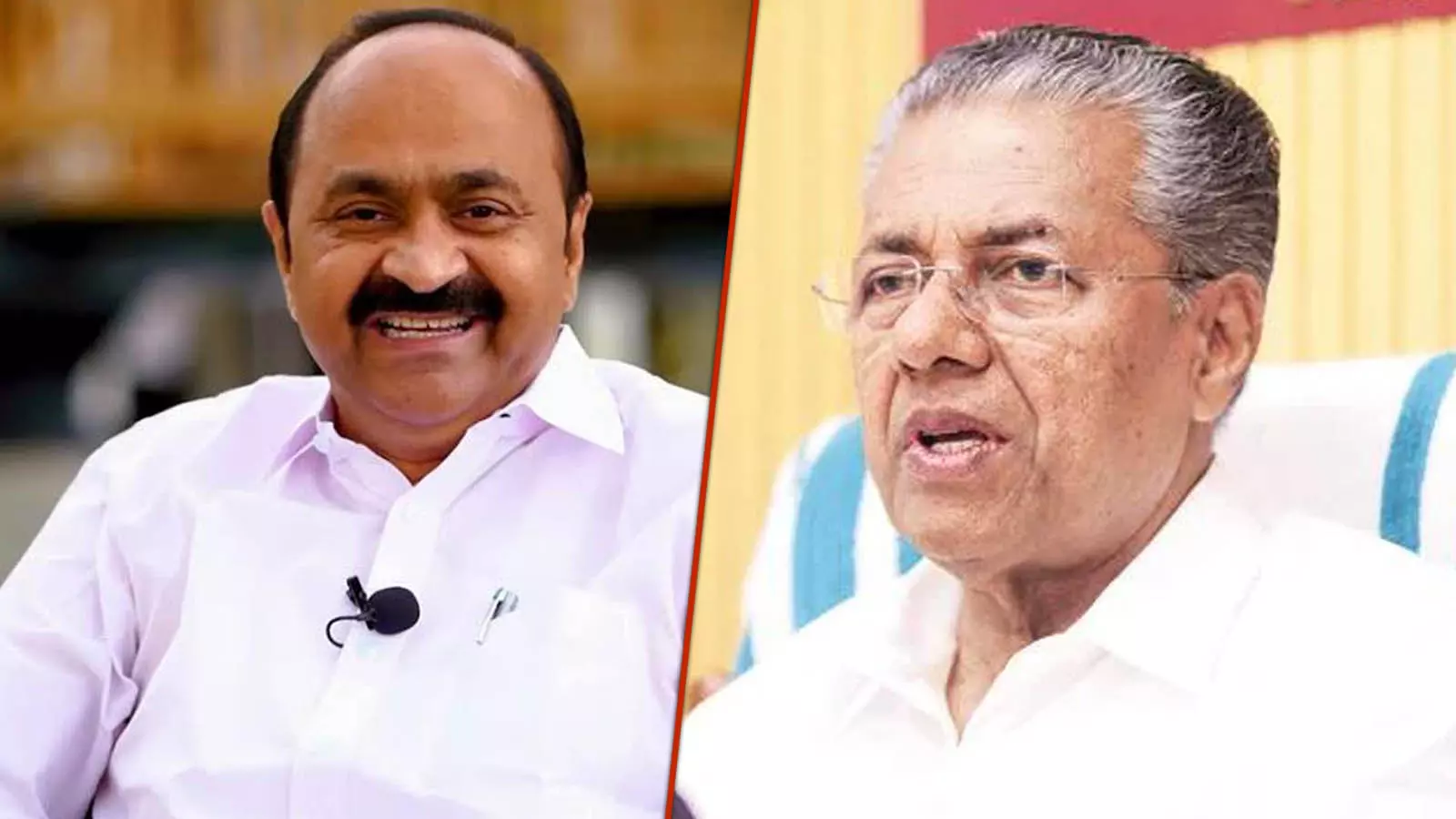
In Kerala’s 2026 Assembly election, both the Left Democratic Front and the United Democratic Front are pitching a vision of a “new Kerala”.
Yet, beneath the shared slogan lies a clear ideological and policy divergence. The contest is shaping up as a clash between two narratives. One rooted in continuity and state-led welfare, the other framed as course correction and systemic reset. It is, in many ways, a battle of puthuyugam versus navayugam.
The LDF’s manifesto leans heavily on the idea of navayugam, a new era built on the foundations laid over the past decade. At its core is the promise of universal healthcare, projected as the next logical step in Kerala’s welfare trajectory. The front argues that it has already strengthened public hospitals, expanded infrastructure, and improved key health indicators. What it now seeks is to formalise these gains into a system where quality healthcare becomes a guaranteed right.
This approach reflects the LDF’s broader philosophy. Development is framed as state-driven, welfare-centric and incremental. The manifesto repeatedly invokes continuity. It presents the last ten years as a period of transformation and asks voters to extend that mandate to complete the project of a “New Kerala.”
Healthcare, education, social security and infrastructure are positioned as interconnected pillars of this model.
A new beginning
The UDF, on the other hand, articulates its vision as puthuyugam, a new beginning. While it too promises a “new Kerala,” its emphasis is less on continuity and more on change. The UDF manifesto seeks to tap into concerns around governance, fiscal stress and delivery gaps. It frames its agenda as a reset that will correct what it sees as structural inefficiencies under the LDF.
In healthcare, this difference becomes evident. While the LDF speaks of expanding public systems towards universal coverage, the UDF places greater emphasis on efficiency, accessibility and partnerships.
It is likely to push for a model that blends public provision with private sector participation, focussing on reducing waiting times, improving service quality and ensuring accountability. The contrast is not about whether healthcare should be accessible, but about how that access is delivered.
Differences in the manifestoes
The divergence extends to economic policy. The LDF manifesto projects Kerala as a state transitioning into a knowledge economy, with heavy public investment in infrastructure, education and social sectors. It highlights large scale projects, industrial corridors and digital connectivity as drivers of growth, while maintaining a strong welfare net.
The UDF, while not abandoning welfare, tends to foreground fiscal prudence and investment climate. Its pitch is often centred on improving ease of doing business, attracting private investment and reducing what it may describe as bureaucratic hurdles. Where the LDF sees the state as the primary engine of development, the UDF positions it more as a facilitator.
This difference also shapes their respective employment narratives. The LDF ties job creation to long term structural changes, particularly in knowledge sectors, public investment and industrial infrastructure. It links employment to its broader development model, arguing that improved education and infrastructure will naturally generate opportunities.
The UDF, in contrast, is likely to stress immediate job creation through private sector growth, entrepreneurship and policy reforms. Its critique often hinges on the argument that government-led growth alone cannot absorb the state’s educated workforce. This creates a sharper focus on market-driven employment generation.
Social welfare
On social welfare, both fronts promise continuity but with different tones. The LDF foregrounds its record, pointing to expanded pensions, housing schemes and targeted interventions for marginalised communities. It frames welfare as a right and a defining feature of governance.
The UDF does not fundamentally challenge welfare but attempts to reframe it around delivery and sustainability. It raises questions about leakages, efficiency and fiscal viability, suggesting that reforms are needed to ensure long-term stability. This creates a subtle but important distinction between expansion and optimisation.
The LDF manifesto also places a strong emphasis on women’s employment, setting a target of ensuring jobs for 50 percent of women. The promise is framed as both an economic and social intervention, aimed at increasing workforce participation while strengthening gender equity.
It builds on recent gains in female labour participation in Kerala and proposes to expand opportunities across formal sectors, skill development programmes and local enterprises. The commitment signals an attempt to move beyond welfare support to sustained economic inclusion of women in the state’s growth trajectory
Infrastructure, envt
Infrastructure is another area where both converge in ambition but differ in narrative. The LDF highlights ongoing mega projects and public investment as evidence of progress. It argues that these initiatives are already reshaping the state’s economic landscape.
The UDF, while supporting infrastructure development, may question the financing models and debt implications. Its approach tends to emphasise transparency, prioritisation and financial discipline, positioning itself as a corrective force.
Environmental concerns and climate resilience find space in both manifestos, reflecting Kerala’s vulnerability to natural disasters. The LDF integrates sustainability into its development model, linking it with local governance and long term planning. The UDF is likely to approach the issue through regulatory frameworks and policy interventions, again reflecting its broader governance style.
Real difference
At a political level, the messaging is starkly different. The LDF campaign is anchored in performance and continuity. It argues that it has delivered on its promises and deserves another term to complete its vision of navayugam. The emphasis is on trust built through implementation.
The UDF campaign, framed as puthuyugam, seeks to channel dissatisfaction and the desire for change. It positions itself as an alternative that can reset governance, improve efficiency and bring a different administrative culture.
Yet, despite these contrasts, there is a notable convergence. Both fronts recognise that the electoral battleground in Kerala is no longer about whether to pursue welfare or development, but about how to balance the two.
Both promise a “new Kerala,” signalling that the discourse has shifted from ideological extremes to competing models within a shared framework of human development.
The real difference lies in emphasis. The LDF’s navayugam is about deepening a state-led model that blends welfare with long-term structural investment. The UDF’s puthuyugam is about recalibrating that model, making it more efficient, market-responsive and fiscally cautious.
As the campaign unfolds, voters are being asked to choose not between two entirely different visions, but between two pathways to the same destination.
A “new Kerala” is no longer a contested idea. The contest is over who is better equipped to build it, and on what terms.