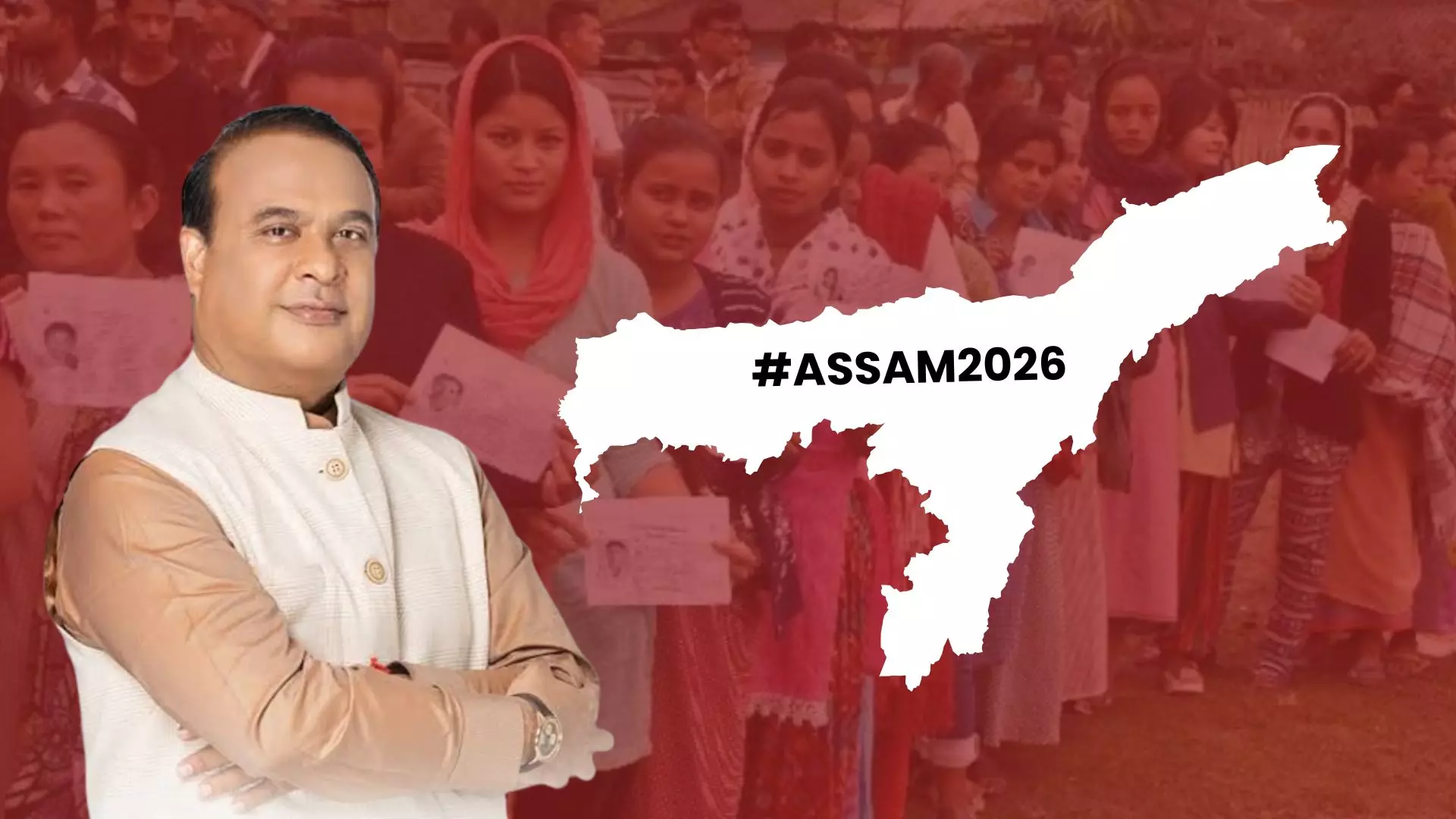
Since taking charge as Chief Minister in 2021, Himanta Biswa Sarma has projected himself as a high-energy, interventionist administrator.
How Assam CM Himanta Biswa Sarma became the strategist who rewired the state’s politics
Sarma's formal political breakthrough came in 2001, when he entered the Assam Assembly as a Congress MLA from Jalukbari. Over the next decade, he became one of the most powerful ministers in the state. After his move to the BJP in 2015, he became instrumental in helping transform the party from an emerging force into Assam’s ruling power.

In Assam’s political landscape, few leaders have altered the course of power as sharply as Himanta Biswa Sarma. Over two decades, he has moved from student politics and Congress backrooms to becoming the state’s most dominant political face — a leader admired for administrative drive and political sharpness, but equally criticised for deepening fault lines.
Having served as Assam’s 15th Chief Minister since May 10, 2021, Sarma’s rise has been anything but ordinary. A lawyer by training, a five-time MLA from Jalukbari, and one of the Bharatiya Janata Party’s (BJP’s) key architects in the Northeast, he has built his career through relentless political calculation, organisational skill and a reputation for getting things done.
On Monday, as the counting of votes for the 2026 assembly elections in Assam showed the BJP leading or having won in 79 of 126 assembly seats by the afternoon, Sarma was the toast of the party in the state.
Roots in students politics
Sarma’s politics began in Assam’s charged student movement years. His association with All Assam Students’ Union (AASU) during the period of the Assam Agitation (a six-year movement against ‘illegal infiltration’ between 1979 and 1985) placed him close to the state’s defining questions — identity, migration and Assamese self-assertion. At Cotton College, he emerged as an active student leader before moving into law practice at Gauhati High Court.
Assam Chief Minister Himanta Biswa Sarma during a Vijay Sankalp Sabha rally ahead of the April 9 state Assembly elections, in Guwahati. Photo: PTI
His formal political breakthrough came in 2001, when he entered the Assembly as a Congress MLA from Jalukbari, defeating a senior Asom Gana Parishad (AGP) figure. It was a significant victory, but more importantly, it marked the beginning of his rapid rise within the then Congress government led by Tarun Gogoi.
Over the next decade, Sarma became one of the most powerful ministers in Assam. From health and education to finance and planning, he handled critical portfolios and played a pivotal role in Congress victories in the state in 2006 and 2011. For many, he was not just Gogoi’s most effective minister, but also a likely successor.
Then came the break.
Also read: Why BJP is set for a stronger return in Assam
The move to BJP
After a prolonged fallout with the Congress leadership, Sarma walked out in 2015, accusing the party of internal dysfunction and leadership failures. His move to the BJP was more than a party switch — it reshaped Assam’s politics. Joining the BJP under Amit Shah’s watch, Sarma became instrumental in engineering the party’s 2016 victory in Assam, helping transform the BJP from an emerging force into the state’s ruling power.
Under Chief Minister Sarbananda Sonowal, Sarma remained one of the government’s strongest pillars. By the time the BJP returned to power in 2021, his elevation to Chief Minister appeared less surprising than inevitable.
File photo of Himanta Biswa Sarma going to file nomination from Jalukbari ahead of the April polls. Photo: PTI
Since taking charge, Sarma has projected himself as a high-energy, interventionist administrator. Roads, welfare delivery, digital systems, land reforms, healthcare expansion and industrial investment have formed the backbone of his governance pitch. Schemes such as the latest instalment of Orunodoi (to provide monetary benefits to eligible women) and Mission Basundhara (for making land revenue services more accessible) have added to his pro-governance image, while the state’s push towards infrastructure and investment has strengthened his development-first narrative.
His supporters often point to improved administrative speed and stronger law-and-order as defining features of his tenure.
Security remains another major pillar of his political identity. During the BJP years, including Sarma’s time as minister and Chief Minister, Assam has seen major peace accords, militant surrenders and a steep fall in insurgency-related violence. For many, this has reinforced the perception of a government focused on stability.
Beyond governance
Yet Sarma’s politics cannot be viewed only through governance.
His aggressive stand on ‘illegal immigration’, eviction drives, madrasa policy changes and repeated emphasis on ‘demographic concerns’ have made him a deeply polarising figure. Among supporters, these positions are seen as necessary responses to long-standing anxieties around identity and infiltration. Among critics, they are viewed as politically charged measures that often alienate minorities, particularly Bengali-speaking Muslims.
This is where Sarma’s politics stands apart: development and confrontation often move together.
Himanta Biswa Sarma with Union Home Minister Amit Shah during an event in Cachar. File Photo
As an orator, he has carved out a style that is direct, combative and sharply political. He speaks less like a conventional administrator and more like a campaigner constantly in motion — a trait that has kept him electorally relevant and publicly visible.
Looking ahead, Sarma’s biggest challenge may be sustaining momentum. Economic delivery, employment, social cohesion, regional tensions and anti-incumbency will test whether his model can endure beyond political dominance.
Also read: Assam polls: Why Gaurav Gogoi suffered shock defeat in Jorhat
For those backing him, Sarma is the face of decisive leadership, fast governance and Assamese political assertion. For opponents, he represents a muscular politics that often risks social division.
What remains beyond dispute is this: in modern Assam, Sarma is no longer just a politician navigating power — he is one of the principal figures defining how power itself is exercised.