- Home
- India
- World
- Premium
- THE FEDERAL SPECIAL
- Analysis
- States
- Perspective
- Videos
- Sports
- Education
- Entertainment
- Elections
- Features
- Health
- Business
- Series
- In memoriam: Sheikh Mujibur Rahman
- Bishnoi's Men
- NEET TANGLE
- Economy Series
- Earth Day
- Kashmir’s Frozen Turbulence
- India@75
- The legend of Ramjanmabhoomi
- Liberalisation@30
- How to tame a dragon
- Celebrating biodiversity
- Farm Matters
- 50 days of solitude
- Bringing Migrants Home
- Budget 2020
- Jharkhand Votes
- The Federal Investigates
- The Federal Impact
- Vanishing Sand
- Gandhi @ 150
- Andhra Today
- Field report
- Operation Gulmarg
- Pandemic @1 Mn in India
- The Federal Year-End
- The Zero Year
- Science
- Brand studio
- Newsletter
- Elections 2024
- Events

How the loss of designated bedroom and bedtime rituals might be causing Indians to lose sleep
For many urban Indians, the bedroom has become a workspace, lounge and dining area, rolled into one. Rituals like changing into nightwear and making the bed have been replaced by the rhythms of a hyperconnected, always-online life. On World Sleep Day, March 13, a look at how this might be impacting us.

“I wonder why I don't go to bed and go to sleep. But then it would be tomorrow, so I decide that no matter how tired, no matter how incoherent I am, I can skip on[e] hour more of sleep and live.” - Sylvia Plath, The Unabridged Journals of Sylvia PlathFor 23-year-old Delhi-based teacher Nikita Singh, the bed bears the lingering residue of her workday even as she turns in for the night —...
“I wonder why I don't go to bed and go to sleep. But then it would be tomorrow, so I decide that no matter how tired, no matter how incoherent I am, I can skip on[e] hour more of sleep and live.” - Sylvia Plath, The Unabridged Journals of Sylvia Plath
For 23-year-old Delhi-based teacher Nikita Singh, the bed bears the lingering residue of her workday even as she turns in for the night — a charging cable within arm’s reach, pulled out of the socket, but ready to be plugged back in anytime the mobile or laptop show signs of collapse; a used coffee mug sits on the bedside table; often even the plate that had held her dinner rests on the bed with the mobile and laptop, to be removed only in the morning.
Even after the room light is switched off, the glow from the mobile continues to illuminate her face as she lies down.
“I usually try to relax when I turn in for the night, not think about work, scrolling through reels or some short games. Then I close my eyes, listen to music as I drift off,” says Singh. But she admits that the screen makes up much of her nighttime routine. “If I have to talk to friends or family before sleeping, I have to use my mobile. Listening to music, again on mobile. While I prefer reading physical books [rather than an e-book on a laptop or tablet], if it is work-related reading and I need the internet, it’s back to the laptop or mobile.”
For most urban Indians today, the act of going to sleep begins with the shutting down of the laptop. But then the mobile takes over, as, like Plath, we push back sleep, trying to squeeze in one more reel, series episode on OTT, a call or message that we had failed to make during the day, or simply random, aimless social media scrolling.
Rituals that had once heralded bedtime — changing into nightwear, making the bed (and tidying it again in the morning), reading or listening to some soft, calming music, neither of which was on a screen, for some, drinking a glass of warm milk — have slowly been pushed out by the patterns of a hyperconnected, always-online life.
For many professionals, the clear demarcation of daytime work and sleeping at night doesn’t work anymore, with late nights and round-the-clock shifts gaining prominence across sectors.
The work-from-home experience of the Covid pandemic years turned the bed into a workstation, with many of us literally living in our pyjamas and spending our days in bed, but not sleeping. With the idea of remote working catching on since, it became a norm for many even in the post-pandemic era. Cramped urban flats often leaving little space for a separate study area, has made the bedroom workspace, lounge and dining area, rolled into one.
Also read: How communities of urban Indians are ditching the screen to bond over board games
Jagadesan K, a video editor based in Chennai, doesn't find time to follow a set nighttime routine, given his varied shift timings and schedules. Remote work and hybrid schedules have made the bedroom multifunctional.
Aesthetics have also changed, the common ivory walls and pale pastel sheets giving way to sharper whites or bolder-hued sheets and walls.
“I have seen in a couple of houses where even the home furnishings like the couch, the curtains, bedspreads, and towels have all been in black or in dark coffee brown. Dark colours always affect the mood of the house, especially the bedrooms,” says Usha (identified by first name only), a Chennai-based interior designer.
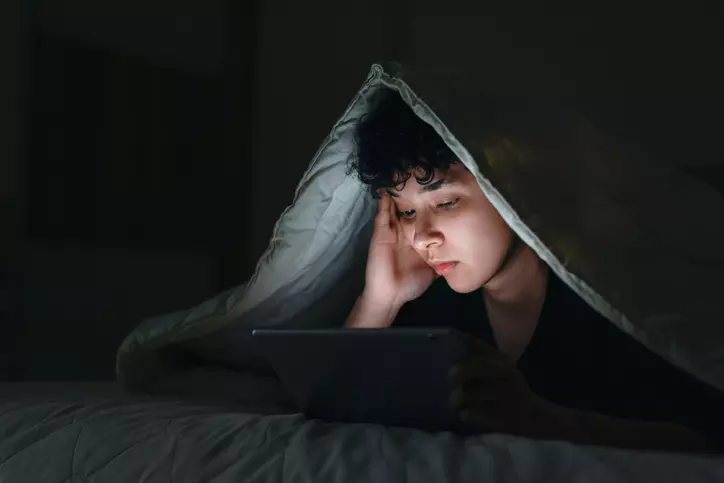
For most urban Indians today, the act of going to sleep begins with the shutting down of the laptop. But then the mobile takes over. Photo: iStock
The collateral damage in all this has been sleep; the duration of it and the quality of it, say experts.
Since 2008, ‘World Sleep Day’ has been celebrated on March 13, to “promote sleep health”. The theme for this year is “Sleep Well, Live Better”.
A survey by community social media platform LocalCircles conducted ahead of World Sleep Day 2026 found 46 per cent of Indians had had less than six hours of uninterrupted sleep in the past 12 months. The figure was 59 per cent in 2025. The dip would have been cause for cheer, except that 46 per cent is still a concerning number.
“Anything less than seven hours or more than nine hours is not healthy,” says Dr. Karthik Madesh Ratnavelu, director and senior consultant in ENT at SIMS Hospital in Chennai.
Adds Dr Arulalan Mathialagan, consultant in ENT, neurotology and skull base surgery at SRM Prime Hospital in Chennai. “Sleep occurs in stages. The first stage, known as N1, is a brief transition phase where muscles begin to relax while the person remains partially awake for around ten to fifteen minutes. In the next phase, N2, the body moves into deeper sleep while vital functions like breathing and heartbeat continue.
Finally, the body enters deep sleep, when most systems slow down and repair processes occur. When there is too much input from the phone, the brain does not easily enter these phases. Falling asleep becomes difficult, sleep duration reduces and efficiency during the day decreases.”
The risks of sleep deprivation are many. “It is the time when our body reboots,” he says. “This is when injuries heal and the body’s repair mechanisms function.” Hormones regulate, metabolism stabilises and the body detoxifies. If sleep is reduced, those mechanisms become less effective. Low immunity, fatigue, irritability, reduced productivity, long-term neurological risks, impaired brain function, may follow.
“It increases the risk of non-communicable diseases such as obesity, diabetes and cardiovascular problems, even cardiac arrest,” warns Ratnavelu.
Also read: In India, why being vocal about relationships is not easy for adolescents in love
In the past, Ratnavelu notes, daily routines supported healthier sleep cycles. Today, that rhythm is increasingly disrupted.
“Once you wake up, the biological clock starts functioning and runs for around twelve to fourteen hours,” Ratnavelu explains. “After that period, the body is ready to sleep. But using mobile phones after that [period] confuses the brain.”
Even thirty minutes of phone usage before sleep, he says, can delay the onset of sleep by altering the balance of sleep-inducing hormones.
“Smartphones are the biggest thieves of sleep — not diseases,” he says.
If television was once labelled the “idiot box,” Dr. Vandhana (identified by first name only), consultant clinical psychologist at Chennai’s V-COPE believes the smartphone deserves a stronger description. “I would call the smartphone a killing box,” she says.
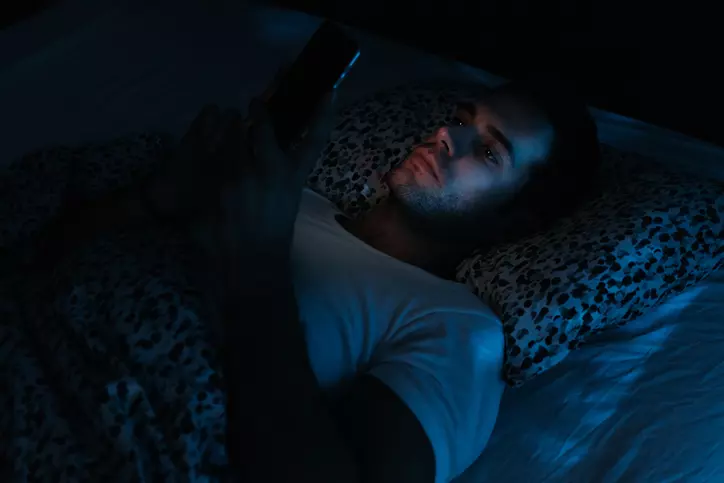
By trying to squeeze in one more reel, series episode on OTT, a call or message that we had failed to make during the day, or simply random, aimless social media scrolling, we lose out on sleep. Photo: iStock
Of course, external factors aren’t the only culprits behind poor sleep.
Akshaya Gnanashree, a licensed clinical psychologist and founder of mental health service, The Mind Aid, says one of the most common complaints she hears is that people simply cannot switch off their minds at night.
“People tend to overthink late at night,” she says. “They think about their problems, their life issues. But this thinking is not productive; it only increases anxiety and stress.”
It is a concern raised by Suresh (identified by first name only), a 22-year-old in a Chennai suburb, “I feel like I get enough sleep, but I feel stress is impacting the quality of sleep."
According to Gnanashree, sleep is closely linked to a sense of emotional security. “Sleep comes naturally when you feel safe,” she says. “That is why many people prefer sleeping beside someone — it gives them comfort.”
In recent years, however, the trend that has quietly entered conversations around sleep is that of ‘sleep divorce’. The term refers to couples choosing to sleep in separate beds or rooms to improve sleep quality.
Experts are not necessarily averse to the idea if it helps individuals get better sleep. After all, the one-glove-fits-all approach may not work in sleep.
“If one partner’s sleep habits disturb the other, we may encourage couples to sleep separately temporarily,” says Vandhana. “This helps regulate sleep patterns.”
However, she emphasises that such arrangements are usually temporary. “Once sleep patterns stabilise, couples can return to their original arrangements,” she says.
Many sleep specialists emphasise the importance of a return of sleep hygiene: habits that prepare the mind and body for rest.
Dr. Koushik Muthu Raja Mathivanan, chief pulmonologist at Lung Clinix Pulmonology Centre, advises keeping the bed strictly for sleep. “The bed should only be used for sleeping,” he says. “Even reading books in bed should ideally be avoided, because the brain must associate the bed only with sleep.” Agrees Mathialagan: “There is a psychology behind separate spaces for working, living and cooking.”
The rationale, according to Ratnavelu, is that the “mind is like a machine — it gets trained.” And so, having a designated sleep area can help the mind relax and slip into rest once there.
Usha also recommends “pleasant and pale colours” for the bedroom. “That way, when you sleep in the room, you feel relaxed and energetic,” she says. Beyond colours, experts advise warm lighting, pleasant scents, calming music and a comfortable temperature between 24 and 27 degrees Celsius, for a sleep-inducing space.
“Often, as children, bedtime routines involved story time and light conversations. These activities created light-hearted emotions that helped the brain relax. So, after dinner, take a short walk and talk about the day with family and keep professional thoughts away before sleep,” advises Mathialagan.
Also read: When less becomes more: Why India's Gen Z is redefining consumption, opting for 'minimalism'
Interestingly, many of those The Federal spoke to were aware of the risks of their loss of bedroom and past bedtime rituals. “I mostly get six to eight hours of sleep per night. I don't think it’s enough. I feel using my bed for work has impacted my sleep,” says Sowmiya A, a 24-year-old professional working in human resources near Chennai.
Her concern is echoed by Leena (identified by first name only), a 23-year-old MBA student in Arakkonam (Tamil Nadu), who uses her bed “for studies or even watching shows”.
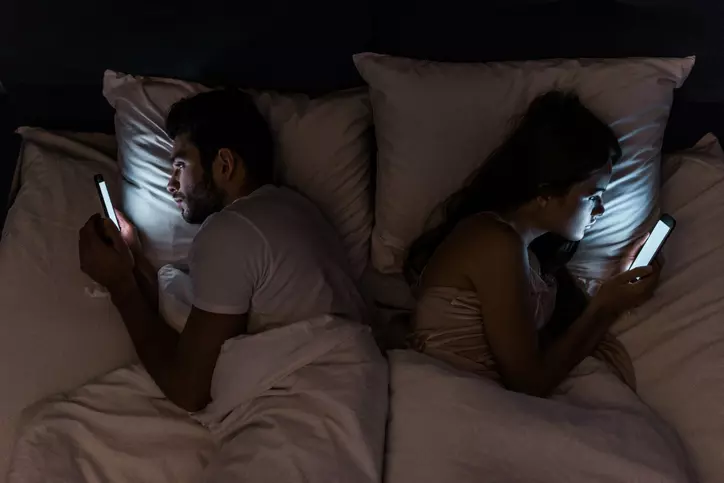
Ironically, we turn to the screen to relax after work, to drift off to sleep. And end up wide awake. Photo: iStock
Elanangai (identified by first name only), a 23-year-old working professional based in Tirupur, says watching OTT series helps her relax before bed. “But I do think it affects my sleep routine. Sometimes we binge-watch, so it affects the time we get to sleep, too,” she says.
To address the issue, some have already started making a change, rediscovering old sleep rituals and hygiene. Sweetha S, a 23-year-old working professional, says she makes it a rule to not use the bed for work, study, or watching shows. She listens to music before bedtime to relax and feels that this helps her get over eight hours of sleep daily.
Others are still left echoing the poet William Wordsworth's ode to lost sleep:
“A flock of sheep that leisurely pass by/One after one; the sound of rain, and bees/ Murmuring; the fall of rivers, winds and seas/Smooth fields, white sheets of water, and pure sky –/I’ve thought of all by turns, and still I lie/Sleepless…”.