AI, Trump and the desi tech job meltdown of 2025
Rapid automation and abrupt and frequent shifts in American visa policy have left Indian tech workers in the US with deep financial uncertainty and emotional strain

This time last year, Shreyas*, a software engineer with a big tech company in California, was fine tuning his New Year resolution — fewer extended work hours, more travel, playing an outdoor sport and making friends outside of work. Less burnout, better work-life balance.Today, Shreyas will give his right arm for some of the said burnout.Fired from his job one fine Monday morning, his H-1B...
This time last year, Shreyas*, a software engineer with a big tech company in California, was fine tuning his New Year resolution — fewer extended work hours, more travel, playing an outdoor sport and making friends outside of work. Less burnout, better work-life balance.
Today, Shreyas will give his right arm for some of the said burnout.
Fired from his job one fine Monday morning, his H-1B visa gave him just 60 days of discretionary grace period to find a new job or return to India. He is busy scouting for jobs and attending interviews; the alternative being boarding a plane back to India by mid-January. Which wouldn’t be a bad option, but for the fact that he has purchased a modest two-bedroom flat in the Bay Area, with a loan pending. “A distress sale alone may cut my losses and this is adding hugely to my stress now,” Shreyas told The Federal.
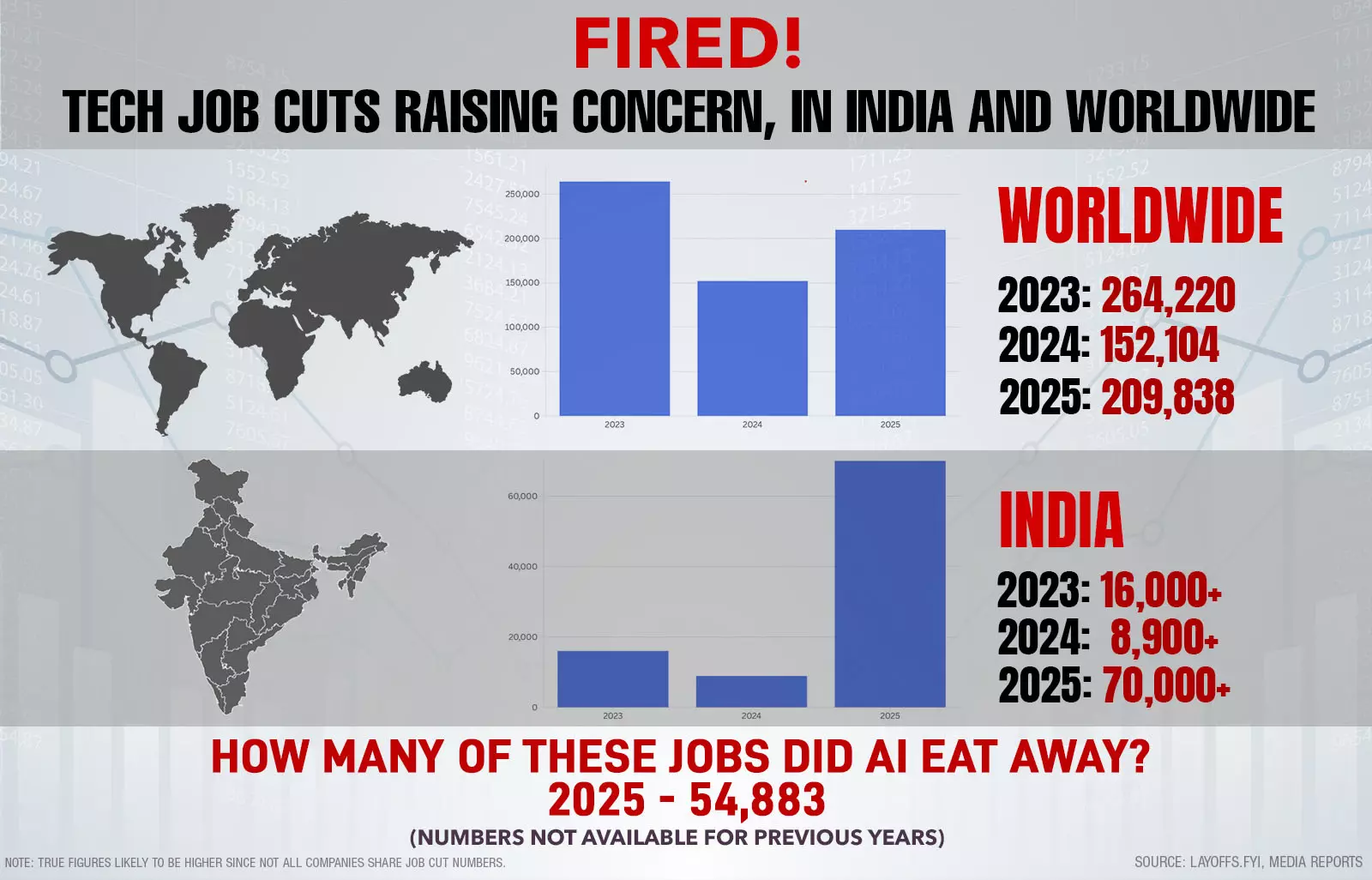
In this hour of extreme anxiety, Shreyas has plenty of company. Over 200,000 tech employees from over 700 companies were laid off in 2025 worldwide. Leading the bloodbath are some MAANG (Meta, Apple, Amazon, Netflix and Google) players and others, including Microsoft, IBM, Intel, HP, Salesforce and Cisco. And those are just the ones making headlines. All over the world, smaller firms and startups have been bulldozing tech jobs, blithely attributing it to artificial intelligence (AI).
Also read: GDP growth rebounds, but average Indian’s living standard dips — How Indian economy fared in 2025
For Indian techies, another turn of events is proving draconian — Donald Trump, his aversion to foreign workers and his declared ‘American worker first’ policy. Suddenly, the US seems less of the land of opportunities than it once did.
For a world thriving on the much-cited benefits of globalisation, it is an irony that the policies of one country can so deeply affect the future of families not just settled there, but dependents in India and elsewhere, who must now suffer the emotional and financial trauma of their kids’, spouses’ or parents’ uncertain employment in a faraway land. American visa policies, of course, are aimed at nationals of all countries, but they make a larger impact on Indians because they account for over 70 per cent of all foreign workers in the US.
The number of job cuts this year isn’t shocking in itself. However, in the past two or three years, they were attributed to post-pandemic corporate rehauls. Today, a good number of the job cuts are happening simply because machines are doing the work faster and better. And this is spooking tech workers.
“There are two ways in which AI can replace humans,” explained Rishi*, a Delhi-based software engineer employed with a US-based tech giant. “The first, which is the most common, is when a set of tasks that is manual and repeatable gets automated, like punching orders in a sales system or answering SOP-driven [standard operating procedure-driven] customer queries.
“The second way is when companies decide to have a job cut and let AI decide which employees to let go. This can be based on a lot of factors like experience, role, pay, compa ratio [compensation ratio] and so on. In most of these cases, the performance or past accomplishments don’t matter.”
There appears to be very little effort to repurpose or retrain employees before/instead of firing them. “The big techs do try this, but there must be an element of luck where similar role/similar skill set work must be available,” Rishi told The Federal. “In most cases, people are let go with severance.”
Estimates of how many tech jobs were lost to AI this year vary vastly, but the widely accepted ballpark number is over 50,000 this year. An SOP for this enumeration is yet to be arrived at. Sometimes, AI “influences” layoffs, but the employers do not cite it formally. Other times, AI directly replaces humans, but companies choose to call it “restructuring” or “streamlining”.
Also read: Politically vocal but electorally outfoxed — what 2025 has been like for India's Opposition parties
Industry watchers point to a third alternative — where companies cut jobs for typical, traditional let’s-get-lean-and-mean goals, but attribute it to AI since it’s elusive and glamorous. A company that adopts AI to such an extent that tens of thousands of people can be dispensed with carries an aura of being strategically sound and future-ready.
COVID changed the dynamics irreversibly. The work-from-home option, increased need for e-commerce and digitisation had tech firms on a hiring spree in 2020-21. Now, the excess flab needs to go. IBM CEO Arvind Krishna has been quoted as saying the current layoffs can be attributed to this “natural correction” rather than to AI.
“It’s the perfect corporate scapegoat – futuristic enough to sound strategic, vague enough to resist scrutiny, and exciting enough to distract from less glamorous truths like margin pressure, post-pandemic overexpansion and slowing demand,” wrote Sasha Semjonova for Salesforce Ben. “AI is real, of course, but in a lot of earnings calls, flashy conferences, and internal memos, it’s also doing a lot of PR heavy lifting.”
Nick Damoulakis, founder and CEO of software firm Orases, agrees. “SaaS [software as a service] growth has cooled. Wall Street is demanding efficiency. And ‘AI is replacing jobs’ sounds futuristic and bold while ‘we’re not hitting our numbers’ sounds fragile,” he wrote in a LinkedIn post.
“AI is transforming work, yes. But when companies cut people, it’s rarely just about technology. It’s about margins, markets, and managing optics. AI has simply become the sleek fig leaf of 2025,” he added.
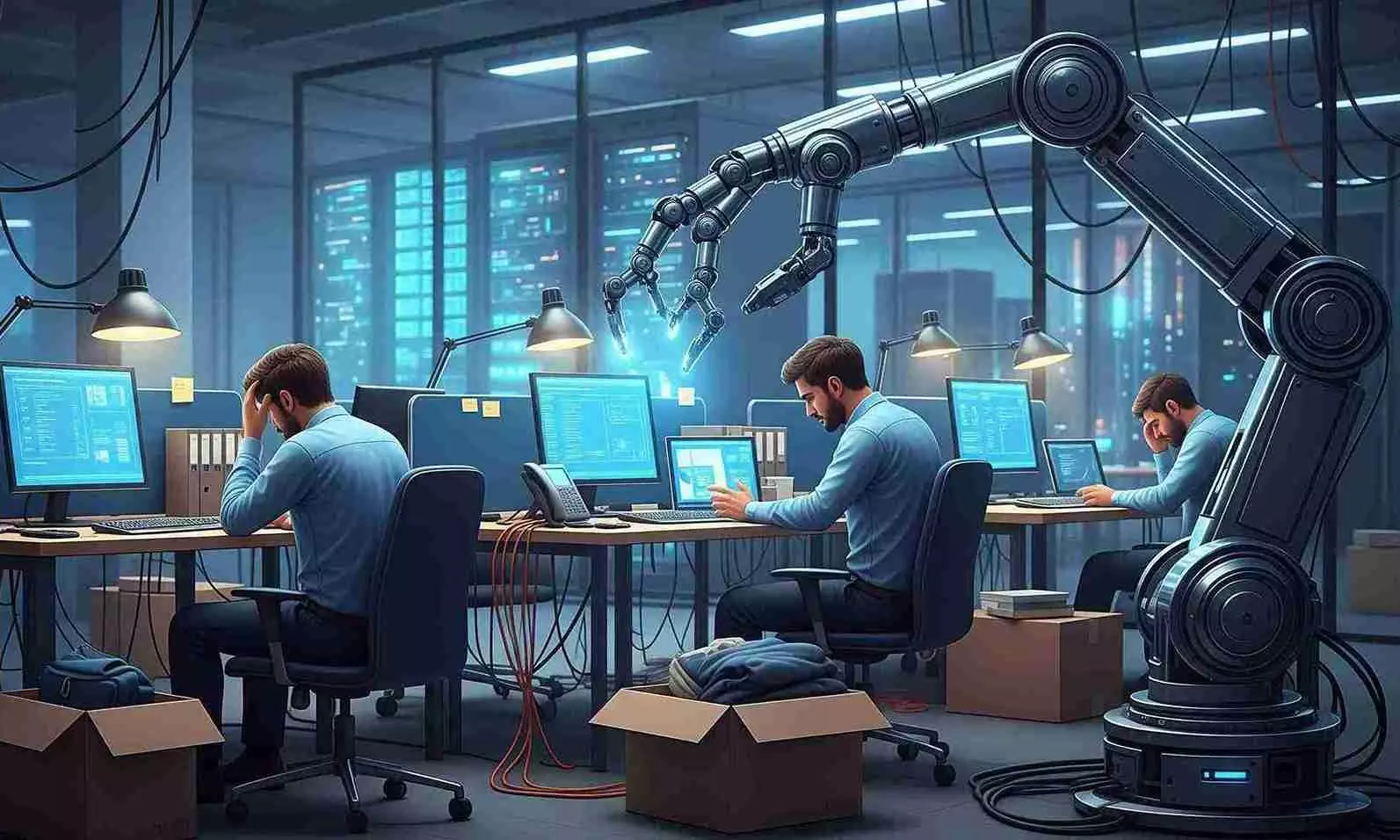
Industry observers talk of the possibility of companies cutting jobs for typical, traditional let’s-get-lean-and-mean goals, but attributing it to AI since it’s elusive and glamorous. Image: AI generated
Fig leaf or red flag, the ultimate cost is paid by humans.
For techies in the US — or anywhere in the West — who are either citizens or hold green cards, a job loss is certainly a blow, but not life-altering.
“There are multiple instances where the same people are rehired by the company after a few months,” said Rishi.
“While AI makes certain roles redundant, it also opens new roles. Companies prefer to hire old hands who know the DNA of the organisation, rather than hiring complete outsiders. Some employees who have been laid off also wait for a few months to check if any opening comes up in the organisation before even starting a new job search.”
Rishi argues that in MAANG companies, employees understand the threat of layoffs will always be there and don’t treat these as life changing moments. “Severance packages are getting more structured, which helps both the organisation and the employee. In fact, I know of someone who was laid off after 18 years in the company with a severance package in crores. The man held a ‘I have been laid off’ party.”
“Employees also treat the time between lay-offs and starting a new job as a cooling, rejuvenating period,” he added.
Also read: Akshaye Khanna’s jig to Saiyaara’s heartbreak appeal — how 2025 brought in ‘meme era’ to Bollywood
This, however, is a First World luxury. For American and Indian-American tech workers in the US, or Indians there with green cards or less stringent visas (like EB-1A), a job cut could present a sabbatical.
For the others, a firing takes sinister turns. First, there is the loss of salary. Then comes the imminent loss of a work visa. Those with families there, especially school-going children, find their lives rudely upended.
Priya* and Sanjay*, both H-1B holders, were leading a quiet life in Texas. Their five-year-old daughter had just begun kindergarten. Priya one day received an email saying she had been terminated from her job with immediate effect, replaced as she was by a robot that didn’t even require a handover.
With her work visa at peril, Priya moved heaven, earth and her extensive desi network in the US to find a new job. Within weeks, she found one in New Jersey, 1,750 miles away from Texas, and moved there.
“The trauma got worse,” Priya told The Federal. “I couldn’t take my child with me then, since the change in weather was too drastic, plus I needed to set up a home first. We were apart for the first time ever and it was painful.”
But luck smiled on the couple — after four-five months, Sanjay managed to find a job in New Jersey and moved there with their daughter.

The world has been moving toward AI taking jobs for a while now, but it’s only in 2025 that it has actually got a column for itself in the job cuts spreadsheet. Photo: Representative image, iStock
Not everyone can expect such luck and hence the average Indian techie in the US is deeply anxious.
Take Amita*, a software engineer with a leading firm in Washington that recently slashed thousands of jobs. While she’s busy lending a shoulder to colleagues who have faced the axe, Amita can barely work around the fear that she could be next. Feeding her paranoia are news reports saying her company is planning another round of massive job cuts, likely within weeks.
AI stealing jobs is, of course, not breaking news. The world has been moving toward this for a while now, though it’s only in 2025 that it has actually got a column for itself in the job cuts spreadsheet.
Also read: How fresh finds, research progress made 2025 a significant year for science and technology
For Indian workers in the US, life has not been the same since January 20, 2025, when Trump took over as US President for the second time. For those on US work visas — be it the F-1 EAD (student visa with Employment Authorization Document), or full-fledged work visas like the H-1B — it’s either downright bad news, or the fear of bad news.
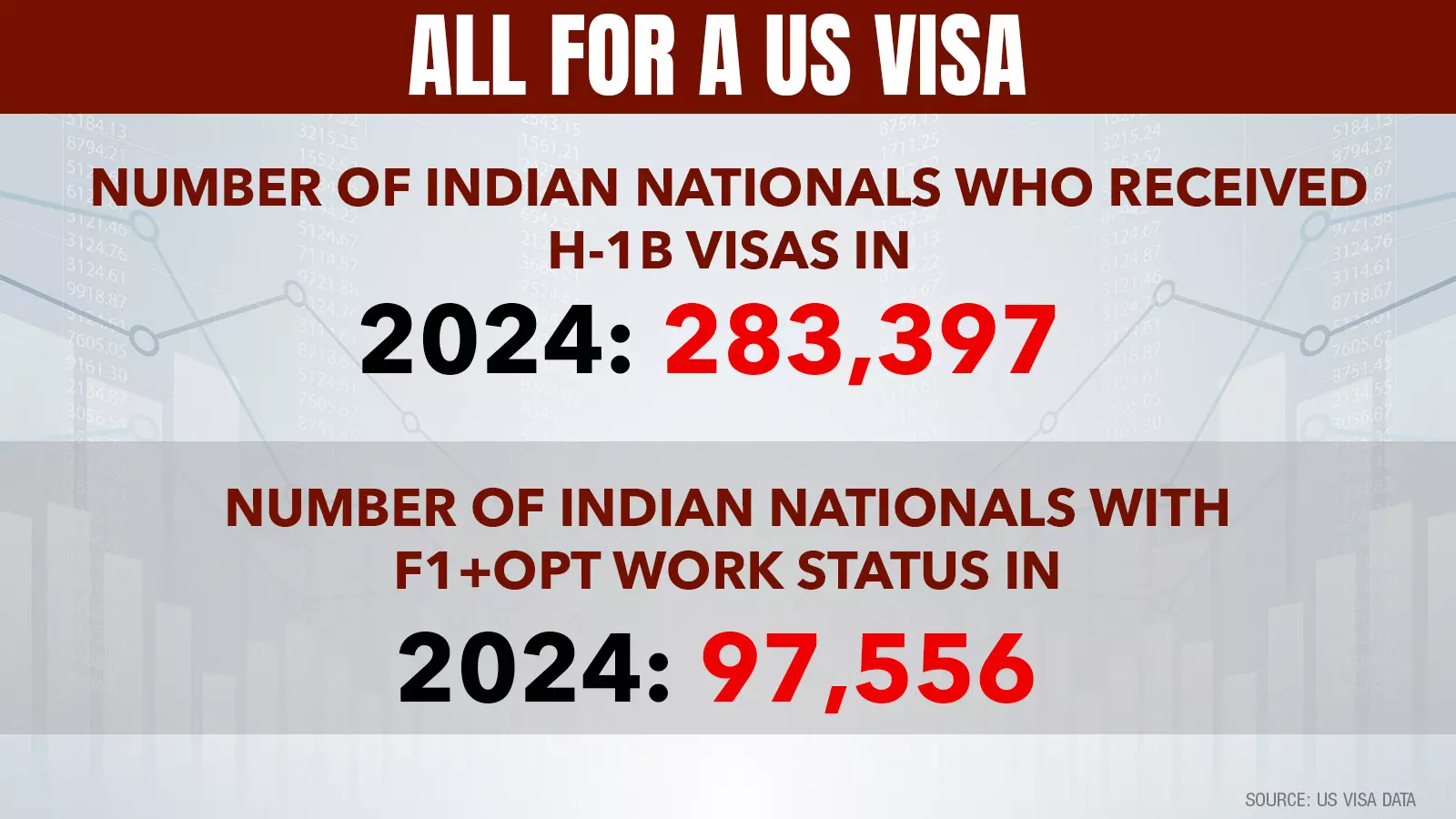
Each day, Trump has a shocker to present. One day, it’s the announcement of a $100,000 fee on H-1B visa applications. Another day that applicants are required to open up their social media accounts for scrutiny. Yet another day that the lottery system of selection is getting refurbished — new rules, new slabs, new anxiety. These apart, visa appointments are tough to book and altered with no warning.
Some of these decisions are here to stay. Some are going back and forth, while some have been challenged in court. The human cost of it all, however, is largely ignored.
Add the stress of job loss to this mix and the pressure seems too much to tackle. Dreams are coming crashing down. Financial worries are ulcer-inducing. From marriage to starting a family to making investments, the foundation appears wobbly.
There is very little formal counselling available to the desi techies outside of peer networks and friendly relatives. For those who do buy one-way tickets back to India, either after a job loss or lack of visa or to escape the anxiety of it all, there is no job guarantee in India either, especially with matching salaries. It’s more worrisome when there are children involved, as they need to get acclimatised to a new life and school environment.
It’s for the third reason that Vedanth* and his wife decided to move back to India from Oregon, USA, earlier this month. “We need some stability before we start our family. This state of flux will not do,” he told The Federal. When the MNC he works for had an opening in Hyderabad, he jumped at it.
Was it worth leaving India in the first place?
“Absolutely yes,” said Vedanth. “I have zero regrets about moving abroad, be it for my higher studies or, subsequently, a job. And, zero regrets about moving back. Migration in search of greener pastures is innate to humans. Else we’d still be living in caves.”
(*All names of Indian employees changed to protect identities.)