Why, despite laws and court orders, sanitary workers continue to die in toxic fumes-filled manholes
The recent death of two sanitation workers, purportedly after inhaling toxic fumes inside a sewer, again highlights how manual workers continue to be sent down manholes without even protective gear. Activists question the distinction often drawn between manual scavenging and sewage cleaning, 'when both involve cleaning human excreta'.

Often, it begins with a blockage. A complaint is filed, a contractor is called, and a worker is asked to climb down into a manhole. There is rarely protective gear, and almost never a safety line. If the gases are strong, he may collapse within seconds. If not, he lives to do this another day. Again, and again.Last week, two sanitation workers died following this all-too-familiar...
Often, it begins with a blockage. A complaint is filed, a contractor is called, and a worker is asked to climb down into a manhole. There is rarely protective gear, and almost never a safety line. If the gases are strong, he may collapse within seconds. If not, he lives to do this another day. Again, and again.
Last week, two sanitation workers died following this all-too-familiar sequence, purportedly after inhaling toxic fumes inside a sewer in Nuh. A third became critically ill. According to reports, it had started with one worker entering the sewer. But when he failed to come out for a long time, a second one went in, and then a third.
More than a decade after the Prohibition of Employment as Manual Scavengers and Their Rehabilitation Act 2013 — which prohibited the engagement of manual scavengers and set a one-year deadline since the commencement of the Act for states to notify the ban of “persons from engagement or employment for hazardous cleaning of sewers and septic tanks” — and years after the Supreme Court in 2014 reiterated that no person should be sent into sewers without safety measures, workers continue to enter manholes across India. The persistence of these deaths points to a systemic failure to enforce the law.
Across the country, hazardous cleaning deaths follow a disturbingly consistent pattern. And yet, the government continues to maintain that there are no manual scavengers in the country anymore. The distinction it draws is technical: cleaning dry latrines is classified as manual scavenging, while sewage work is treated as sanitation work.
There is no ambiguity in safeguards detailed for sanitation workers on paper, however.
In 2014, the Supreme Court had said, “If the practice of manual scavenging has to be brought to a close and also to prevent future generations from the inhuman practice of manual scavenging, rehabilitation of manual scavengers will need to include… sewer deaths – entering sewer lines without safety gears should be made a crime even in emergency situations.”
“There is no reason why sewage work should not be seen as part of manual scavenging. It is ultimately the same human excreta – whether it is in dry latrines or manholes. Why should these workers be treated differently?” ask Sanjeev Kumar Danda, secretary of the Dalit Adivasi Shakti Adhikar Manch (DASAM).
Also read: Why Karnataka's new ‘Eva Nammava’ law alone may not be enough to curb 'honour killings' in the state
Yet, workers continue to die in the most hazardous of situations without any protective cover.
A Ministry of Social Justice audit of 54 deaths in 2022-23 had found that in 47 cases, no mechanised equipment or safety gear had been provided, and in 49, workers wore no safety kit at all. In 42 cases, there was no awareness of the law, and in 41 sites, there was no emergency response system in place. Most of these workers were hired informally through middlemen or subcontractors – an arrangement that shields government departments and principal employers from legal liability.
Even where consent was formally recorded, the audit claimed workers were often not informed of the risks involved. In effect, they entered spaces filled with methane, hydrogen sulphide and carbon monoxide without a clear understanding of the danger, gases that can cause instant unconsciousness or death. Despite a prescribed list of 44 safety devices and clear legal prohibitions, masks, oxygen cylinders and gloves are frequently missing.
There is also a significant gap between official and independent data.
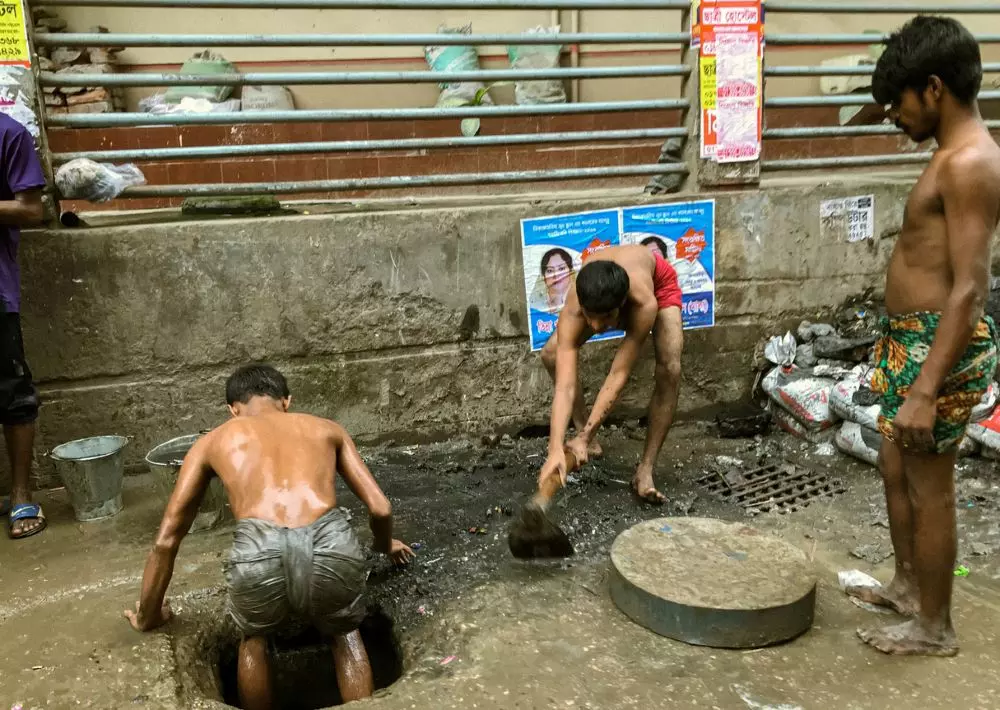
In 2023, the Safai Karmachari Andolan documented 102 deaths, while the government reported 65. In 2024, the numbers were 116 versus 54. In 2025, 121 deaths were recorded, but only 46 were acknowledged officially. Photo: iStock
In 2023, the Safai Karmachari Andolan (SKA), a movement against manual scavenging, documented 102 deaths, while the government reported 65. In 2024, the numbers were 116 versus 54. In 2025, 121 deaths were recorded, but only 46 were acknowledged officially. In the first three months of this year alone, according to SKA, 41 people have already died inside sewers and septic tanks.
"Since the 2014 SC judgment, the government has been coming up with false data or denying the true data... if they want, they can get any data. But they don’t want to keep the data, because if it shows that the death toll is high, then they become answerable. So, there is a kind of attempt to underestimate or deny the data, to keep the numbers down. This is the strategy of the government. Unfortunately, in a democratic country, it should not be like this. It is the people’s government,” Bezwada Wilson, SKA national convenor, had alleged in an earlier interview with The Federal.
Even rehabilitation remains incomplete. A 2021 study conducted in Uttar Pradesh and Jharkhand for WaterAid India found that most manual scavengers were not officially enlisted under the Prohibition of Employment as Manual Scavengers and their Rehabilitation (PEMSR) Act, 2013, despite having valid documents, leaving them unable to access benefits such as alternative livelihoods, loans or scholarships. Only 6.5 per cent of surveyed workers appeared in government lists. Without that recognition, the promise of transition out of the occupation remains largely unrealised.
On paper, India has moved toward mechanisation.
Schemes such as the National Action for Mechanised Sanitation Ecosystem (NAMASTE), introduced in July 2023, have pushed for robotic cleaning, safety gear and insurance coverage. But the reality on the ground remains uneven.
A case in Delhi last June exposed this contradiction starkly.
“Delhi has more or less become mechanised now, and since it's the capital, there is more awareness of the laws. Here, contractors are pulled up and taken to court, so people have become a lot more careful and don't send people down the sewers so much anymore," a Delhi Jal Board supervisor, speaking on condition of anonymity, told The Federal.
However, images posted by the Public Works Department last year showed workers manually cleaning drains without protective gear, triggering outrage before being deleted. Even as a “junior engineer was suspended”, Chief Minister Rekha Gupta reportedly defended the practice, saying “machines don’t work everywhere,” particularly in narrow lanes.
The episode laid bare how the system continues to normalise manual entry even where safer alternatives exist.
Kerala, often cited as a model, was officially declared free of manual scavenging by late 2024 following a Supreme Court-mandated survey.
A major shift came in early 2023 when the government scaled up the use of robotic systems such as the Bandicoot, developed by Genrobotics, to clean sewers and manholes, reducing the need for human entry into hazardous spaces. The rollout was supported by the NAMASTE scheme, launched in the state in October 2023, which focuses on mechanised sanitation and provides workers with health insurance. Rehabilitation measures have included one-time cash assistance of Rs 40,000 for identified workers. More recently, Thiruvananthapuram Corporation introduced G-Spider, an AI-based canal cleaning system, further expanding the use of technology.
Bandicoot uses robotic arms, cameras and sensors to safely remove waste from confined sewer spaces. Its deployment has expanded across more than 120 cities in over 19 states and Union Territories, marking a steady shift towards mechanised sewer maintenance.
Through the use of mechanisation, Kerala has one of the least reliance on manual entry for manhole cleaning in city areas.
“We are maintaining sewer manholes using the safest and most efficient robotic solution available, significantly reducing the need for manual entry into hazardous sewer systems through Bandicoot. With over 20,000 manholes in Thiruvananthapuram city, the technology has been deployed across key sections. Since its introduction, the capital district has consistently relied on robotic cleaning to improve safety and efficiency in sewer maintenance. The adoption of such advanced sanitation technologies has also contributed to national-level recognition for sewerage management and recycling efforts,” a Kerala Water Authority official told The Federal.
However, even here, challenges persist. Fatalities continue to be reported in private settings such as septic tank cleaning, and gaps in legal definitions mean certain hazardous cleaning practices fall outside the formal classification of manual scavenging, even though the risks remain.
In Telangana, deaths continue to puncture claims of progress. In March 2024, three workers died from inhaling toxic gas while cleaning a sewage manhole in Hyderabad city. In the first week of August 2021, two Dalit youths died of suffocation after getting a contractor to manually clean a manhole in LB Nagar, Hyderabad.
To end manual scavenging, Project SHUDH — an urban sanitation system integrating robotics, artificial intelligence (AI), and satellite intelligence — was launched on a pilot basis in Hyderabad in January 2026.
According to K Ashok Reddy, managing director of Hyderabad Metropolitan Water Supply & Sewerage Board (HMWS&SB), the board is emphasising mechanisation: “We are banning manual scavenging and emphasising mechanisation… to clean drainage in narrow streets, we are using more than 70 mini jetting machines without the workers having to enter manholes.” He added that “for workers working in hazardous conditions, we are providing masks, gloves, boots, and gas detectors,” and that awareness sessions and insurance coverage are also being considered.
Even in states seen as technologically advanced, the pattern holds. In Karnataka, according to official data and reports by social organisations, from 1993 to 2025, more than 100 people have died while cleaning manholes or septic tanks.
According to available data, most manhole deaths in Karnataka are reported in highly urbanised districts. The highest number of cases is in the Greater Bengaluru area owing to its large drainage system and old pipelines. It’s been alleged that contractors often send workers into manholes instead of using machines to save money. North Karnataka has also seen deaths of sanitation workers, mostly from inhalation of toxic gases while cleaning septic tanks.
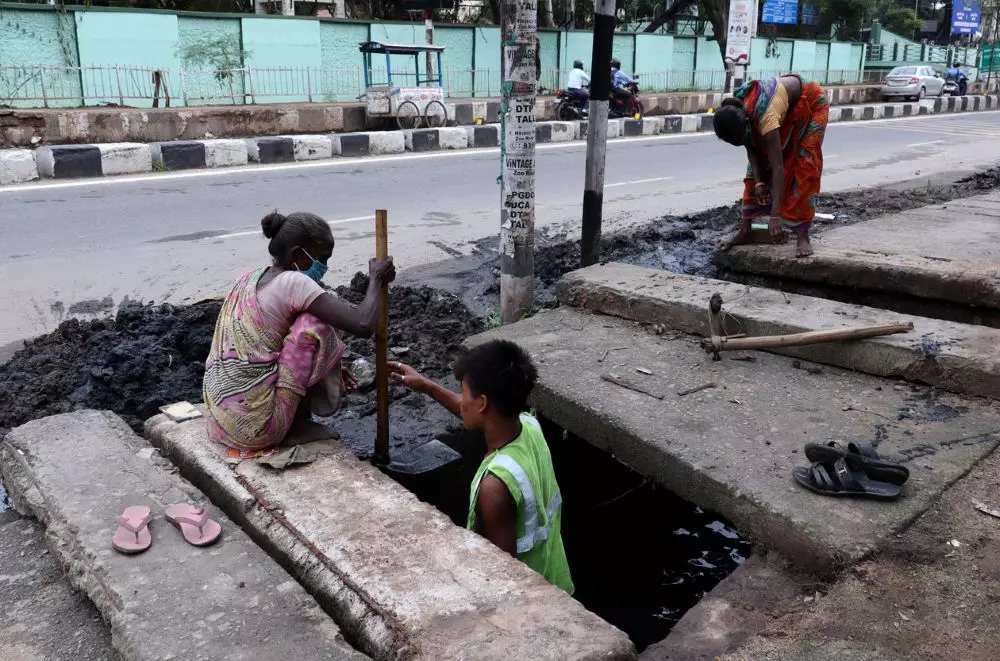
While the government has argued that “sanitation is an occupation-based activity. It is not caste-based,” activists reject this outright. Researchers also point to caste as central to the persistence of the practice. Photo: iStock
Kannamedi Bheemappa Obalesh, a member of a monitoring committee of the Safai Karmachari Commission, told The Federal that “measures exist only on paper and are not implemented properly,” adding that the government does not have accurate data on workers involved in manhole work and that workers are often not receiving the benefits they are entitled to.
Also read: How India’s unorganised workforce has been impacted by the war in Iran
At the centre of this system are workers who occupy the most precarious position.
“We’re officially with the DJB, but in reality, we work under contractors. It can be a private company once in a while, but most often it’s the small-time contractors. There’s no fixed salary. We get whatever they decide to give. Some months it’s as low as RS 12,000,” a contractual sewer worker in Delhi told The Federal.
He added: “I’ve stopped going inside the sewers because I know the law now. But most workers don’t have that awareness, or the choice. Many still enter quietly, and they won’t admit it. We’ve created a WhatsApp group, but they still don’t mention it. They’re scared; if something happens and it comes out, they could get pulled into court cases, lose their work, and someone else who’s willing to do it for cheaper will take over. There is so much unemployment, they can’t take the risk.”
The DJB supervisor quoted above admitted to the flaws in the system.
“The problem with this arrangement is that the DJB can escape all blame if things go south. They simply say that it is the contractor’s problem and wash their hands of it. The worker’s family gets stuck dealing with bureaucratic and legal hurdles just to fix accountability and get the compensation due to them,” he alleged.
Sujith Koonan, from the Centre for International Legal Studies at the Jawaharlal Nehru University, who has worked on manual scavenging in India, also concurred that contractualisation was a massive problem.
“One of the ways to address this is to eliminate the contractor system and make workers direct, permanent employees. That would fix accountability. Their financial and social conditions would also improve, at least in terms of a stable salary and access to social security benefits. It could make a difference to their families as well; their children could stay in school and have more stability going forward,” he said.
When the Federal reached out to the labour commissioner’s office at the Government of National Capital Territory of Delhi (GNCTD), an official claimed the office only dealt with the compensation if companies were involved, but otherwise had nothing to do with the matter of manual scavengers. Instead, they said, it was the Scheduled Castes/Scheduled Tribes Commission that was responsible.
And therein comes the starkest aspect. While the government has argued that “sanitation is an occupation-based activity. It is not caste-based,” activists reject this outright.
“It is completely wrong. If it is not caste-based, why are only the Scheduled Caste people cleaning human excreta?” Wilson had asked in the recent interview with The Federal.
Researchers also point to caste as central to the persistence of the practice.
“I found caste as the central component… a majority of people in manual scavenging belong to certain particular castes. Even within the Scheduled Castes, they are pushed to the very bottom of the social hierarchy. Even those from other SC communities don’t want to marry within this so-called untouchable caste,” said Koonan.
Filmmaker Vidhu Vincent, who directed the 2016 Malayalam film ‘Manhole’ based on the life of a manual scavenger’s daughter, also pointed to the significance of caste dimensions.
“The people who are going inside these manholes, especially in Kerala and Tamil Nadu, most of the time belong to a particular community called the Arundhatiyars. It’s a village-based community, and many are not very educated. Often, they also smoke or drink before entering. The problem is that methane gas is present in these manholes, and that creates a serious risk; explosions or other hazardous incidents can occur,” she said.
Also read: Why, in coastal Karnataka, toddy tapping, once part of legends and ballads, has few takers today
The Federal has reached Sudhansh Pant, secretary of the Department of Social Justice and Empowerment, on email for comment; the article will be updated if a response is received.
The National Commission for Safai Karamcharis (NCSK) – after being without members or a chairperson since April 2025 – recently got a vice-chairperson and one member.
“The Commission is doing the work it can do, given its strength. We’re not sitting idle. But there are roles for every position that others cannot do. But you can gauge things from the fact that we don’t have accurate data on manual scavengers in the country,” said an official.
Vincent argues that the focus must shift from a narrow definition of manual scavenging to the broader reality of unsafe sanitation work.
Until that happens, the sequence will continue: a blockage, a complaint, a worker sent inside. And, too often, a death.
(With inputs from Rajeev Ramachandran, Prabhu Swamy Natekar and Jinka Nagaraju)