- Home
- India
- World
- Premium
- THE FEDERAL SPECIAL
- Analysis
- States
- Perspective
- Videos
- Sports
- Education
- Entertainment
- Elections
- Features
- Health
- Business
- Series
- In memoriam: Sheikh Mujibur Rahman
- Bishnoi's Men
- NEET TANGLE
- Economy Series
- Earth Day
- Kashmir’s Frozen Turbulence
- India@75
- The legend of Ramjanmabhoomi
- Liberalisation@30
- How to tame a dragon
- Celebrating biodiversity
- Farm Matters
- 50 days of solitude
- Bringing Migrants Home
- Budget 2020
- Jharkhand Votes
- The Federal Investigates
- The Federal Impact
- Vanishing Sand
- Gandhi @ 150
- Andhra Today
- Field report
- Operation Gulmarg
- Pandemic @1 Mn in India
- The Federal Year-End
- The Zero Year
- Science
- Brand studio
- Newsletter
- Elections 2024
- Events

How India’s unorganised workforce has been impacted by the war in Iran
From Banarasi weavers hit by export issues to roadside eateries struggling to operate under the shadow of the LPG crisis and food delivery app workers seeing a drop in incentives... Iran war has brought in a personal crisis for many unorganised sector workers in India, who understand little of the conflict's geopolitical implications.

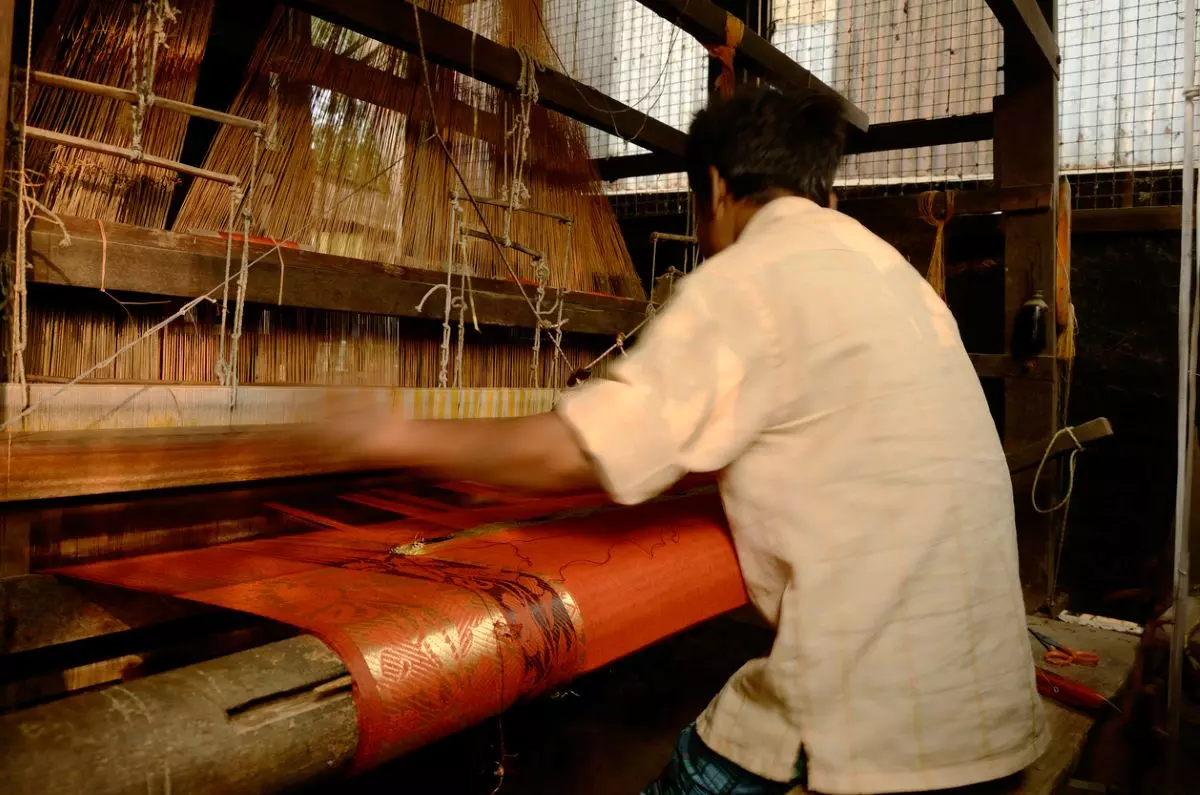
For the family of Rafiq Ansari, a 60-year-old weaver in Uttar Pradesh, Eid celebrations this year will be subdued. The war in Iran, the geopolitical implications of which they understand little of, feels unsettlingly close. With shipments stuck and fewer orders coming in from the Middle East, money is tight.“We have received payment for what we made earlier. But now the traders/exporters...
For the family of Rafiq Ansari, a 60-year-old weaver in Uttar Pradesh, Eid celebrations this year will be subdued. The war in Iran, the geopolitical implications of which they understand little of, feels unsettlingly close. With shipments stuck and fewer orders coming in from the Middle East, money is tight.
“We have received payment for what we made earlier. But now the traders/exporters are refusing to take the ready goods. The exporters say that the cost of transporting goods by vehicle is very high right now, so they can’t take the material at the moment,” says Ansari.
Following the outbreak of the war, Iran has turned the Strait of Hormuz, the shortest sea link between India and the Gulf, into a war zone, effectively closing the channel. While oil shipments have been the worst hit — according to reports, about 20 per cent of the world’s oil and natural gas shipments pass through the strait and the blockade has sent fuel prices soaring — other cargo transport between India and the Gulf countries has also been impacted. Alternative routes exist, but they are longer, costlier and as yet, uninsured.
Representational image: iStock Photo
The blow of the export crisis could have been softened if the weavers could have sold what is stuck in the local market, but it is a common practice for commissioning agents to pay for raw materials used, especially the silk yarn, which then makes it impossible for weavers to sell the finished goods to others.
“There is a complete trade chain in our work. That chain has broken. Its impact will surely be felt. We accept that a lot of the exporters’ goods are stuck. They are also suffering losses because their payments are held up too. But poor weavers like us don’t have enough accumulated capital to keep the work going until the situation improves,” rues Kunj Bihari, a 45-year-old weaver from Varanasi.
He adds: “The local market demand is already accounted for. Now, new orders [for exports] are not coming either. What should we do?”
The question is one that is haunting many among India’s unorganised workforce.
Roughly three weeks since the outbreak of the war in Iran, the conflict has made these people collateral damage in international events that are far removed from their modest lives.
Also read: Why activists have little hope of war and Ayatollah’s death bringing change for women in Iran
The ones who seem to be bearing the brunt of it are unorganised workers associated with the food & beverages (F&B) and hospitality sectors — roadside eateries, servers in small restaurants, gig workers linked to food delivery apps.
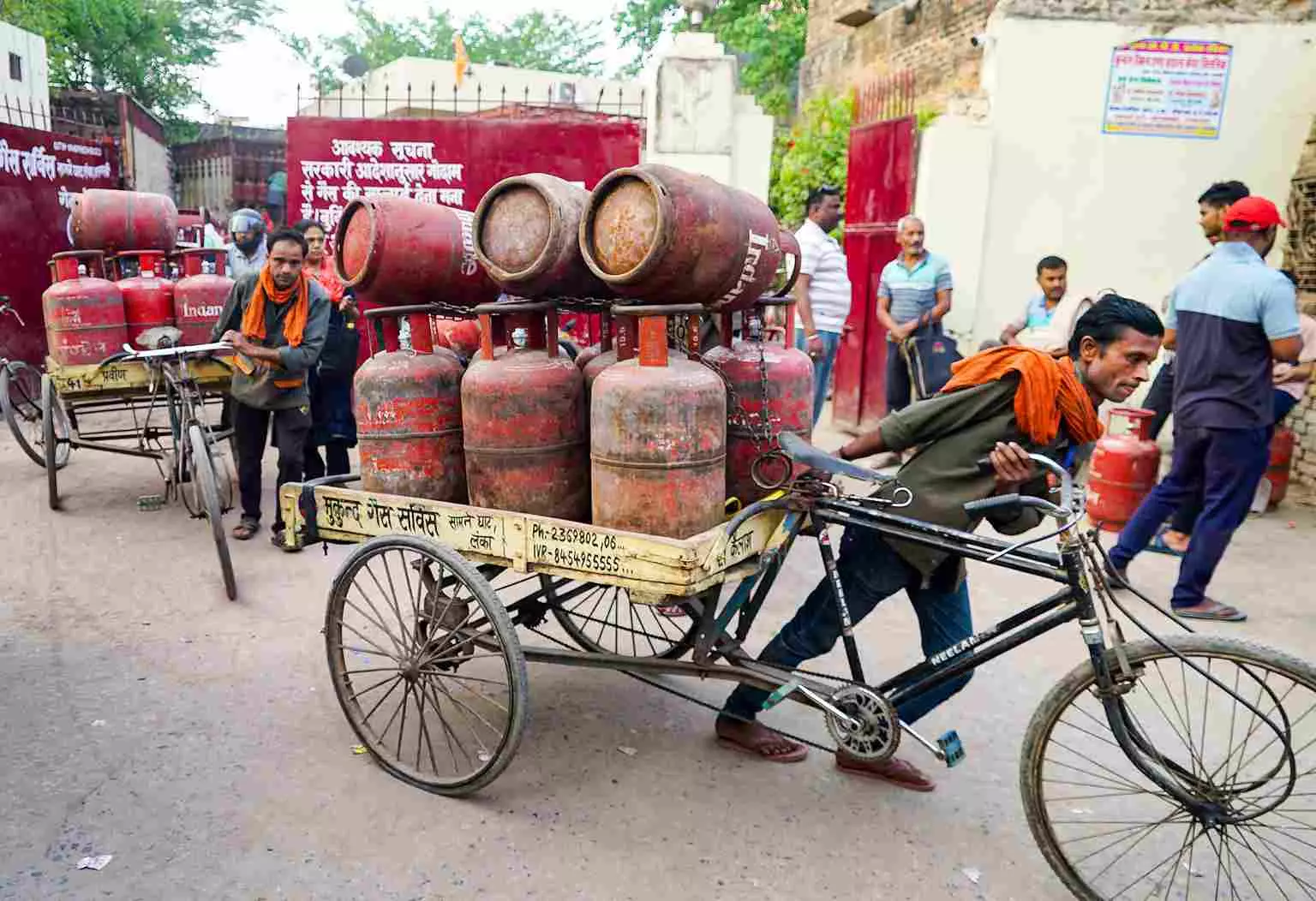
With apprehensions surrounding the future of LPG supply, while many restaurants have curtailed their operations or tweaked menus, it’s those at the bottom of the pyramid, who have little savings to fall back on, who are worst hit. To make matters worse, earlier this month, the government increased the price of domestic LPG by Rs 60 for a 14.2 kg cylinder.
The hike in prices is a pinch for Khushi Ram, a street vendor selling chhole kulche in Delhi’s Mandi House area. “I need cooking gas to keep the kulche, chhole, rajma and kadhi warm. Because of the hike in cooking gas prices, I have had to increase the price of all the items slightly, which has affected demand. I am not opening the stall every day now,” he says.
Titri Devi, who runs a tea stall in the area with her husband, shares a similar experience. “We have increased the price of tea by Rs 5 per cup; from Rs 10 per cup earlier to Rs 15 now. Customers are unhappy, but we have no choice. [LPG] cylinders are not very easily available and when we manage to arrange for one, prices are high.”
To beat the LPG crisis and the price hike, Raju (identified by first name only), who runs a tea stall in Delhi’s Sadar Bazaar area, has bought a kerosene stove. “But that required an investment of Rs 1,700,” he says.
A worker brings in LPG cylinders. PTI file photo
There are similar narratives coming in from across cities.
By Friday (March 20), the LPG supply in Kolkata remained erratic, though the shortage was not as acute as the city had been facing in the past week or so. The relief, if any, is yet to trickle down to the hawkers and workers at the bottom of the pyramid, though.
At the city’s Dacres Lane, the city’s street-food hub, the LPG crisis of the past few days has forced many vendors to cut menus and scale down cooking, while some have temporarily shut operations.
“If this continues, we may have to shut down the business. Gas prices are rising every day and supply is erratic,” says Bubai Pandit, who works at a popular eatery called Chitta Da’s shop.
Another worker at a small eatery in the area points to a closed food stall opposite and says, “On most days, we need two or three cylinders because of the lunch hour rush. Now we are trying to manage with just one. If the shortage continues, many stalls may have to shut for a few days.”
Talking to The Federal, Mohit Valecha of the Indian Hawkers Alliance, admitted that “thousands of street-food vendors have had to shut down because of the shortage of commercial LPG cylinders, which are now selling for between 5,000 and 6,000 rupees in the black market”.
He added: Imagine what the cost of food items would be if vendors had to run their stalls after procuring cooking gas at such high prices. A cup of tea would cost 30 to 40 rupees.”
While many of the bigger restaurants too have been forced to trim menus as commercial cylinders become harder to procure, staff members say the slowdown is already affecting daily incomes. “We are paid per shift. If the kitchen does not run the whole day, we are told to leave early,” says Ganesh Pain, a server at New Kalpataru Hotel near the Saroj Gupta Cancer Centre and Research Institute in Kolkata.
The entire ecosystem has been impacted. Bhola Sheikh, a small goods transporter who delivers produce to eateries in southern Kolkata, frets, “If restaurants reduce cooking, they buy less. That means fewer trips and less income.”
By the same logic, gig workers associated with food delivery apps are also affected. “Orders are slightly down because some restaurants have reduced menus or stopped making certain [popular] dishes,” admits Utpal Mandal, a food-delivery rider working with Zomato, an app-based platform. “If fewer orders come in, our incentives drop.”
In Bengaluru, a delivery partner speaking on condition of anonymity says, “orders have reduced by about 25 per cent”.
With many restaurants running at reduced capacity — according to an employee at a hotel on Bengaluru’s Regency road, they have reduced their serving capacity by half; from 300 to 150 people — delivery app riders say they are prioritising walk-in customers to online orders, to avoid paying commissions to aggregators.
Also read: Why Iran's strike on Israel’s Haifa has reminded some in Mysore of a battle over 100 years old
In a letter dated March 18 to the Ministry of Petroleum and Natural Gas, Karnataka Chief Minister Siddaramaiah wrote, “as against the demand of 50,000 LPG cylinders from restaurants, hotels, catering establishments and PG accommodations etc., we are able to supply only 1,000 cylinders per day. As a result, there has been a visible increase in shutting down of establishments due non-availability of commercial LPG. This is beginning to impact the students, IT professionals, farmers, dairy producers along with a large section of the public which are dependent on the hospitality sector”.
He added: “Similarly, Auto LPG is a critical fuel for a large number of autorickshaws, which form an important part of the city's last-mile connectivity and support the livelihood of many drivers.”
The CM requested the ministry’s intervention “to ensure adequate allocation and availability of commercial LPG and Auto LPG to Karnataka”.
The Centre, on its part, has issued an order under the Essential Commodities Act to divert natural gas to priority sectors, including domestic piped natural gas (PNG), compressed natural gas (CNG) for vehicles and LPG production. It has also urged states to keep a watch against hoarding and has been pushing commercial users to switch to PNG from LPG. India has also been in talks with Iran to allow for the easing of shipping through the Strait of Hormuz.
For those impacted by the fallout of a war in which they play no role, however, bureaucratic and diplomatic optimism, however, mean little till it brings them actual material relief.
“We worked day and night to complete orders. But now the goods (finished products) are not being picked up. Here in the local market, there is more demand for sarees, but there (in the Middle East and Dubai) the demand is more for fabrics and curtains. Exporters are trying to find ways to sell these materials in markets in Mumbai and Delhi, but this is still not a solution. Our Eid has been ruined,” laments Arfa Begum, 58, a member of Rafiq’s family.
(With inputs from Samir K Purkayastha, Shilpi Sen, Abhishek Rawat and Chandrappa M)