- Home
- India
- World
- Premium
- THE FEDERAL SPECIAL
- Analysis
- States
- Perspective
- Videos
- Sports
- Education
- Entertainment
- Elections
- Features
- Health
- Business
- Series
- In memoriam: Sheikh Mujibur Rahman
- Bishnoi's Men
- NEET TANGLE
- Economy Series
- Earth Day
- Kashmir’s Frozen Turbulence
- India@75
- The legend of Ramjanmabhoomi
- Liberalisation@30
- How to tame a dragon
- Celebrating biodiversity
- Farm Matters
- 50 days of solitude
- Bringing Migrants Home
- Budget 2020
- Jharkhand Votes
- The Federal Investigates
- The Federal Impact
- Vanishing Sand
- Gandhi @ 150
- Andhra Today
- Field report
- Operation Gulmarg
- Pandemic @1 Mn in India
- The Federal Year-End
- The Zero Year
- Science
- Brand studio
- Newsletter
- Events

Why global success for Indian indie music may look nothing like the reign of K-Pop icon BTS
While Korean music band BTS’s latest album, Arirang, turns inward, emphasising its Korean identity, what might define an Indian global pop sound remains an open question. For now, India's indie music industry seems poised for steady, distributed growth rather than a single, defining breakthrough.

At a time when the K-pop craze seems to be only getting bigger globally, music band BTS’s latest album Arirang, released last month, turns inward, emphasising its Korean identity even as it scales new heights abroad. The album debuted at No. 1 in dozens of countries, drew more than 110 million streams for its lead tracks in the first 24 hours, sold 3.98 million copies on release day...
At a time when the K-pop craze seems to be only getting bigger globally, music band BTS’s latest album Arirang, released last month, turns inward, emphasising its Korean identity even as it scales new heights abroad. The album debuted at No. 1 in dozens of countries, drew more than 110 million streams for its lead tracks in the first 24 hours, sold 3.98 million copies on release day (according to the music chart Hanteo), and became the group’s seventh No. 1 on the Billboard 200; a companion Netflix livestream concert reportedly reached 18.4 million viewers across 190 countries. Like the lyrics in one of the tracks, Aliens, puts it, “Everybody knows now where the K is”, a clear nod to the global ascent of Korean music and culture.
As BTS dominates global charts, for some in India, the question is: ‘Could India have its own BTS moment?’
Music critic Prashanth Vidyasagar is of the opinion that it could, but “it will not look anything like BTS”. Its success, he says, would depend on a deeply personal fan relationship, confidence in their native language, and a consistent artistic narrative. While BTS forged emotional bonds through candid storytelling and embraced the Korean language and identity without compromise, Indian artists are only beginning to move beyond surface-level engagement and rediscover regional languages for global audiences. Rather than one breakout act, Vidyasagar suggests, India may see multiple smaller moments, region by region, language by language, and “those might actually be more meaningful in the long run.”
India’s indie scene has seen cycles of visibility, from the 1990s pop acts of artistes like Alisha Chinai — the Indie pop queen who thrived in a time when platforms like MTV India and Channel V India dominated a limited media landscape — Colonial Cousins, Silk Route and Lucky Ali, to more recent successes such as Diljit Dosanjh — who played at Coechella music festival in 2023 — Yo Yo Honey Singh and Prateek Kuhad, who have all found audiences beyond India. Newer names, including rapper Hanumankind, have also broken through globally, reflecting a growing, if uneven, international presence. Incidentally, Hanumankind’s track Big Dawgs (2024) peaked at number 23 on the US Billboard Hot 100 and crossed 400 million streams on Spotify fetching him a remix with ASAP Rocky and a contract with Capital Records.
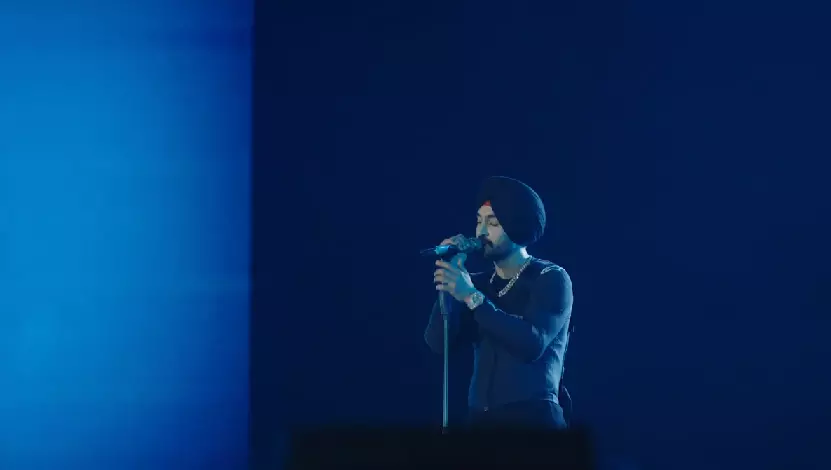
File photo of Diljit Dosanjh performing. Photo: X/Diljit Dosanjh
In January, Bollywood playback singer Arijit Singh said he would step back from mainstream Bollywood work to focus on independent music, a move seen by some as a sign of shifting priorities within the industry. For many artistes, the ecosystem itself has changed. “Being an independent artist in India has become much more accessible now,” says indie music producer Baislamhq, pointing to streaming platforms and social media that allow musicians to release work without labels. At the same time, he added, “[while] it is easier to enter now, it is harder to stand out”.
Additionally, Indian independent artists contend with a challenge at home: the country’s enduring fascination with Bollywood soundtracks.
Travellers from the 1970s through the 1990s may recall a familiar scene, a friendly taxi driver abroad singing Mera Joota Hai Japani to the delight of Indian passengers. Even now, the appeal of songs like Naatu Naatu (from the 2022 Telugu film RRR, also available in Hindi) continues to shape what many listeners recognize as ‘Indian’ music. For practitioners on the ground, that pull is unmistakable.
Piyali Sen, a Bengaluru-based choreographer who teaches Bollywood dance, says her students and clients tend to gravitate toward songs with catchy choruses and slick hook steps. “Whenever I choreograph for wedding sangeets, popular Bollywood tracks are what people ask for,” she says. “With social media, a song’s popularity is often tied to the reels fans create. For an indie track to break through, it helps to have a strong beat and good dance moves.”
She adds: “Indie artists should be able to dance well. That is often not the case.”
Also read: Why a Chennai professor has made it his mission to search for a ‘missing’ singer in Gaza
Yet Bollywood’s reach, however vast, is no longer all-defining.
Musician Raghu Dixit cites himself as “living proof” that independent music can flourish without leaning on the industry’s infrastructure. He points to artists and bands, from Indian Ocean to figures in the Punjabi indie scene, as well as Nucleya, Prateek Kuhad, Anuv Jain, Hanumankind and newer names like Reble, who have built audiences on their own terms. Streaming platforms, independent venues and music festivals, he argues, have created an ecosystem in which artistes can find listeners without passing through Bollywood as a gatekeeper. “It [Bollywood] helps, certainly,” he says, “but the scene is not reliant on it.”
Many independent musicians echo that view, framing Bollywood not as an adversary but as one element in a broader, increasingly varied musical landscape. Baislamhq, for one, sees the line between the two worlds blurring, with crossover tracks becoming more common. “What was once a divide,” he notes, “is now a space where both can grow.”
If Bollywood remains India’s musical first love, the global playbook for building something as big as BTS may lie elsewhere.
According to an article in the New Yorker, K-pop is less a genre than a mode of musical production and at its core is the idol system for which entertainment companies scout promising performers and subject them to a rigorous, often years-long training regimen.
“It is not just great music, but a fan-driven cultural ecosystem that Korea built over decades,” Dixit agrees. India, he argues, may not produce a single global phenomenon in the same mould but could instead see multiple voices, across languages and forms, finding audiences worldwide. “Everything, everywhere, all at once.”
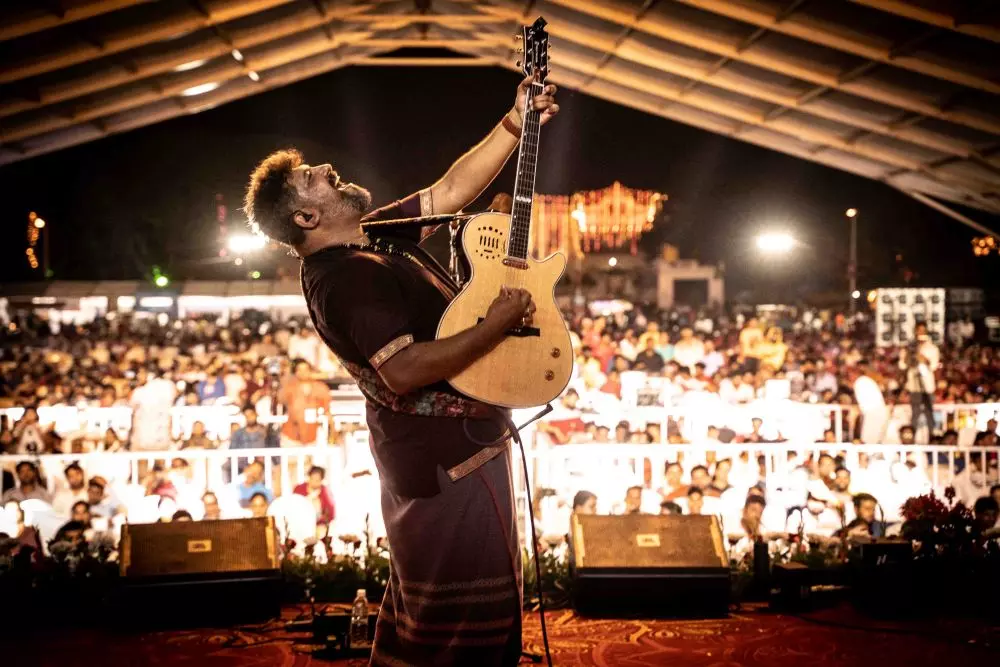
Raghu Dixit at a concert. Photo courtesy: raghudixit.com
For Dixit, the path to wider resonance lies in authenticity. “The simpler and more rooted you are, the more universal your work becomes,” he says, describing a career built on folk traditions and regional language music. From Hey Bhagwan, a high energy folk fusion with Kannada lyrics, to Jag Changa, which is entrenched in folk roots, Dixit’s music arc follows the steady vision of what he wants to do.
Still, matching BTS’s scale would require a rare convergence: great music, a compelling story, precise timing and a team attuned to global pop cycles, Vidyasagar believes. BTS benefited from both the rise of platforms like Twitter and YouTube, which enabled continuous, intimate fan engagement, and the broader Korean Wave, which had already primed global audiences.
Fans remain central. Poojitha Reddy, a 26-year-old from Bengaluru who identifies as part of the ‘BTS Army’, points to the group’s meticulous global strategy, from retaining Korean lyrics to cultivating localised fan experiences. “BTS has it all – talent, performance and attitude. The consistency of storytelling and how they engage fans across platforms is phenomenal,” she says, adding that no Indian indie act yet commands comparable fan mobilisation.
Then there is the question of infrastructure, a must behind any breakout act.
In the case of K-pop, the Korean government passed a legislation in the ’90s to help strengthen the country’s artistic production. This resulted in the perfect incubator for a generation of teenagers to flourish. While government support makes it easier, the broader infrastructure around the artiste is crucial. Managers, agents, labels, marketing and media teams scale an artist’s reach and popularity. Yet many independent musicians continue to operate with minimal institutional support.
Bengaluru-based DJ and radio host Rohit Barker notes that radio and social media have helped local artists reach wider audiences, though access to venues remains uneven. “With more stages, the future looks bright,” he says.
“The biggest struggle is not just making good music but getting people to hear it,” Baislamhq says, pointing to the financial muscle of global labels. Dixit describes the current moment as exploratory, with international companies still testing the waters. “The real shift will come with long-term investment in artist development across genres,” he says.
Also read: How artists are collaborating with local communities to bring about change in urban India
What might define an Indian global pop sound too remains an open question.
For Dixit, the answer lies in India’s plurality. “India doesn’t have a single musical identity and that’s our greatest strength,” he says, envisioning a landscape where folk, hip-hop and fusion coexist and travel internationally. “An Indian global sound could be a folk song from Rajasthan, a Kannada indie track, a Tamil hip-hop record, or a fusion experiment; all coexisting, thriving and building a scene that is a robust reflection of the incredible country we are. The world is moving toward plurality, not homogeneity. If anything, India is uniquely positioned to reflect that.”
For now, India’s indie scene appears poised for steady, distributed growth rather than a single, defining breakthrough.
If at all an indie artist makes it to the popularity levels of BTS, there is a cautionary tale in the band’s 2.0 appearance last month (following the band members’ compulsory two-year military service, under South Korean laws for all adult men). Its entertainment company HYBE’s stock reportedly fell by over fifteen per cent following the underattended reunion concert in Seoul (the attendees still reportedly numbered about 100000, but the anticipated footfall had been double that). The word on the ground was that the machinery around them may have started to weaken. Peppered in the behind-the-scenes documentary aired on Netflix in March were doubts expressed by the BTS members on using more English lyrics than Korean and if their music was getting banally ‘global’ — as one of the band’s rappers, RM, put it, “It feels like eating kimchi fried rice at Paris Baguette.”
In an era of fragmented listening, the task may be less about producing one global superstar than sustaining many distinct voices who are rooted locally, yet legible worldwide. If a breakthrough comes, it may not look like BTS. And that may be the point.