- Home
- India
- World
- Premium
- THE FEDERAL SPECIAL
- Analysis
- States
- Perspective
- Videos
- Sports
- Education
- Entertainment
- Elections
- Features
- Health
- Business
- Series
- In memoriam: Sheikh Mujibur Rahman
- Bishnoi's Men
- NEET TANGLE
- Economy Series
- Earth Day
- Kashmir’s Frozen Turbulence
- India@75
- The legend of Ramjanmabhoomi
- Liberalisation@30
- How to tame a dragon
- Celebrating biodiversity
- Farm Matters
- 50 days of solitude
- Bringing Migrants Home
- Budget 2020
- Jharkhand Votes
- The Federal Investigates
- The Federal Impact
- Vanishing Sand
- Gandhi @ 150
- Andhra Today
- Field report
- Operation Gulmarg
- Pandemic @1 Mn in India
- The Federal Year-End
- The Zero Year
- Science
- Brand studio
- Newsletter
- Elections 2024
- Events

How the good, old Indian winter picnics have upgraded to fancy farm walks and catered events
Till the ‘90s and even part of the first decade of the 2000s, winter weekends meant picnics with family and friends. Today, the neighbourhood park or lakeside has given way to farms and resorts, cookouts have turned into catered meals, as people seek an experience rather than a day in the sun.

The preparation would start days in advance. Decorators, those old-world, had-it-all suppliers of beddings to bartans (utensils) on rent, would be contacted for pots and pans, big enough to cook food for 10-15 people. Meat, fish, vegetables and groceries would be listed and bought the evening before by the adults, while the children made their own frantic preparations, packing books,...
The preparation would start days in advance. Decorators, those old-world, had-it-all suppliers of beddings to bartans (utensils) on rent, would be contacted for pots and pans, big enough to cook food for 10-15 people. Meat, fish, vegetables and groceries would be listed and bought the evening before by the adults, while the children made their own frantic preparations, packing books, frisbee, badminton racquets and shuttle corks. Often, a small bus or minivan would be hired for the whole party to travel together. And early, on the designated day, the group would set out for the park, lake or riverside or verdant green, for a day of sun and the outdoors, often enjoying a breakfast of toast, boiled eggs and banana — or poori-subzi, for those who preferred Indian — on the way. Once at the destination, stoves would be set up, food cooked on site and conversation, music and games, enjoyed. With sundown, utensils and bags would be packed up again, as the group headed back home, tired but joyful.
It was called a picnic, not a hangout, or a drive, or daycation, words more commonly associated now with a day-long jaunt.
Before the malls and multiplexes became weekend hangout zones and farmhouses and resorts started offering lucrative day deals for quick getaways, for those growing up in the ‘90s and before, picnics offered a much-looked-forward-to break from the routine. While the world celebrates ‘International Picnic Day’ on June 18, for Indians, by and large, it would be the winter months, when the torrid summer gave way to pleasanter outdoors, that weekends would be reserved for picnics with family, neighbours, friends or office colleagues.
“Now, I think the word itself has disappeared from our vocabulary. Except on school trips, people don’t use the word picnic for an outing anymore,” says Rakesh Jaitly, a 51-year-old IT professional living in Bengaluru, whose last picnic was a decade, or more, ago. “We wanted to give our daughter, who was then about 10, a feel of the good-old picnic, so we got together with a few other families with children and went for one,” he explains.
The picnics that live on in his memory, however, are the ones he went to in his growing-up years or as a youth. “Back then, bonds were forged on these picnics. Before the social-media era, events like these would help people connect and get to know each other. There would be real conversation and you would get to know about the hidden talents of those in the group. For example, someone would be a good singer. It was all about spending time with family and friends and getting to know them better,” he adds.
Also read: How a film in a ‘nearly extinct’ tongue turns the focus on Kerala’s ‘vulnerable’ Cholanaikkan tribe
The tradition had a slow fade, living on even in the first decade of 2000s, before being replaced by fancier outings.
For some, instead of cookouts, it would be a packed hamper or potluck meal, in the open. Payoja Sharma, a 24-year-old pastry chef from Chennai, recalls how, when she was a child, they would pack their lunches and “take a long drive to somewhere on the East Coast Road (ECR) or Mahabalipuram [nearby] and find some gazebo and picnic there. It's been a while since we did that”.
Adds Sumathi Rao, a college lecturer in Bengaluru: “Once, a Bengaluru picnic meant spreading a sheet in Cubbon Park or Lalbagh [city attractions] with chitranna and mosaranna [local delicacies] or homemade biryani. Today, families drive past these parks to resorts in the city outskirts near Kanakapura Road or Devanahalli for a ‘day outing’.”
Others from the city too, like businessman Ramesh Gowda K and bank official Rajesh D Naik, talk of picnics by the lakes or up at Nandi Hills and Chamundi hills, giving way to "organised trips, entry tickets, and curated experiences” or “long drives”, “road trips” and “planned getaways”, made easier by the short weekend packages made available by resorts.
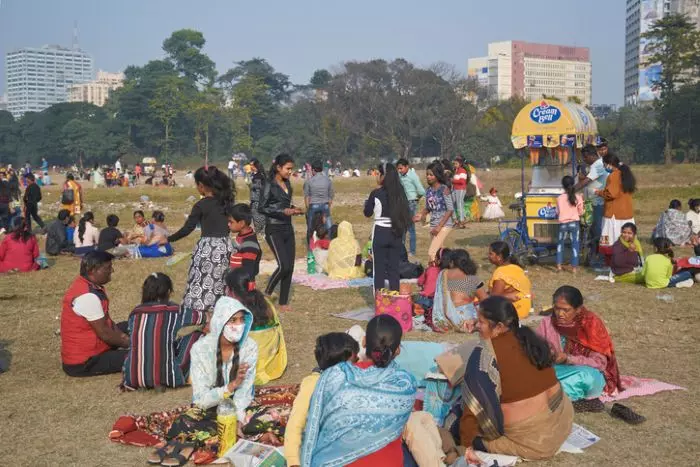
In an era of mounting ecological crisis, picnicking in the midst of nature calls for the responsibility to ensure the revelry doesn't disturb the balance in any way. Photo: iStock
The word itself is believed to owe its origin to the French tradition — reportedly an amalgamation of two words, the verb ‘piquer’, which meant to “to peck” or “to pick” and nique, a noun, which could translate to something like of “little importance”. According to the Oxford English Dictionary, the earliest known use of the word was “in the mid-1700s”. “OED's earliest evidence for picnic is from 1748, in a letter by Philip Stanhope, politician and diplomatist,” adds the dictionary.
In India, while the Raj era saw the colonialists enjoy picnic lunches as a common form of social activity, reportedly detailed in books such as Lunch: A History, a 2014 publication by historian Megan Elias and the early, Curries & Bugles: A Memoir and Cookbook of the British Raj by Jennifer Brennan, the idea of a picnic itself was not unknown to Indians. A terracotta sculpture discovered in Kaushambi and believed to date back to the 2nd century BCE, depicts a group of picnickers on a chariot with a plate of food between them.
A significant feature of the post-Independence era picnics, right up till the ‘90s, would be the involvement of the picnickers.
“Today, subtle shifts in how people picnic are noticeable,” says Joydev Mistri, an event manager in Kolkata. “Earlier, everything, from scouting locations to arranging transportation and cooking and organising games and fun activities, would be handled by the picnickers themselves. Now, many groups are handing over these responsibilities to event managers or tour operators.”
Sharmistha Mukherjee Cheema, proprietor of La Marinate, a luxury catering company based in Delhi NCR, recalls how men would be involved in the cooking at the picnics she would go to in her growing-up years in West Bengal. “My uncle’s mutton curry would be a speciality in these events,” she adds.
Now, her company handles the food for high-end picnics, among other events.
“The first picnic we catered for was two-three years back, for a group of friends. The most recent was earlier this winter,” says Cheema. She adds: “The first one didn’t involve cooking on site. It was all prepared in our kitchen and included things like a cheese platter and a dessert platter. The last one was at a farmhouse, so we set up a chulha (stove) there and while the food was partially cooked in our kitchen, we did some cooking on site. There was a gol gappa counter and the food included seasonal favourites like sarson ka saag, and mutton.” The service includes servers, so that the picnickers can just sit and relax.
Also read: How the centuries-old tradition of Tamil Nadu’s Athangudi tiles is finding a place in modern homes
While some farmhouses offer just the venue, such as the one where Cheema’s clients had their picnic, there are also farms which offer curated day-long experiences, which can be thought of as the 21st century avatar of the good old picnic.
Anita Kachhi founded Farmwalks two-three years back and has on board eight to ten farms in the Delhi NCR area, where clients can “enjoy a picnic setting on an organic farm”. “The experience includes petting farm animals, vegetable picking and enjoying a healthy, organic meal, provided by the farms. The average charges are Rs 1400 per head for adults and Rs 1000 per head for children,” she explains. Over the years, her company has hosted groups of school children, corporates and family groups. “The food offered is a mix of soups, salads, Indian, continental and barbecue,” adds Kachhi. “It is a learning opportunity. Now people want something more than a traditional picnic. They want an experience. The season started in November, post Diwali, and we have been booked every weekend since.”
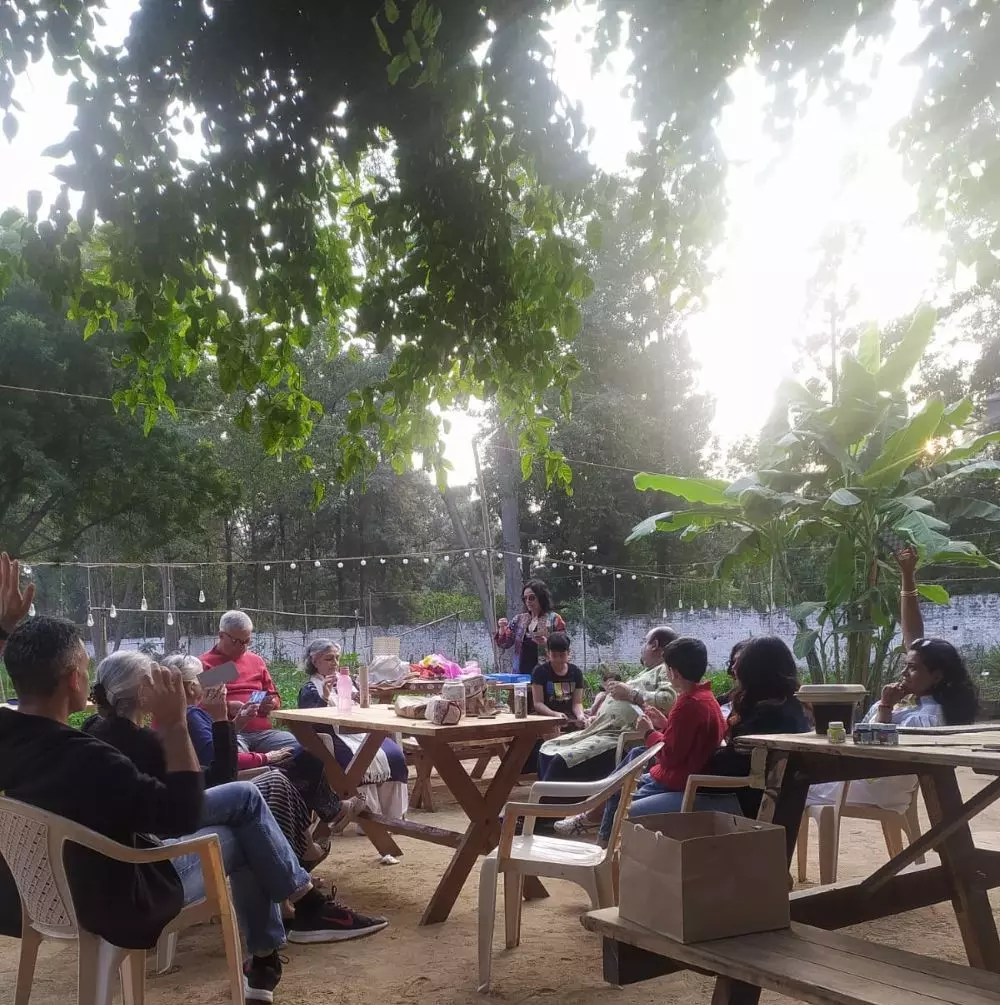
A group relaxes at Delhi's Amarkanan farms. Many farms offer curated day-long experiences, which can be thought of as the 21st century avatar of the good old picnic. Photo: By special arrangement
One of the farms on her board is Amarkanan Farm, in Delhi’s Chhatarpur area, part of the Edible Roots group of farms. “It is in essence, a picnic, though clients don’t use that word. In fact, we are trying to bring it back in use,” says the farm’s proprietor, Kapil (identified by first name only). In addition to farm experiences, Amarkanan offers activities like pizza-making at the farm’s cafe for increased involvement of guests.
The idea is not restricted to Delhi-NCR. Kiruba Shankar, co-owner of the Vaksana Farmstay near Chennai, says they get “day-visit requests, where people come in the morning, stay at the farm and experience farm-related activities like taking the farm animals for grazing, petting them and harvesting fruits and vegetables. Food is readily available as we are a farm-to-table enterprise,” he says.
In terms of food and experience, the modern picnics, with catered food, servers and lavish spread, are closer to the original French and English events; picnics reportedly started among the aristocracy, with champagne, silverware and liveried servers, before gaining mass appeal.
But even the common British adult or children’s picnic hampers had more variety than the Indian spread of the ‘90s — think cold cuts, tins of tongue, an array of sandwiches, root beer, ginger ale… Any Indian child who has grown up reading Enid Blyton’s children’s fiction can rattle off the essentials in a minute.
The potluck picnic that Ayandrali Dutta, a food writer and content strategist based in New Delhi, enjoyed with her friends at the national capital’s Sundar Nursery recently, definitely boasted more options than the traditional mutton curry, fried fish and rice picnics. “We had keema pao, macaroni, some salads, cake etc.. We had sent one person ahead, at 9.30 to hold a spot near the lake. Sundar Nursery gets very crowded on weekends, so if we missed the right spot, it would be half the fun gone,” she says.
Dutta is part of a group in Delhi which has been trying to revive the picnic culture among friends over the past few years. “While some of our picnics are held in places like Sundar Nursery or Lodhi Gardens, where it's a potluck because you don’t have permission to cook, I have also been to farmhouse picnics in Noida and Gurgaon, where the food is cooked on site,” she says.
It is, however, not the gang who does the cooking, explains Cheema, who is among Dutta’s picnic circle. “We engage a caterer, not one as high-end as my company, but we don’t do the cooking ourselves,” she says.
Also read: What Telangana’s Mudumal Menhirs say about India’s past astronomical prowess
Perhaps the essence of the picnic now lives on in being outdoors and spending time with your brigade — family, friends and friends who are family — and enjoying the frills as a natural upgrade.
Says Smita Chanda, a school teacher based in Kolkata, “Winter picnics will always be about spending time together, making memories, and celebrating the season. Whether it’s an outing with homemade snacks or a fully organised event, the essence remains the same.”
Indeed, in smaller towns probably the pleasure retains much of its simplicity. The last weekend of 2025 reportedly saw picnickers in Ranchi flocking to the town’s Kanke Dam, Dhurwa Dam, Tagore Hill and other popular hangout spots, to soak in the sun and the festive cheer. But in an era of mounting ecological crisis, picnicking in the midst of nature demands the conscientiousness to ensure that the revelry doesn't disturb the balance in any way. Recently, Odisha’s minister of state of forest, environment and climate change department, Ganesh Ram Singkhuntia, made news when he warned picnickers against littering and polluting picnic spots in the state, after many were reportedly found flouting the plastic ban in ecotourism destinations.
The record for the largest picnic in the world was set in 2009 in Lisbon, Portugal, which reportedly had over 22,000 participants. In India, picnics have traditionally been for people who know each other. The modern-day farmhouse events too are catered for intimate groups — probably more so, as occupational demands, lifestyle and nuclear families make large gatherings a logistical nightmare, involving the aligning of multiple schedules. Perhaps frequent travels and evolving work commitments, where weekends are no longer a guaranteed available slot for everyone, is one contributing factor to fewer picnics being enjoyed. The trick may just be in ditching the meticulous planning and heading out for an impromptu day in the sun, disregarding the lack in numbers, less-than-perfect venue or hastily-put-together menu. Rather than an upgrade to fancy, perhaps what’s needed to boost the picnic culture in India again is a move to an unscripted day of fun.
(With inputs from Priyadarshini N, Samir Purkayastha and Naveen Ammembala)