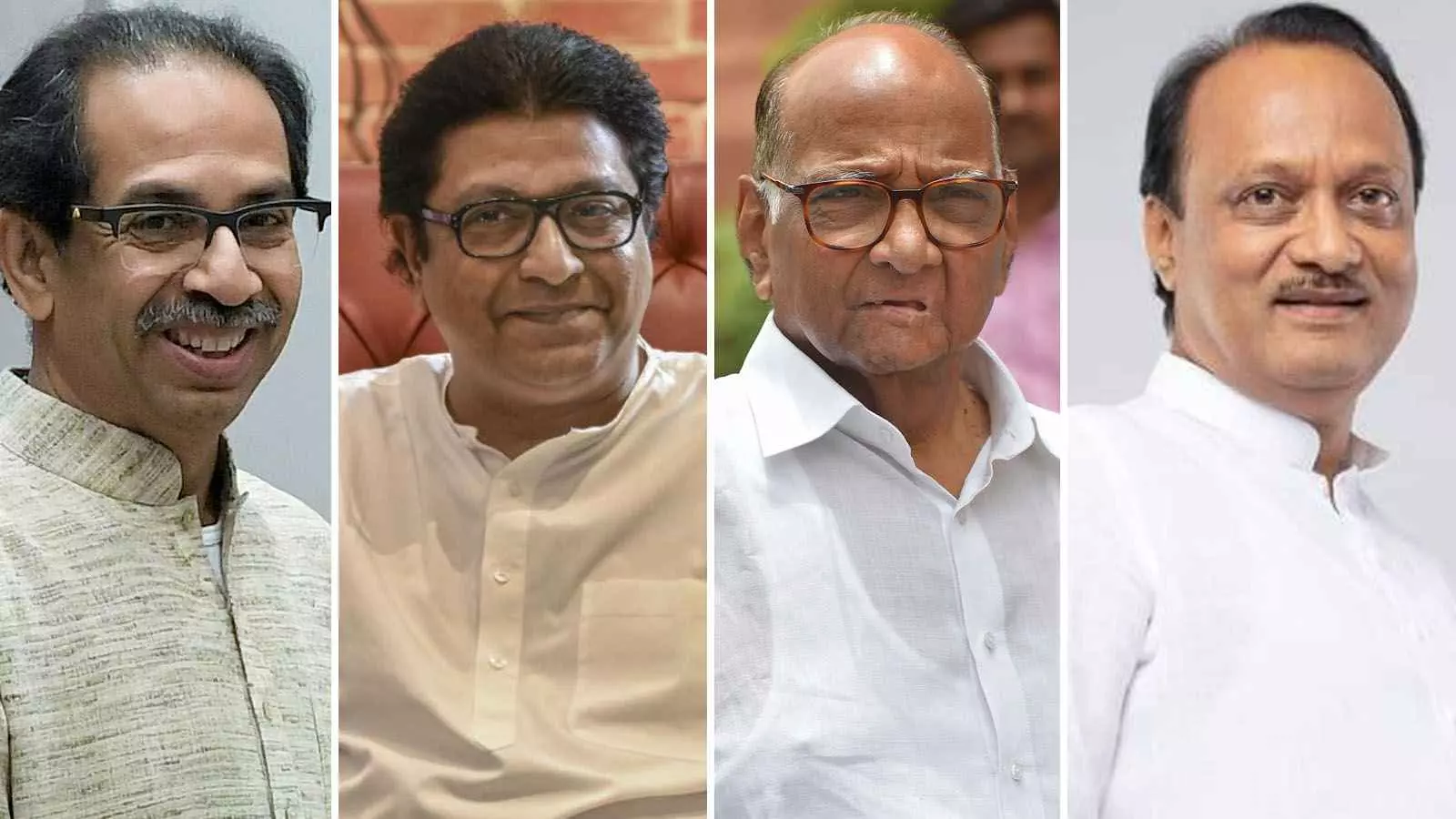
Why Thackeray and Pawar strongholds crumbled in Maharashtra local body polls
Failed family reunions, shifting urban voter priorities and the BJP’s organisational edge reshape power equations in BMC, Pune and Pimpri-Chinchwad civic polls

The Maharashtra local body election results on Friday (January 16) delivered a stunning blow to two of the state’s most entrenched political dynasties – the Thackerays in Mumbai and the Pawars in Pune, as the BJP-led Mahayuti alliance swept the civic polls, redrawing the balance of power in their traditional strongholds.
Breaking the nearly three-decade-old dominance of the undivided Shiv Sena, the BJP emerged as the single-largest party in the Brihanmumbai Municipal Corporation (BMC) elections and also triumphed in Pune, where it outperformed the alliance of the two NCP factions.
Also read | Maharashtra civic polls: BJP ahead in Mumbai, Pune and Nagpur; Sena in Thane
Breaching the bastion of the Thackeray family, the alliance of the Bharatiya Janata Party and Eknath Shinde-led Shiv Sena secured a clear majority in BMC elections by bagging 118 out of 227 seats. BMC has a whopping budget of Rs 74,427 crore for 2025–26. Coupled with a strong showing by Deputy Chief Minister Eknath Shinde’s Shiv Sena, the BJP now finds itself firmly in the driver’s seat to govern the cash-rich corporation.
In Pune and the neighbouring Pimpri-Chinchwad Municipal Corporation elections, the BJP achieved a massive victory, opening up a wide gap over the alliance between the Nationalist Congress Party (NCP) and the NCP (SP).
Reunion gamble misfires
The Mumbai verdict marked a decisive setback for the Shiv Sena (UBT)’s traditional dominance in the city, exposing deep organisational weaknesses and strategic miscalculations by the Thackeray camp. Once seen as the natural party of power in the BMC, the Sena found itself outmanoeuvred by the BJP-led Mahayuti, which capitalised on vote polarisation, sharper booth-level mobilisation and a clearer leadership narrative to wrest control of the country’s richest civic body.
Uddhav Thackeray’s decision to align with his brother Raj Thackeray, in the hope of consolidating Marathi votes and invoking the legacy of Bal Thackeray, proved counterproductive due to Raj’s earlier tirades against North Indians and Muslims.
Uddhav believed that Raj, rather than his Maha Vikas Aghadi ally Congress, would help consolidate votes against the BJP. The Sena (UBT) chief expected Raj’s oratory to bring together roughly 40 per cent of Marathi votes along with the Muslim vote, estimated at 18 to 20 per cent, as a formidable counterweight. That assessment, however, proved misplaced.
Raj not only alienated North Indian, Gujarati, Marwari and South Indian voters but also caused Muslim voters to think twice. His past remarks, including calls for the removal of loudspeakers from mosques, weakened support for Uddhav’s party.
Minority votes ultimately proved decisive but were fragmented among several parties, including the Congress, AIMIM, the Samajwadi Party, the NCP and the NCP (SP). Only a small fraction stayed with Uddhav Thackeray, and this division altered the electoral outcome.
BJP outmanoeuvres Thackerays
On the other hand, the BJP systematically consolidated non-Marathi votes in large numbers. With the support of Deputy Chief Minister Eknath Shinde, it also made significant inroads into the Marathi voter base.
At the same time, Chief Minister Devendra Fadnavis, projecting himself as a development-oriented leader and a proponent of Hindutva, drew substantial support from Marathi voters as well. As a result, the gap between the BJP–Shiv Sena alliance and the Thackeray brothers steadily widened.
Also read | Maharashtra polls: Amid BJP's statewide sweep, Congress wins big in Latur
The Thackeray cousins had time to narrow this gap but moved too late, by which time the BJP was already well on its way to securing a majority. If they had known they would contest together, there was little reason to delay strengthening their local cadre and engaging voters at an earlier stage. Instead, they visited shakhas only days before polling and addressed just one mega rally. While it had some impact, it fell well short of what was required.
Pawar legacy wanes
The outcome of the Pune and Pimpri-Chinchwad Municipal Corporation elections has delivered an unmistakable message: the Pawar surname, once a decisive force in these urban centres, is no longer enough by itself to secure electoral success.
Even with tactical coordination between the two Nationalist Congress Party (NCP) factions led by Sharad Pawar and Ajit Pawar, voters did not rally behind the arrangement in the manner the leadership had hoped for.
In the Pune Municipal Corporation, the BJP has clearly pulled ahead, securing victories or strong leads in a significant number of wards and placing itself in a dominant position within the civic body.
The NCP factions, despite broadly aligning their strategies, were unable to expand their traditional strongholds into a wider citywide surge. Over the past decade, Pune’s electorate has undergone a noticeable shift, with an expanding middle class, first-time voters and apartment-based communities responding more to issues of governance, infrastructure and national political narratives than to legacy-driven local leadership.
The Pawars’ campaign failed to effectively address this transition or present a cohesive urban vision capable of matching these expectations, a weakness compounded by the near absence of Sharad Pawar from the campaign and the low-key role played by his daughter and Baramati MP Supriya Sule.
Stronghold slips away
Pimpri-Chinchwad, however, was expected to offer a contrasting outcome. The civic body has long been regarded as a Pawar bastion, particularly under Ajit Pawar’s influence. Yet, the results there also proved underwhelming for the NCP. The BJP has made substantial gains and is leading or winning enough seats to seriously challenge, if not dismantle, NCP dominance in the corporation.
The significance of this result lies in the fact that Pimpri-Chinchwad was widely viewed as a test of whether Ajit Pawar’s personal influence could still decisively shape urban electoral outcomes. The verdict indicates that individual stature alone is insufficient without organisational unity and a coherent political narrative.
Also read | Gauri Lankesh murder case accused Pangarkar wins Jalna civic poll as Independent
A major factor behind the setback was the partial and ambiguous nature of the Pawars’ rapprochement. While there was seat-sharing and limited joint campaigning, it was never presented as a full-fledged political reunion.
At the grassroots level, cadres remained split, allegiances were unclear, and voters were unsure whether the arrangement reflected genuine reconciliation or merely a temporary tactical move to block the BJP. This lack of clarity weakened the alliance’s electoral appeal.
Meanwhile, the BJP approached both elections with stronger booth-level organisation, a sharper message and a sustained urban footprint built over several years. In contrast, the NCP’s campaign appeared hurried, assembled close to polling day and overly dependent on residual goodwill rather than a forward-looking agenda. Rivalries between local leaders aligned with different Pawar camps further disrupted campaign cohesion across several wards.