If the move materialises, it would significantly strengthen the Shinde faction in Parliament.
Operation Tiger buzz: Why Uddhav's Sena is bracing for tough days | Capital Beat
Ahead of Shiv Sena's 60th foundation day, six UBT MPs may join Eknath Shinde, raising questions over defections, democracy and Uddha Thackeray's future

A fresh political crisis appears to be unfolding within the Shiv Sena (UBT), with reports suggesting that six Lok Sabha MPs from Uddhav Thackeray's faction have broken away to form an independent group and are likely to merge with the Shiv Sena led by Maharashtra Deputy Chief Minister Eknath Shinde. If the move materialises, it would significantly strengthen the Shinde faction in Parliament and deepen the challenges facing the Shiv Sena (UBT) chief, Uddhav Thackeray, ahead of the Shiv Sena's 60th foundation day.
Also read: After TMC, Shiv Sena (UBT) exodus, is Samajwadi Party heading towards a split?
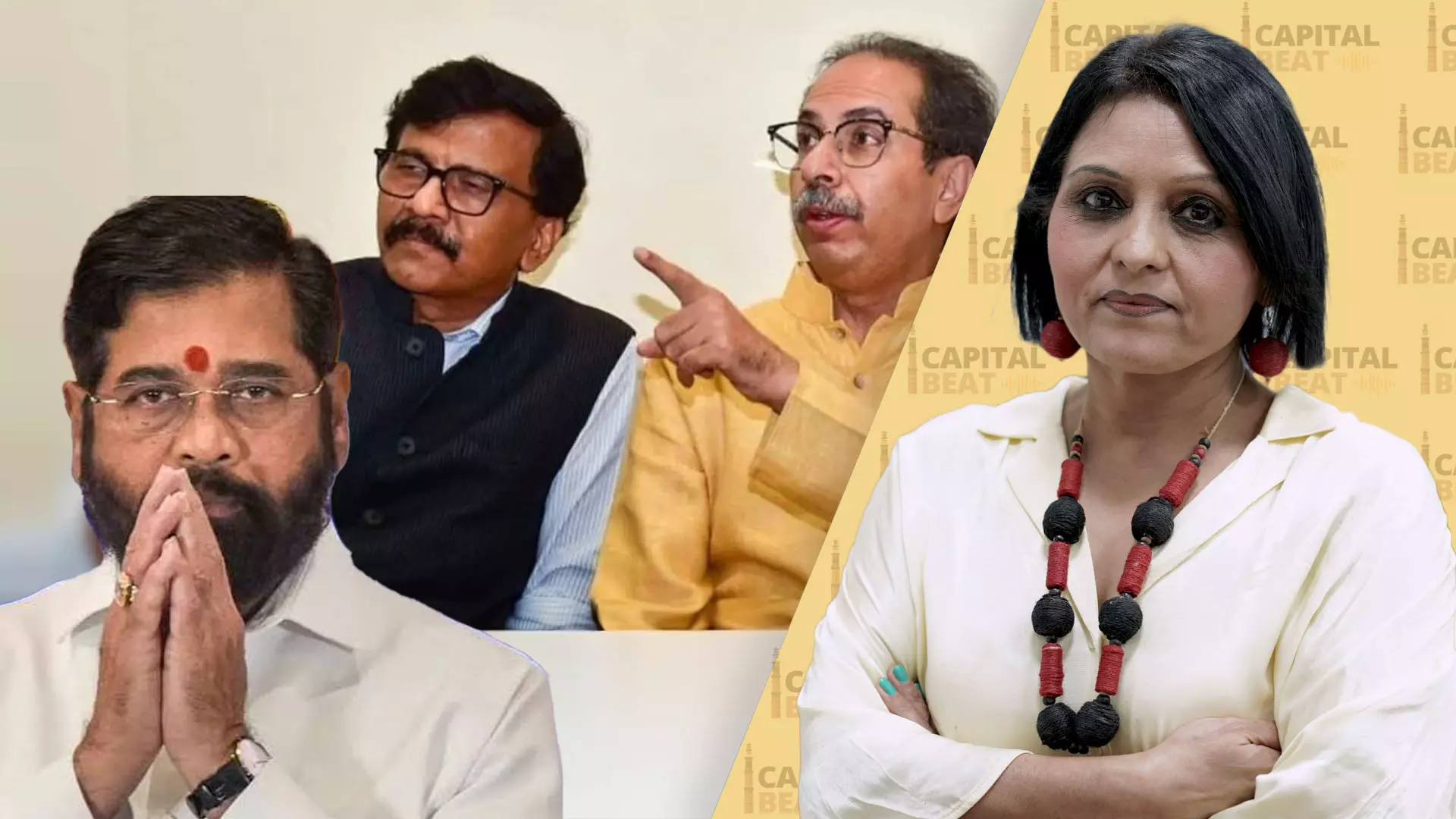
In this episode of Capital Beat, Puneet Nicholas Yadav, Political Editor, The Federal, and Yogesh Pawar, senior journalist, discuss the implications of the reported rebellion, the reasons behind it, and what it means for Maharashtra politics.A calibrated move
The reported breakaway comes at a politically significant moment. According to reports discussed during the programme, the MPs are expected to formalise their merger with the Shinde-led Shiv Sena on June 19, coinciding with the party's foundation day celebrations.
The MPs reportedly involved include Sanjay Jadhav, Baburao Kadam Wakchaure, Sanjay Deshmukh, Nagesh Patil Ashtikar, Om Rajenimbalkar and Sanjay Dina Patil.
If the merger proceeds, the Shinde faction's strength in the Lok Sabha would increase substantially, consolidating its position within the ruling NDA.
Also read: Shiv Sena (UBT) faces rebellion; Raut alleges Rs 50 crore bid amid Shinde camp buzz
Questions are also being raised about whether Uddhav Thackeray can prevent further erosion within his party and whether Maharashtra is witnessing a political script similar to developments seen elsewhere in recent years.
Rumours become reality
Yogesh Pawar said speculation about a fresh split had been circulating ever since the original Shiv Sena split in 2022.
According to him, rumours repeatedly surfaced that it was only a matter of time before more leaders deserted Uddhav Thackeray. While leaders within the UBT camp had dismissed such claims until recently, Pawar said events now appear to be moving in precisely that direction.
He argued that the latest developments could strengthen Eknath Shinde's claim that his faction represents the political legacy of Bal Thackeray, regardless of whether that claim is universally accepted.
Also read: Shiv Sena workers protest after Shinde’s name omitted from NMMC event invitation
Pawar noted that discussions about defections had intensified over the past week, with growing indications that a significant shift was imminent.
Why now?
When asked why MPs who had remained loyal during the 2022 split might now be changing sides, Pawar suggested that multiple pressures could be at play.
He claimed that political pressure and investigations had become a recurring feature of Indian politics and alleged that leaders often face scrutiny over personal or financial matters. Such circumstances, he argued, can create incentives for politicians to alter their political alignments.
Pawar also referred to concerns that MPs may struggle to secure adequate development funds for their constituencies if they remain outside the ruling ecosystem.
According to him, fears over constituency development, political survival and personal vulnerabilities may collectively influence decisions to switch allegiance.
Also read: Shiv Sena reunion on the cards? BJP’s growing clout sparks calls for unity
He stressed that these factors should be viewed as part of a broader political pattern rather than isolated incidents.
Operation Tiger
As reports of the rebellion emerged, posters bearing the slogan "Operation Tiger" reportedly appeared across parts of Mumbai.
The Shiv Sena (UBT) subsequently issued a whip directing its MPs to attend a meeting in New Delhi amid fears of a rebellion.
Reports indicated that the party may initiate disqualification proceedings against MPs who fail to comply.
The developments have heightened tensions within the party and intensified speculation about the scale of the possible defection.
Numbers in Parliament
Puneet Nicholas Yadav examined the parliamentary implications of the reported split.
According to him, the immediate significance lies in the numbers game in Parliament. He argued that the ruling NDA is attempting to expand its strength in anticipation of future constitutional and legislative initiatives that may require a two-thirds majority.
Also read: 'Operation Tiger' rumours trigger unease in Maharashtra politics
Yadav referred to discussions around issues such as delimitation, parliamentary restructuring and women's reservation, noting that securing additional MPs could help the government move closer to the numbers required for constitutional amendments.
He explained that if the reported Shiv Sena defectors join the NDA fold, the alliance's tally would rise further, though it would still remain short of the two-thirds mark.
The broader objective, he suggested, appears to be the consolidation of political strength through the acquisition of additional parliamentary support.
Mandate and democracy
Yadav argued that the issue extends beyond parliamentary arithmetic.
He said voters in several constituencies had specifically rejected rival candidates aligned with Eknath Shinde and elected representatives from the Uddhav Thackeray camp.
As a result, he questioned whether post-election defections amount to a betrayal of the mandate given by voters.
Also read: Congress attacks Amit Shah, alleges bid to engineer defections in Opposition ranks
While acknowledging that parties often justify such moves politically, he maintained that elected representatives switching sides after securing victory under a different banner raises fundamental democratic concerns.
According to Yadav, the phenomenon reflects a broader trend in which opposition parties are increasingly vulnerable to fragmentation.
Challenges ahead
Both panellists agreed that Uddhav Thackeray faces a difficult road ahead.
Pawar argued that the former chief minister's best option is to return to grassroots politics and reconnect with voters directly.
He said the Shiv Sena historically built its strength through street-level mobilisation and public engagement, suggesting that the party must revive those methods if it hopes to recover politically.
Pawar also contended that Uddhav Thackeray continues to enjoy sympathy among sections of the electorate who view him as a victim of political betrayal.
According to him, that emotional connection could still be converted into political support if effectively mobilised.
Institutions under scrutiny
The discussion also touched on the role of constitutional institutions.
Yadav expressed scepticism about whether disqualification petitions alone would resolve the issue, citing previous political disputes that remained entangled in legal and procedural processes for years.
He argued that delays in adjudication often render remedies ineffective by the time judgments are delivered.
Also read: Raj Thackeray hints at 'slightly flexible politics' after MNS backs Shiv Sena
Pawar similarly questioned whether institutional interventions would provide meaningful relief, suggesting that political battles are increasingly being decided through power equations rather than constitutional safeguards.
Both panellists emphasised that opposition parties may need to rely more on public mobilisation than legal remedies.
A defining moment
The reported split represents another major test for Uddhav Thackeray and the Shiv Sena (UBT).
If the six MPs formally join Eknath Shinde's camp, it will further strengthen the NDA's position in Parliament while raising difficult questions about political loyalty, anti-defection laws and the health of India's democratic institutions.
Whether Uddhav Thackeray can prevent further defections or convert public sympathy into political momentum remains uncertain. What is clear is that Maharashtra politics is entering another turbulent phase, one that could have implications far beyond the state.The content above has been transcribed from video using a fine-tuned AI model. To ensure accuracy, quality, and editorial integrity, we employ a Human-In-The-Loop (HITL) process. While AI assists in creating the initial draft, our experienced editorial team carefully reviews, edits, and refines the content before publication. At The Federal, we combine the efficiency of AI with the expertise of human editors to deliver reliable and insightful journalism.