Why Hyderabad is turning into a hotspot for urban snake encounters
Rapid urbanisation is destroying natural habitats, pushing snakes into homes and streets, with rescues and snakebite cases rising sharply across the city

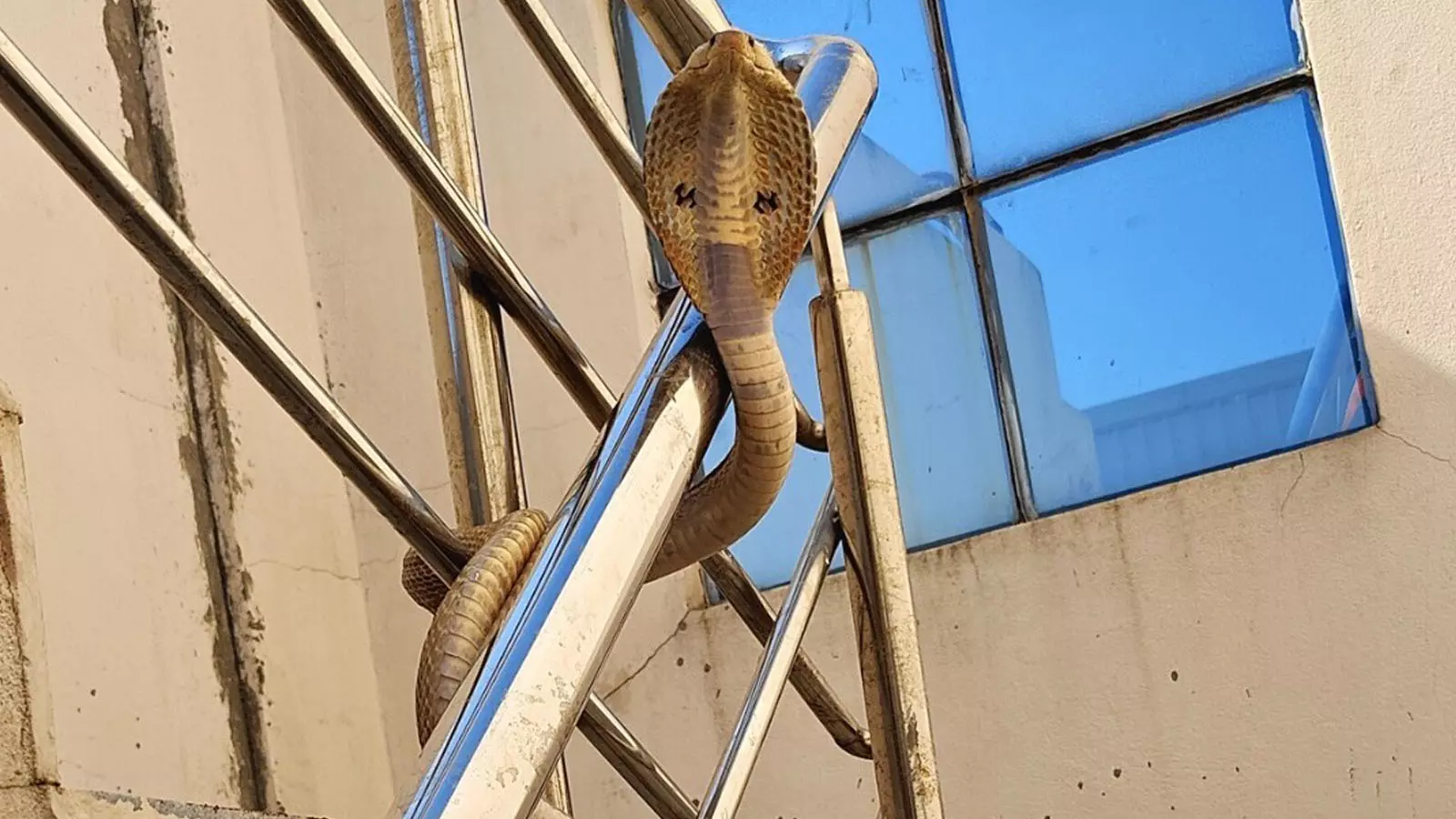
Residents of Hyderabad face a new menace — increased snake activity. A key reason for this alarming development is rampant urbanisation and construction that have altered the city’s landscape.
As the urban centre’s limits spread to accommodate its burgeoning population, it is Nature that is bearing the brunt. Snake habitats in the city, which was once known for its lakes and green cover, are getting obliterated, and the reptiles are finding no option but to seek refuge in human settlements.
Also read: Reckless urban growth under scanner as water quality of Hyderabad lakes plummets
In 2025, more than 15,000 snakes of different types were rescued in Hyderabad and released into forest areas. The Friends of Snakes Society (FOS), an NGO based in Hyderabad’s twin city Secunderabad, has confirmed a rising trend. In 2013, the number was less than 2,500. It quickly rose to 3,389 in 2015, 5,644 in 2018, 8,995 in 2020, and 10,525 snakes in 2021, before hitting 15,000 last year.
The FOS and the Telangana Forest Department’s wildlife wing concur that Hyderabad has indeed turned into a snake 'hub'.
Hiss! What to do if you spot a snake
♦ Stay calm and keep a safe distance from the snake
♦ Move people away quietly and allow the snake space
♦ Do not attempt to kill, catch or handle the snake
♦ Secure the area and restrict access where possible
♦ Contact wildlife authorities or trained snake rescuers immediately
♦ Seek immediate medical help if any bite occurs
Despite being a modern city, the sight of a cobra crawling at the doorstep or a python hiding in the bathroom is no longer rare in Hyderabad. The FOS said it receives more than 100 distress calls every day from various parts of the city.
Snakebites on the rise
As relentless urbanisation makes scarce trees, anthills, rocky mounds and thick vegetation, snakes are left virtually homeless. Their search for new shelter and food is has triggered grave threats such as snakebites.
Also read: Hyderabad scores well on piped water but pockets of problem remain
According to Telangana forensic science data, people aged 31-40 fall victim to snakebites the most. Most incidents of snakebite are reported in June, when the monsoon begins, and mostly around dusk.
It is on the feet and other leg parts that snakes bite the most, and volunteers have warned people to watch their step while walking, especially in and around bushes or in the dark.
More rescue, fewer killings
Rapid construction of houses and expansion of the city are the main reasons for rising snake sightings, FOS General-Secretary Avinash Visvanathan told The Federal Telangana. It's a positive development that people are seeking help with rescue rather than killing the snakes straightaway, he added. It shows there is greater awareness of wildlife conservation.
City residents typically alert bodies such as the FOS as soon as a snake is spotted, and volunteers soon rush to the spot for rescue work. They take the rescued snakes to a conservation centre and eventually release them into forests.
Also read: Snake research institute Kalinga Foundation in Agumbe turns 10
Raju, an FOS volunteer, said snakes found in residential areas are taken to rescue centres and released into the green once a month. A Shankaran, a special-duty officer of the Telangana Forest Department’s wildlife wing, told The Federal Telangana that the department encourages the snakes’ release into the wild.
Training, awareness workshops
The FOS also conducts workshops for school students and the general public to raise awareness about snakes. People are taught to identify different species of snakes, understand their ’ behaviour, and follow safety measures for peaceful human-snake coexistence.
The NGO advises people to call it immediately if they spot a snake, and share the location. A trained volunteer would arrive to safely capture the snake, said its helpline representative Ajay. The organisation operates round the clock, and can be reached at 83742 33366.
For an efficient handling of venomous snakes, a work which is fraught with risk, the volunteers undergo six months of training before deployment.
Also read: King Cobra or Giri Nagu makes its way into Telangana’s forests for the first time
Environmental experts have said that even if snake activities have multiplied, wisdom doesn’t lie in killing them as a solution. It is important to understand that snakes are a key part of the ecosystem, and public awareness initiatives should continue so that they seek the help of specialists to ensure the reptiles’ well-being.
(This article was originally published in The Federal Telangana.)