



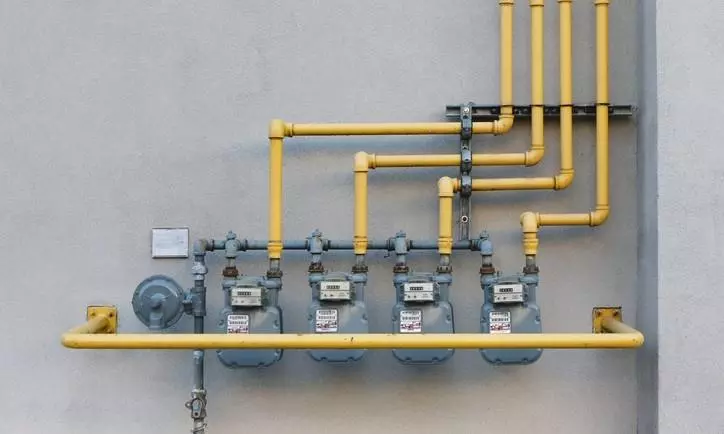
Centre mandates PNG for apartments, but Tamil Nadu is woefully behind
Poor piping infrastructure, political reluctance, and a stubborn cylinder-is-enough mindset hamper progress on this front

In a push for cleaner, safer and more reliable domestic fuel, the Centre has made Piped Natural Gas (PNG) connections compulsory for apartment households across areas where infrastructure is available.
Under a fresh order issued on March 24, LPG cylinder supplies to such households will be cut off after three months if residents fail to switch to PNG.
The move, aimed at reducing dependence on imported LPG amid global supply disruptions, carries significant implications for states like Tamil Nadu that lag in PNG adoption.
Call for swift action
Experts and urban planners have urged the Tamil Nadu government to act swiftly. What they are mooting is mandatory PNG rules, amendments to the Tamil Nadu Common Building Rules, and strict enforcement by local bodies. The state must also ensure safety and security by fast-tracking the required infrastructure through the concerned departments.
Also Read: Govt slashes excise duties on petrol, diesel; will fuel prices fall?
CMDA officials have attributed the slow progress in Tamil Nadu to “poor awareness and a lack of political vision and political will.” They note that the government is simultaneously widening roads across the state, incorporating separate ducts for sewage, gas and EB lines, along with pedestrian platforms.
However, critics argue that political reluctance remains in PNG's adaptation a major hurdle.
Water takes precedence
Association of Professional Town Planners president KM Sadanand minced no words while speaking to The Federal. “Only a couple of companies are working on it in Chennai. There is city-to-city gas storage near the seaside and port via the national highway, but within the city, there is no such plan so far,” he said.
“Urban development authorities get involved only when there is a pressing need. PNG is very cheap. Advanced countries are using PNG, but we are not. We repeatedly dig up our roads for water, drainage, and electrical linkages. Private players are good at executing this project," he added.
Sadanand further said Tamil Nadu is “not proactive or active,” focusing instead on stormwater and drainage issues. “Flooding used to occur once a year, but we are worried about that, not the PNG service,” he remarked.
He also suggested vested interests: “Many private LPG companies are run by politically connected individuals, so political leaders are not looking at PNG service. PNG is the safest method compared to the LPG cylinder system.”
Only a few PNG players in TN
Enquiries by The Federal confirm that the majority of private apartments in Chennai continue to purchase bulk LPG cylinders and pipe them to individual households. Only a few newly built apartments have switched to PNG, where private players have begun supplying.
Two private entities, Torrent Gas Chennai Pvt Ltd and THINK Gas (operating as AGP CGD India Pvt Ltd), are spearheading the effort in Chennai and its suburbs under exclusive City Gas Distribution (CGD) authorisations from the Petroleum and Natural Gas Regulatory Board (PNGRB).
In the initial phase of the PNG rollout, residents in north and central Chennai localities, including Manali, Madhavaram, Perambur, Royapuram and Thiruvottiyur, are now eligible to apply for domestic connections. Expansion work is progressing briskly in south Chennai along the Old Mahabalipuram Road (OMR), East Coast Road (ECR), Sholinganallur, Siruseri and Tambaram, while active pipeline laying continues in West Chennai at Ambattur, Avadi and Poonamallee.
Although there is strong public acceptance for PNG connections, properly planning and rolling them out is far from straightforward. Acquiring land and laying pipelines across Tamil Nadu is difficult. "If the government acquired the land and handed it over to us, we could execute the project much faster," said an employee with a private PNG gas distributor who wished to remain anonymous.
Logistics remains challenge
Both Torrent Gas Chennai Pvt Ltd and THINK Gas are aggressively expanding pipeline networks for domestic households, commercial outlets, industries and CNG stations. Following the PNGRB’s unified pipeline tariff rollout on January 1, Torrent Gas slashed prices by up to ₹2 per standard cubic metre (scm), and THINK Gas by up to ₹4 per scm in Tamil Nadu, making PNG even more affordable than LPG.
Hari, Marketing Manager for a leading private gas distribution company, told The Federal that 70 per cent of the residential pockets in Kanchipuram and Chengalpattu districts, including Tambaram, Kelambakkam, Semmancheri, Thalambur and Karappakkam, have already received PNG connections. However, securing timely permissions from state and central government agencies continues to pose a major hurdle. “Metro rail construction goes on 24 hours a day, but we are allowed to lay pipes only between midnight and 3 am,” he said.
Also Read | Why excise cut on fuel offers relief for oil companies, not necessarily end-users
While government-to-government projects receive full cooperation, private players are still at a disadvantage, he added, calling for greater administrative support. Hari also cited escalating land values in Tamil Nadu, which have surged 30-40 per cent in the past two years, compelling the company to pursue long-term lease models instead of outright purchase.
Behavioural patterns impede change
Above all, he pointed to the persistent “cylinder-is-enough” mentality among the public. In high-rise apartments, where nearly 70 per cent of residents are tenants, many households do not cook three meals a day and remain wary of security deposits, metering charges and perceived safety risks of pipes entering their homes. “This mindset has to change,” Hari stressed.
While Tamil Nadu grapples with delays, major metro cities have embraced PNG with remarkable success, delivering cleaner air, uninterrupted supply and significant cost savings.
Delhi stands out as a model. Indraprastha Gas Limited (IGL) has achieved over 33 lakh domestic PNG connections as of January 2026, with thousands more added monthly. The network now covers most of the capital, including 260 out of 350 villages in recent expansions. During the current LPG supply concerns, IGL has ramped up installations to 1,300-1,500 connections per day, with a 200 per cent surge in applications. The result: visibly improved air quality and hassle-free cooking for millions.
Tamil Nadu yet to catch up
Mumbai and Pune, under Mahanagar Gas Limited, boast well-established PNG networks that have expanded rapidly into tier-2 areas, replacing LPG dependence. Ahmedabad and Surat have built extensive pipelines, now reaching semi-urban and rural pockets. Bengaluru too has seen significant growth, with GAIL Gas and others accelerating connections in response to urban demand and environmental concerns.
Also Read: Centre assures adequate fuel supply, prioritises PNG amid West Asia conflict
Nationally, India has around 1.6 crore PNG connections, with active users crossing one crore. The current push driven by the need to ease pressure on LPG has seen over 3.5 lakh new domestic and commercial connections in the first three weeks of March alone.
As the Centre’s three-month deadline looms, the ball is now in Tamil Nadu’s court. The question is whether the state will seize the opportunity or continue to lag behind the PNG success stories of Delhi, Mumbai and other metros.
