



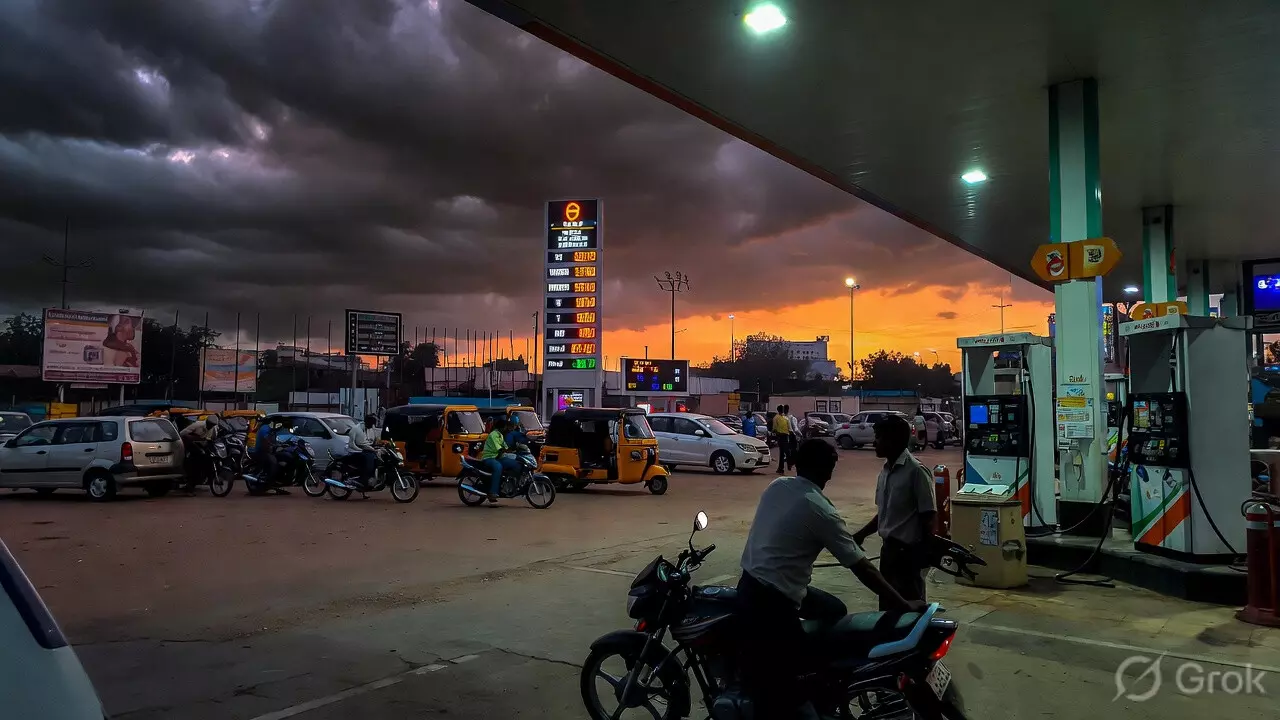
Why excise cut on fuel offers relief for oil companies, not necessarily end-users
Rs 10/litre duty cut comes as OMCs bleed Rs 48.8 per litre on every sale; with 5 state elections concluding by April-end, fuel price hikes may be round the corner

With international crude prices surging in the wake of Iran's blockade of the Strait of Hormuz — a critical route through which nearly a fifth of the world's daily oil supply passes — the Centre on Friday (March 27) announced a steep cut in excise duty on petrol and diesel of ₹10 per litre.
The Union Finance Ministry slashed the excise duty on petrol from ₹13 per litre to ₹3, while diesel's levy was wiped out entirely. Both cuts took effect immediately after a Gazette notification was issued the same day. Finance Minister Nirmala Sitharaman announced the move on social media, framing it as consumer protection against rising fuel prices.
Will consumers actually benefit?
The relief at the pump is far from certain. State-owned oil marketing companies (OMCs) are currently absorbing losses of around ₹48.8 per litre on petrol and diesel sales due to the Brent crude surge. The excise cut is therefore more likely to ease the bleeding for oil companies than translate into lower prices at the fuel station anytime soon.
Also read | Govt slashes excise duties on petrol, diesel; will fuel prices fall?
Private player Nayara has already hiked petrol prices by ₹5 per litre. State-owned OMCs have held back for now — but whether that holds once the five assembly elections wrapping up in April are out of the way is another question entirely.
Fuel prices and elections
In India, petrol and diesel prices have long run on an unspoken electoral calendar — suppressed before votes, revised sharply after. The pattern holds across governments.
Ahead of the 2022 assembly elections in Uttar Pradesh, Punjab and Goa, retail fuel prices were frozen for nearly 140 days even as crude climbed internationally. Within 48 hours of results day, prices were hiked, by ₹10 per litre, on both petrol and diesel, delivered in rapid tranches over 16 days.
Before the 2024 Lok Sabha elections, prices held steady for nearly two years from May 2022. A ₹2 per litre cut landed just weeks before polling — widely read as an electoral gesture rather than an economic one.
The excise duty game follows the same rhythm. Duties rise quietly when crude falls — as in 2020 — letting the government pocket the margin rather than pass it on to consumers. Cuts arrive only when political heat or a crisis makes them unavoidable. This week was both.