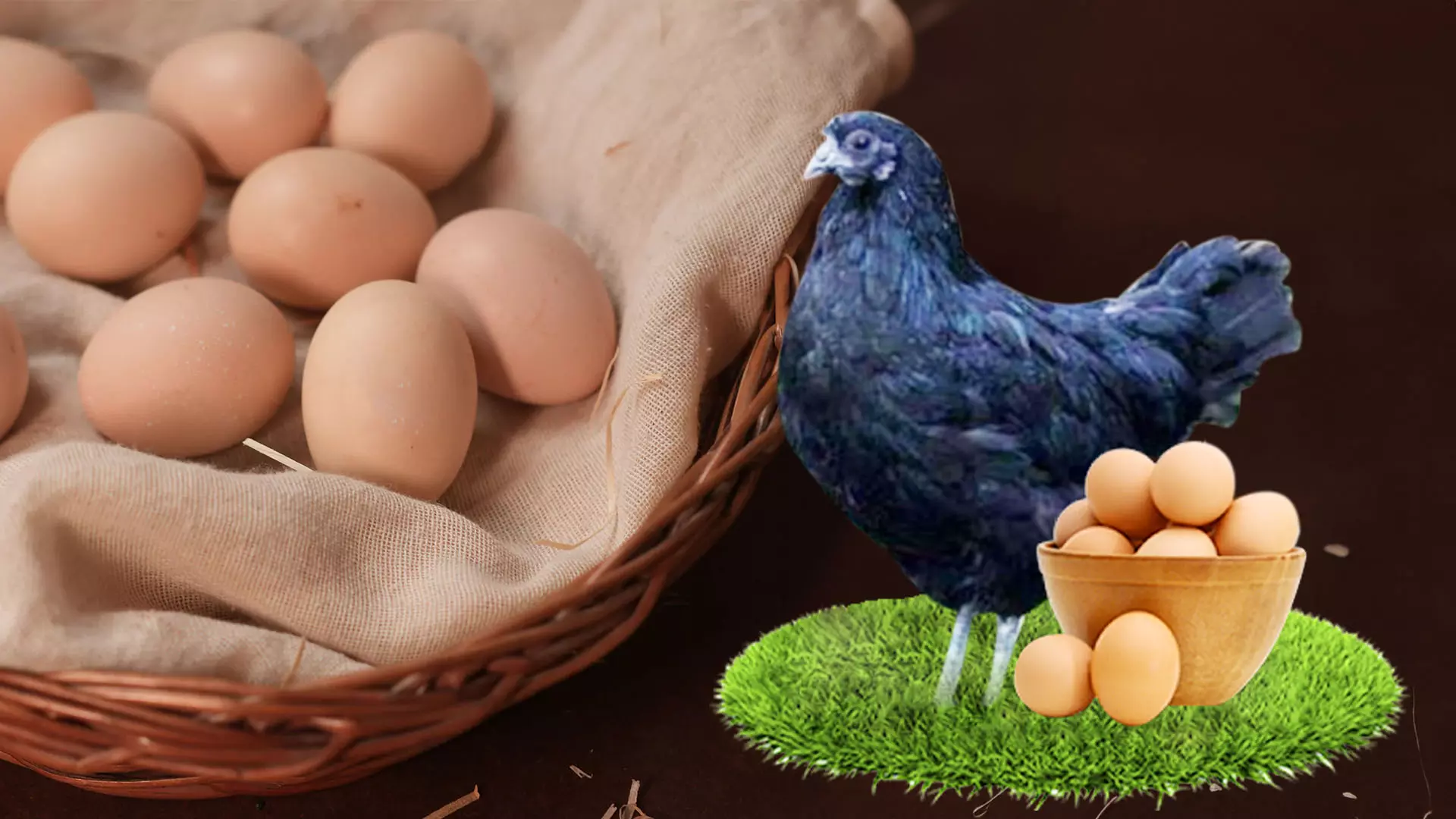
Demand for Kadaknath eggs surges in Chennai, but are they worth the price?
Marketed as “magic eggs” and sold at a premium, Kadaknath eggs are gaining popularity in Tamil Nadu. Do science and facts justify the hype?

Kadaknath eggs, often branded as a superfood, are seeing a sharp rise in demand across Chennai. Sold at prices significantly higher than regular white or brown eggs, these black eggs are being promoted for their supposed superior nutrition. But are Kadaknath eggs truly different, or is the buzz driven more by marketing than science?
To find answers, we visited the Tamil Nadu government-run poultry research station in Madhavaram, Chennai, where Kadaknath birds are bred and studied. With demand rising, several private poultry farms in the state are now sourcing Kadaknath chicks from this research facility to meet market needs.
Experts at the station say while Kadaknath eggs do have some nutritional advantages, the differences compared to other eggs are marginal rather than dramatic.
Origin and traits
Kadaknath is a slow-growing indigenous bird that originates from Madhya Pradesh. Its most striking feature is its black colour — from feathers to meat — caused by a high concentration of melanin.
Also read: Eggs safe for consumption, cancer risk claims 'misleading': FSSAI
“Kadaknath is a slow-growing bird. Its origin is from Madhya Pradesh. The whole colour of the bird is black due to the presence of a high amount of melanin,” said Manswi Saraswat, researcher. “The meat is rich in protein, low in fat, and high in unsaturated fatty acids. It produces about 220 to 230 eggs per year and is disease-resistant compared to other birds.”
The birds typically reach market age in around 12 weeks, weighing about 1.25 kg, making them less commercially efficient than conventional poultry breeds.
Nutritional comparison
According to experts, all eggs offer high-quality protein and essential nutrients. However, Kadaknath eggs do show a slight edge in certain parameters.
Also read: Karnataka collects samples to test claims about cancer causing substances in eggs
“Almost all eggs give the highest biological value of protein,” explained TS Selvan, Director, Tamil Nadu Poultry Research Station. “Kadaknath eggs contain about one to two per cent more protein and unsaturated fatty acids, along with essential amino acids, making it slightly superior compared to other eggs.”
Selvan added that a standard commercial white egg contains around 7–8 grams of protein and roughly 180 milligrams of cholesterol, which is about half the recommended daily intake.
Eggs in the market
During a demonstration at the research station, Selvan explained the differences between various eggs available in the market — white Leghorn eggs, Kadaknath eggs, Aseel eggs, turkey eggs and Japanese quail eggs.
White eggs, he said, are a complete source of nutrition, providing protein, fat, calcium, vitamin D and vitamin B12. Kadaknath eggs contain marginally higher protein and are richer in unsaturated fatty acids. Aseel eggs, often sold as brown eggs, also have higher protein and lower cholesterol. Turkey eggs offer more protein but carry very high cholesterol due to their large size, while quail eggs are rich in vitamins and amino acids despite their smaller size.
“All eggs have good nutrition. The differences are minor,” Selvan notes.
Breeding and research
At the Tamil Nadu Veterinary University research centre in Madhavaram, Kadaknath chicks sourced from Madhya Pradesh are being bred locally. Researchers are studying disease resistance, growth patterns and reproductive traits as part of a long-term project aimed at improving availability in the open market.
Also read: 20 vegetarian foods with more protein than eggs
This local breeding effort has helped reduce dependence on inter-state sourcing and has encouraged more farmers to experiment with black chickens.
Farmer profits
For poultry farmers, the rising popularity of Kadaknath chickens is translating into higher earnings.
“I started raising country chickens, but there was a lot of demand for black chickens,” says Nithya, a poultry farmer. “The profit is around Rs 150 to Rs 200 per hen. A lot of people are asking for it, and I see a clear difference compared to other chickens.”
Farmers say the perception of Kadaknath as a premium and healthy product allows them to charge higher prices, making it an attractive alternative to conventional poultry.
Hype versus reality
While Kadaknath eggs do offer slightly higher protein and healthier fat content, experts caution consumers against assuming they are vastly superior. The nutritional differences exist, but they are modest.
For most people, regular eggs already meet daily protein and nutrient needs at a much lower cost. Whether Kadaknath eggs are worth the premium ultimately depends on consumer preference rather than a dramatic nutritional advantage.
(The content above has been transcribed from video using a fine-tuned AI model. To ensure accuracy, quality, and editorial integrity, we employ a Human-In-The-Loop (HITL) process. While AI assists in creating the initial draft, our experienced editorial team carefully reviews, edits, and refines the content before publication. At The Federal, we combine the efficiency of AI with the expertise of human editors to deliver reliable and insightful journalism.)