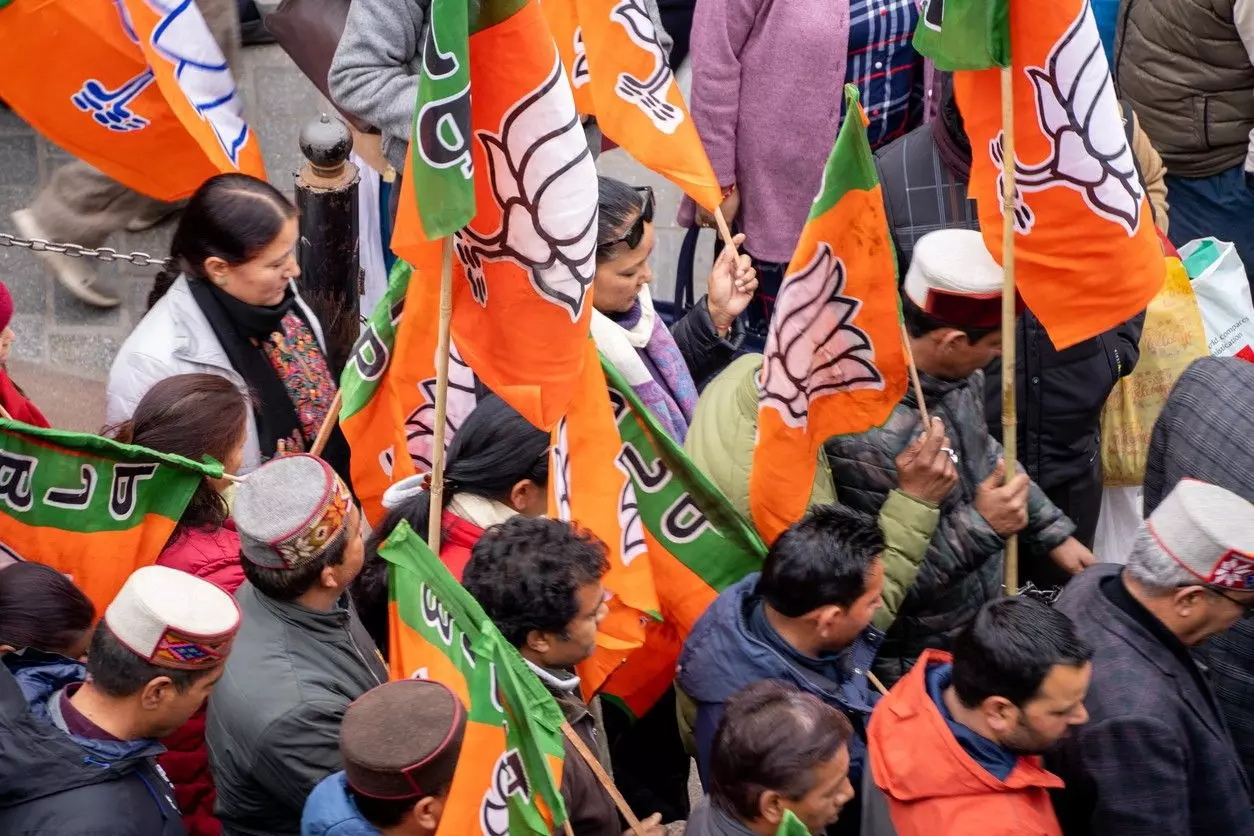
The BJP's decent electoral show in places such as Thiruvananthapuram and Thrissur in the 2024 Lok Sabha elections has come under the Opposition's scrutiny after the ongoing SIR procedure exposed a significantly high number of voters under the ASD category. Photo: iStock
BJP's 2024 LS poll show in Kerala under lens as SIR exposes shocking ASD entries
Left and Congress allege electoral fraud as data show a high concentration of untraceable voters in segments where it did well in 2024

At a press conference of Congress leader Rahul Gandhi against alleged “vote chori” (theft of votes) held recently, a video of B Gopalakrishnan, the vice president of the Bharatiya Janata Party’s (BJP) Kerala unit, was played in which he was seen making a startling claim.
He said his party could bring people, even from as distant as Kashmir, to enrol them as voters in any constituency it wanted to win, and there was nothing illegitimate about such an exercise.
Kerala SIR's 'ASD' revelations
At the time, the remark was brushed aside by the BJP as rhetorical bravado. However, months later, as Kerala’s Special Intensive Revision (SIR) throws up unprecedented numbers under the ASD (absent, shifted, deceased) category, Gopalakrishnan’s statement has acquired disturbing relevance.
Also read: 25 lakh names missing: Kerala CM questions credibility of SIR drive
What has alarmed political observers is not merely the scale of deletions, but their concentration.
Across Kerala, Assembly segments where the BJP finished first or second in the 2024 Lok Sabha elections show disproportionately high numbers of voters falling into the ASD category.
Leaders of the state’s ruling Left Democratic Front (LDF) and the Opposition United Democratic Front (UDF) argue that the consistency of this overlap has raised serious questions about whether voter enrolment, rather than voting itself, became a key area of electoral manipulation.
Thiruvananthapuram in focus
The pattern is most striking in Thiruvananthapuram district, which delivered the BJP's strongest parliamentary showing in Kerala, in the last Lok Sabha elections. Assembly segments under the Thiruvananthapuram Lok Sabha constituency, such as Thiruvananthapuram, Vattiyoorkavu, Nemom, and Kazhakkoottam, witnessed an intense mobilisation by the BJP ahead of last year’s polls, following a noticeable surge in voter registrations in the preceding years.
During the SIR, these same constituencies have recorded some of the highest proportions of untraceable voters in the state.
Data from Thiruvananthapuram show that tens of thousands of voters in each of these segments have been marked either absent or shifted. In several polling areas, ASD percentages have been more than 25. Booth-level officers (BLOs) have reported addresses that do not exist; flats where residents deny knowledge of the registered voters; and entire blocks where listed voters cannot be traced despite repeated visits.
Thrissur, BJP's only LS seat in Kerala
The phenomenon is not confined to the capital. Thrissur, where the BJP secured a landmark Lok Sabha victory in 2024, has emerged as another flashpoint. Under the SIR, 2,56,842 voters in the district have been either removed or flagged. Booth-level staff recount repeated instances of voters registered at vacant houses, commercial buildings, or addresses that appear to have been temporarily rented for enrolment purposes.
Also read: After LSG debacle, Left front to launch mass protests against Centre's new Bills
For instance, Booth No. 29 in the Thrissur parliamentary constituency illustrates the anomaly starkly. During the SIR, 334 voters from this single booth were found to be untraceable. This is politically significant because actor-turned-politician Suresh Gopi had secured a lead of over 500 votes in this booth during the 2024 election.
The scale of ASD entries in a booth that delivered such a decisive margin has raised pointed questions among election officials and local residents alike. Interestingly, members of Gopi’s own family who had earlier voted in Thrissur have since shifted their voter registrations to Thiruvananthapuram, highlighting the ease and strategic nature of voter relocation that the SIR process is now beginning to expose.
The case of Palakkad
The Palakkad Assembly constituency presents an even starker case. In several booths considered to be BJP strongholds, between 50 and 65 per cent of voters were initially marked untraceable during the revision. Although follow-up verification restored some names after enumeration forms were submitted, Palakkad district still recorded 2,00,070 voters under the SIR’s deletion or doubtful categories.
The BLOs say the issue extended beyond migrant labour colonies and border regions into urban wards where voter rolls had expanded sharply after 2019.
Also read: Despite Thiruvananthapuram magic, Kerala LSG results expose chink in BJP's armour
Across the state, the district-wise figures underline the scale of the exercise. Thiruvananthapuram tops the list with 4,36,857 voters who have been either removed or flagged, followed by Ernakulam with 3,34,962. Thrissur, Palakkad, Malappuram, Kozhikode, and Kollam each account for well over one lakh names. Even smaller districts such as Wayanad and Kasaragod show tens of thousands of voters in the ASD category. Despite additional verification, more than 16 lakh names statewide remain questionable.
LDF reacts: 'Not just SIR issue'
The political implications have prompted sharp reactions from the LDF.
“This is exactly what we have been saying since the Lok Sabha elections. The issue is not confined to the ongoing SIR exercise alone. The LSGD (Local Self Government Department) voters’ list had already exposed vote manipulation,” said V S Sunilkumar, a former state minister who lost to Gopi in Thrissur last year.
“Around 55,000 voters were missing in the LSG elections in Thrissur Lok Sabha constituency alone, and almost the same number have now appeared in the ASD list. This is why the BJP-led NDA (National Democratic Alliance), which had emerged first in the 2024 Lok Sabha elections, has slipped back to third position in the just-concluded LSG elections,” he added.
Education and Labour Minister V Sivankutty alleged that the BJP is attempting to replicate the Thrissur model in Thiruvananthapuram.
Also read: Kerala LSG elections: What numbers say about UDF, LDF, NDA performance
“There are constituencies in Thiruvananthapuram where the BJP is attempting to add votes on the Thrissur model. They had confidently claimed they would win in Nemom, Vattiyoorkavu, Kazhakkoottam and Thiruvananthapuram constituencies. Leaders had already begun staying here on rent. There are more than 12,000 flats in these constituencies. The Election Commission (EC) must intervene in this matter. This is how Suresh Gopi voted in Thrissur as well. This is a fraud perpetrated against democracy,” he said.
Opposition leaders argue that Kerala’s migration profile does not support claims of large-scale inward movement into select Assembly segments. Migration from the state has historically been outward, and internal migration patterns are well documented. The absence of social or economic indicators corresponding to the spike in voter enrolment strengthens suspicions that many ASD entrants were never genuine residents.
Gopalakrishnan counters
However, Gopalakrishnan has shrugged off the charges.
“The number of seats is more important than percentage figures, and that is something the BJP achieved in the recent local body elections. From a little over 1,600 seats earlier, the BJP alone increased its tally to 1,919 seats. Including BJP-supported independents, the party was about to create around 2,000 local body representatives,” Gopalakrishnan wrote on Facebook.
Also read: UP political battle intensifies over 4 crore 'missing' voters
The EC maintains that the SIR is a neutral, technical process intended to clean up the electoral rolls. Yet, the outcomes have reopened a deeper debate about electoral manipulation through enrolment rather than polling-day malpractice. Unlike booth capture or ballot tampering, voter list manipulation leaves little trace until a comprehensive revision brings discrepancies to light.
Seen against this backdrop, Gopalakrishnan’s remark on vote enrolment no longer sounds hypothetical. The SIR data suggest that systematic voter additions may have played a role in constituencies where electoral stakes were highest. As revised rolls are published and citizens are urged to verify their names, the political fallout is only beginning.
For the BJP, the concentration of ASD voters in its strongest 2024 Assembly segments threatens to convert an electoral breakthrough into a sustained credibility crisis.