How Azam Khan became the ultimate symbol of UP’s political realignment
Azam Khan’s prolonged legal battles and isolation within the SP reflect a larger political shift in UP, where assertive Muslim politics has steadily lost ground

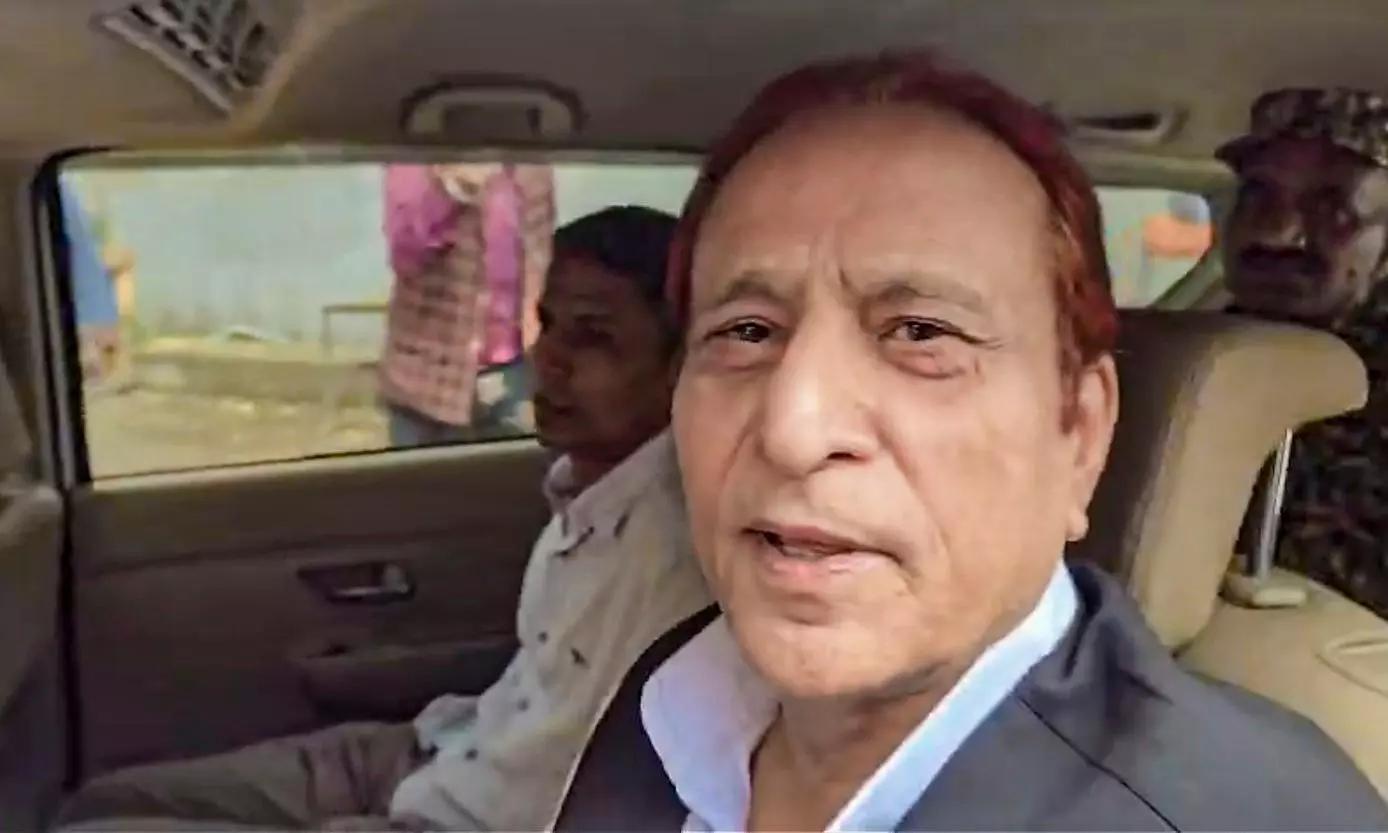
“Ab aur kehne ko reh kya gaya hai? Bas Musalmaan hone ki saza hai! (What else is left to be said now? I’m paying the cost of being a Muslim.)” These words from the beleaguered Samajwadi Party veteran leader Azam Khan, spoken when he was briefly released before being sent back to prison within minutes, capture the angst and ordeal that have come to define his personal and political life.
On October 31, barely 40 minutes after securing bail in the dual PAN card case, Khan was taken into ED custody over alleged financial irregularities in the construction of Maulana Mohammad Ali Jauhar University, which he founded in Rampur. The next day, a court remanded him to 14 days of judicial custody and ordered his transfer to Ghaziabad’s Dasna jail.
Also read: ED detains Azam Khan from Rampur jail as soon as he came out on bail in PAN fraud case
It was a near-theatrical illustration of the predicament that has defined Khan’s political and personal life for six years. Since February 2020, he has spent more than five years in jail, with each brief spell of freedom followed by fresh prosecution. His wife, Tazeen Fatima, and son, Abdullah, have also been drawn into the legal maelstrom. His ordeal is compounded by the apparent indifference of the very party he co-founded with Mulayam Singh Yadav.
From a towering socialist leader who challenged Nawabs, Congress and the Babri Masjid demolition with intimidating ferocity and unchallenged authority, Khan’s trajectory in recent years has become a cautionary parable of the seismic shifts in the state’s political landscape. Political experts and party insiders say that Khan and his style of politics, plausibly, no longer have any space.
The making and breaking of Azam Khan
“The incarceration of Azam Khan has completed BJP’s Hindutva project in the state. The message is clear: this is what a defiant and outspoken Muslim will face in the new Uttar Pradesh,” a long-time SP leader and close aide of Azam Khan told The Federal.
The 10-term MLA’s political journey began as a socialist leader who became the voice of beedi workers, rickshaw pullers and sections of Rampur’s working class.
Azam Khan with SP chief Akhilesh Yadav
As a fiery young leader, he took the fight of working-class people head-on to the landed elites and aristocrats of Rampur. His Nawaab vs Awaam rhetoric found traction, and he dislodged the Congress from Rampur.
“By the time Khan joined Samajwadi Party, he had already had been elected MLA from Rampur at least four times on the tickets of different parties including the Janata Party, Janata Dal, Lok Dal and Janata Party (Secular) of Chaudhary Charan Singh,” noted a veteran social activist and journalist Javed Akhtar.
Rise to prominence
Political observers note Khan’s stature grew multifold when Mulayam Singh Yadav elevated him to counter the Kamandal churn of the late 1980s and early 1990s.
“He had already constituted the Babri Masjid Action Committee along with senior lawyer Zafaryab Jilani and was being seen as somebody who was championing the Muslim cause in the face of the Hindutva politics that was taking root in the state. Mulayam Singh Yadav elevated him to become the Muslim face of the party,” recalled veteran political analyst Sharat Pradhan.
When the BJP came to power in 2017, a string of frivolous cases was slapped on him. He was arrested in 2020, and from there it has been a downhill ride for him.
Over the years, Azam Khan became indispensable to the party and was regarded as the de facto deputy chief minister in successive SP governments. When Akhilesh Yadav faced a challenge from within the party, Mulayam Singh Yadav entrusted Khan with getting the party to accept Akhilesh as its chief ministerial candidate.
“Azam Khan, initially, did have a problem, not because of his personal ambitions but because he couldn’t bring himself to accept that he would have to take orders from somebody he had always seen as a kid. But at Mulayam’s insistence, he threw his weight behind Akhilesh,” said senior journalist and author Sunita Aaron.
The downward spiral
SP insiders told The Federal that while Azam Khan did hold the greatest number of portfolios under the Akhilesh Yadav’s government, things were beginning to change steadily.
Also read: Uneven reality of Yogi’s UP growth story: Proposals aplenty, delivery patchy
“When the BJP came to power in 2017, a string of frivolous cases was slapped on him. He was arrested in 2020, and from there it has been a downhill ride for him. And today it has boiled down to this: anyone who speaks up for him also faces the music,” said the Rampur city president of the party and political confidant of Khan, Asim Raja.
After Khan’s disqualification from the Uttar Pradesh Assembly, the SP fielded Raja in Rampur, though he subsequently lost to the BJP’s Akash Saxena.
Why was Azam targeted?
Why did Azam Khan become the primary casualty of political retribution? He was neither a crowd-puller like gangster-turned-politician Mukhtar Ansari, nor did he command a wide national platform on minority issues like Sambhal’s Shafiqur Rahman Barq.
Also read: Akhilesh Yadav’s Hindu pivot and search for a coalition beyond Muslims, Yadavs
For political analysts, the answer lies in the sharp distinction between Khan’s style of politics and his polarizing public persona.
First, his strong public rebuttal of the Ram Janmabhoomi movement and his role in founding the Babri Masjid Action Committee drew clear battle lines, positioning him as the prominent face of anti-Hindutva mobilisation in the state.
“When administrative action was taken against Kar Sevaks under Mulayam Singh Yadav’s government, it was believed that Khan convinced Neta ji to act decisively. Ever since, he has been viewed with contempt by proponents of the Hindutva project,” Pradhan added.
Impulsiveness and sharp tongue
Second was his impulsive temperament and sharp tongue. In one breath, he could deliver memorable parliamentary speeches and campaign addresses; in the next, he could utter remarks deemed offensive or reprehensible. Consequently, he occasionally became viewed as the party's ‘embarrassment-in-chief’.
His sexually suggestive remarks regarding BJP candidate and actress Jaya Prada during the 2019 Lok Sabha election campaign in Rampur served as a prominent example of this pattern.
Third was his perceived autocratic style of functioning, which left little room for political negotiation or administrative deliberation.
Watch | What's behind strained Congress-SP ties in poll-bound Uttar Pradesh?
“His high-handedness in dealing with bureaucrats and other leaders made him unpopular. Statements like claiming he would make the district magistrate wipe his shoes deepened that resentment. So, many forces joined BJP to cut Khan to size,” a veteran journalist shared.
BJP’s quintessential bad Muslim
Political analysts and party insiders say that Khan’s combative rhetoric made him a convenient antagonist for Hindutva-focused political narratives.
“Unlike Mukhtar Ansari who had acquired the Robinhood image among the Dalits and backward classes in areas like Mau, Azamgarh and beyond, Khan’s politics was quintessentially around minority rights. Although he was honest and never had any criminal connections as such, his temperamental nature ruffled many a feather not just in the BJP camp but also within his party,” Aaron noted.
Party insiders say that Azam Khan’s isolation from the party had begun towards the end of the Akhilesh Yadav’s regime. Khan was increasingly skipping social gatherings and events of Akhilesh Yadav.
“Unlike Mukhtar Ansari, who acquired a Robin Hood image among the Dalits and backward communities in areas like Mau and Azamgarh, Khan’s politics revolved strictly around minority rights. Although he was honest and never had any criminal connections, his temperamental nature ruffled many a feather not just in the BJP camp but also within his party,” Aaron noted.
For Pradhan, Khan was the BJP’s quintessential Muslim adversary. His relentless prosecution allowed the party to cast itself as dismantling the SP’s alleged regime of minority appeasement.
“During the Muzaffarnagar riots, he publicly made statements alleging that minorities were unjustly being framed and not given non-partisan hearing by the statecraft. As a result, in the Western UP he was increasingly being seen as the anti-Hindu face,” Pradhan argued. “Crucifying him served BJP the purpose of creating the perception that they are delivering justice to the Hindus of the state.”
Moreover, Khan's concentration of administrative and political authority in Rampur generated local opposition from political rivals, residents, and sections of the regional Muslim community.
From co-founder to liability
As a founding member of the SP and one of Mulayam's closest associates, Khan expected the party to make his prolonged incarceration a central platform. Instead, Akhilesh Yadav's engagement with the matter has often appeared episodic.
Yadav did not visit Khan during his initial spell of incarceration, which lasted until May 2022. He eventually visited him ahead of the 2024 Lok Sabha elections during Khan's second spell in prison, which began in October 2023. The meeting, however, did little to dispel rumours of friction, which resurfaced over candidate selections.
Also read: Banking on women: Welfare turns into a BJP-SP cash-promise war ahead of UP polls
“Khan, who has always had a sway over candidate selection across most of Western UP, felt he was not being heard. While Khan’s protégé Ruchi Veera secured a ticket from Moradabad, Yadav denied a ticket to Khan’s confidante Asim Raja in Rampur,” Akhtar added.
Yadav also did not heed to Khan’s instance on leaving Nagina seat for Bhim Army’s chief Chandrashekhar Azad and fielded Manoj Kumar instead. Azad eventually won the seat, partially attributed to the influence Khan continued to exert from prison.
Factional friction
Party insiders say that Azam Khan’s isolation from the party had begun towards the end of the Akhilesh Yadav’s regime. Khan was increasingly skipping social gatherings and events of Akhilesh Yadav.
Party insiders indicate that Khan’s isolation within the SP began toward the end of Akhilesh Yadav’s tenure as Chief Minister, as Khan increasingly abstained from official party events and gatherings organised by Yadav. Insiders note that Yadav disapproved of Khan running an independent power center in Rampur separate from the leadership in Lucknow (the state capital) and Etawah (the Mulayam family turf).
Political analysts remain divided on Akhilesh Yadav’s approach to Khan’s legal situation. Aaron rejects claims that Yadav has completely abandoned Khan and his family.
“Khan himself has said he doesn’t have enough money to pay for a lawyer. So, naturally somebody is paying Kapil Sibal to represent him. Also, Akhilesh Yadav has always tried to keep him in good humour. Being in opposition and out of power for 10 years, he is also facing many political compulsions,” Aaron contested.
Twilight of a political era
Pradhan sees the situation differently, arguing that Khan no longer fits the evolving internal dynamics of the party. His outspoken nature is often perceived as a challenge to the leadership authority Akhilesh Yadav has worked to consolidate.
“Khan still carries that stature that he can openly scold Akhilesh Yadav also on his policies and strategies like the pro-Sanatan push. Besides, he thinks that openly coming out in Khan’s support could disturb his social engineering to counter BJP’s umbrella Hindu vote consolidation,” Pradhan added.
Also read: UP polls: Bargaining chip or overreach? Why Congress is asking for so many seats
Aaron agrees that Khan’s broader electoral authority is receding, noting that his role within the SP has become “more symbolic than organisational.”
Analysts generally agree that Khan’s political trajectory reflects broader shifts in regional minority politics.
“It’s all about hard Hindutva and soft Hindutva. There’s no space for minority politics or even secular kind of politics that Azam Khan championed. He’s behind the bars just as secularism has been brushed under the carpet,” said Pradhan.