



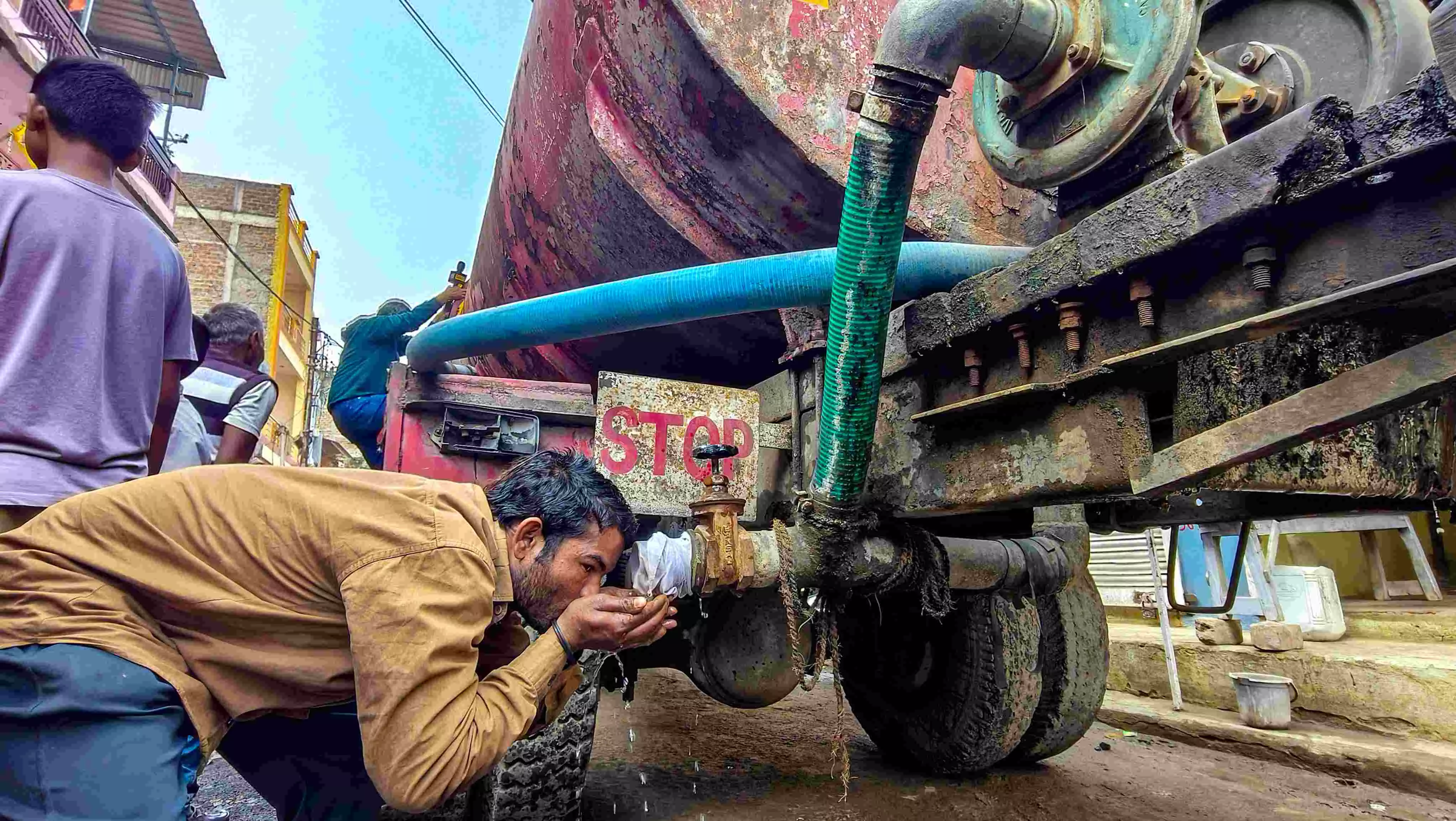
A man drinks water from a tanker amid a contaminated water crisis at Bhagirathpura, in Indore, Madhya Pradesh. Photo: PTI
Indore water contamination: Authorities yet to pinpoint source as probe expands
City officials have intensified surveys in the affected Bhagirathpura area to contain a diarrhoea outbreak; over 25,000 residents screened

Authorities in Indore are continuing efforts to contain a diarrhoea outbreak in the city's Bhagirathpura area, even as officials admit that the exact source of contamination has not yet been conclusively identified. Health teams launched an expanded door-to-door survey on Saturday (January 3) to identify fresh cases and prevent further spread of the disease.
Also read: Indore contaminated water case: Uma Bharti rips into MP govt
The outbreak, believed to be linked to contaminated drinking water, has led to hundreds of hospitalisations and multiple deaths, prompting heightened scrutiny of the city’s water supply system.
Ring survey to map spread of infection
Civic authorities carried out a ring survey covering more than 5,000 households, screening over 25,000 residents for symptoms of diarrhoea. Health officials said 65 people with mild symptoms were detected and given immediate treatment, while 15 patients were referred to hospitals for further care.
The survey involves screening 50 houses around each identified hotspot to understand the pattern and spread of the infection. Officials said the exercise is aimed at early detection and treatment while parallel investigations continue into the source of contamination.
Hospitalisations and deaths
According to official data, 354 patients have been hospitalised so far following the outbreak. While 205 patients have been discharged, 149 remain under treatment, including 20 in intensive care units.
Also Read: Indore water contamination: Why 'cleanest city' model is under scanner
The local administration has confirmed six deaths linked to the outbreak, though officials have acknowledged that figures are still being reconciled as the investigation progresses. The death toll remains disputed even after almost a week, with other sources saying it could be between 10 and 16.
Cause of contamination under investigation
While contaminated drinking water has been identified as the likely trigger, authorities say investigations are ongoing to determine how and where contamination entered the supply. Municipal officials are examining water pipelines and related infrastructure in the affected locality, and water quality testing is being conducted at multiple points.
Initially, authorities suspected that a small police chowki (outpost) constructed over a main water pipeline in Bhagirathpura was responsible for the contamination. The toilet at the chowki did not have a proper septic tank, leading officials to believe that waste may have seeped into the water line.
However, according to a report published in The Indian Express, officials have now widened the scope of the investigation to examine other possible sources of contamination.
The daily cited a senior area engineer overseeing the expanded investigation as saying that they had earlier thought the contamination was from the toilet made at the police chowki, where the infection spread.
"Even though that’s still a factor, we are looking beyond that source,” the official was quoted as saying.
The report added that authorities are also conducting heavy metal tests on the pipeline. Officials say the densely populated locality and its narrow lanes pose significant practical challenges for inspection and repair work.
Dependence on water tankers a fresh worry
To ensure access to safe drinking water, the municipal corporation has increased the deployment of water tankers in Bhagirathpura and surrounding areas. Residents have been advised to avoid tap water and use boiled or supplied water until further notice.
Also Read: Indore water contamination: 203 still in hospitals, says Collector
This has thrown the residents into more hardships. With regular water supply disrupted due to the ongoing investigation, many households are now dependent on water tankers. Some residents, sceptical about tanker water quality, have turned to packaged drinking water, adding to their financial strain.
(With agency inputs)