







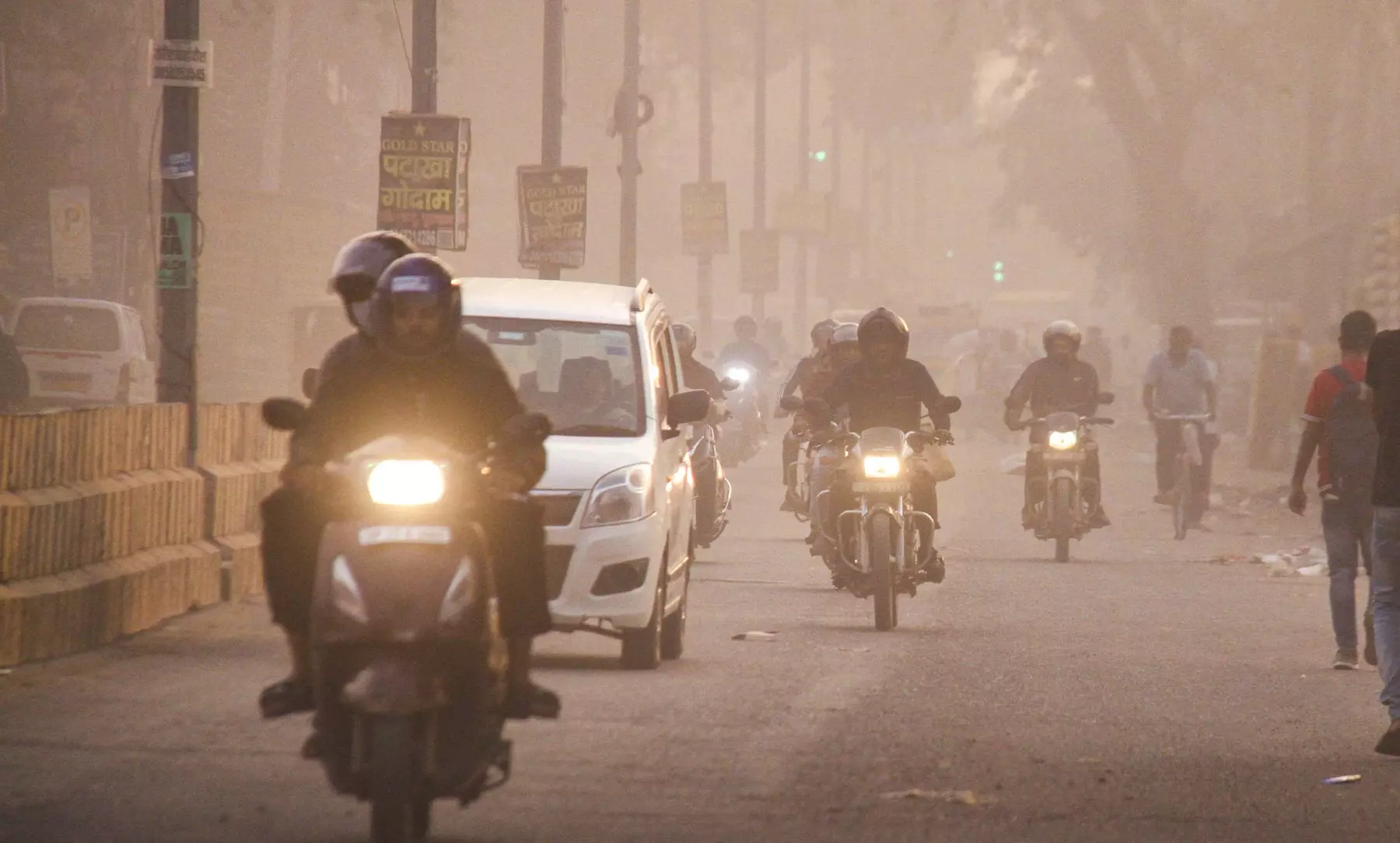
Delhi Pollution: 50 pc work from home in Delhi-NCR offices from November 5
CAQM orders 50% work-from-home in Delhi and five NCR districts from November 5 to 20 amid rising pollution. Construction curbs have also been imposed

In a bid to curb air pollution in Delhi and the National Capital Region, the Commission for Air Quality Management (CAQM) has instructed government and private offices to allow work from home to 50 per cent of their staff members, while the remaining will physically attend office. The order will be in force from November 5 to 20 in Delhi and five National Capital Region (NCR) districts.
50% staff to work from home in six districts
The panel has also imposed curbs on demolition activities which generate dust and on outdoor construction activities across the NCR during the same period. However, essential public infrastructure, national security and other critical projects are exempted from the purview of the order dated October 30.
Also Read: Delhi records cleanest October air in 11 years, wettest in four
"State Government and private offices to operate with up to 50% of the staff strength attending physically and remaining staff to work from home in the territorial jurisdiction of the NCT of Delhi and in the districts of Gurugram, Faridabad, Sonipat, Ghaziabad and Gautam Buddha Nagar except for such industrial establishments and essential services, where this arrangement is not feasible,” stated the order as quoted by ANI.
Construction curbs and project exemptions
It further stated that the order will also be applicable to linear public infrastructure projects, including highways, roads, flyovers, overbridges, power transmission lines, pipelines and telecommunication works.
Also Read: Delhi winter air pollution: 10 lakh vehicles face ban from November 1
Exemptions have been provided to projects linked to the Railways, Metro services, airports, inter-state bus terminals, hospitals, water supply and sanitation, national security and defence-related activities along with projects of national importance.
CAQM cites November pollution trends
The Commission explained the reason behind the curbs, referring to daily Air Quality Index (AQI) data for November from 2018 to 2025. The statistics indicated a recurring pattern of an increase of pollution levels in Delhi-NCR, particularly during early to mid-November.
Also Read: The hidden toll of India's air pollution: How PM2.5 affects long-term health
"During this period, local emission sources, seasonal agricultural residue & biomass burning and other episodic events related emissions further contribute to the pollution load, while adverse meteorological conditions, including low wind speeds, a shallow atmospheric boundary layer and reduced vertical mixing, further limit pollutant dispersion," the order stated.
"The proposed measures are preventive in nature, limited to a specified period and geographical area, and have been formulated keeping in view the seasonal vulnerability of the region to air pollution," it added.