The hidden toll of India's air pollution: How PM2.5 affects long-term health
A Lancet study links 3.8 million Indian deaths over 11 years to PM2.5, emphasising the need for structural emission cuts and preventive care.

As air pollution becomes a recurring crisis across Delhi-NCR and other parts of northern India, the health risks extend well beyond immediate symptoms like coughing, throat irritation and breathlessness. Medical experts warn that prolonged exposure to fine particulate matter, particularly PM2.5, is associated with serious long-term conditions, including cardiovascular disease, stroke and kidney damage. PM2.5 measures 2.5 micrometers or less in diameter — roughly 30 times smaller than the width of a human hair.
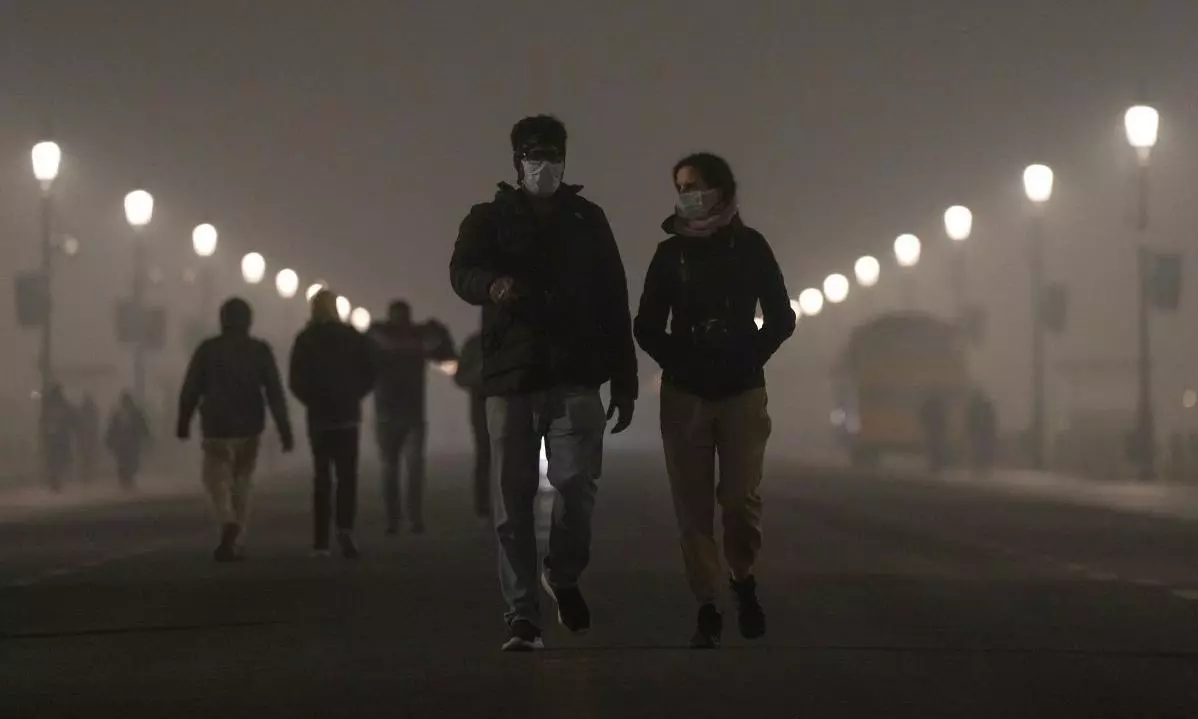
For millions who commute daily, exercise outdoors, or work at construction sites, breathing polluted air is an avoidable reality. Yet the danger isn't confined to visibly hazy or smoky days; these microscopic particles pose a hidden risk even when the air appears clear.
What the research shows
A study published in The Lancet Planetary Health in December 2024 highlighted the staggering scale of India's air pollution crisis. Researchers analysing district-level mortality and estimated PM2.5 exposure between 2009 and 2019 found that every 10 micrograms per cubic metre increase in annual PM2.5 concentration was linked to an 8.6 per cent increase in annual mortality.
Also read: Delhi records coldest October morning in 3 years as AQI slips into ‘poor’ category
The study estimated that 3.8 million deaths over the 11-year period were attributable to PM2.5 exposure when assessed against India's national air quality standards. Crucially, the researchers noted that 100 per cent of India's population lived in areas exceeding the World Health Organization’s (WHO) annual guideline of 5 micrograms per cubic metre.
These findings underline why air pollution must be treated as a long-term public health challenge rather than simply a seasonal inconvenience. Note, however, that while these estimates capture broad population-level patterns, they do not calculate an individual's personal risk profile.
Why PM2.5 is particularly concerning
Because of their microscopic size, these particles bypass the body's natural defenses, penetrating deep into the lungs and entering the bloodstream to trigger systemic inflammation.
According to the WHO, long-term exposure to fine particulate pollution is linked to conditions including ischaemic heart disease, stroke, chronic obstructive pulmonary disease, lung cancer and respiratory infections.
While vulnerable groups — including children, older adults, pregnant women, and individuals with pre-existing heart or lung conditions — face the highest risk, healthy adults are far from immune to prolonged exposure.
Also read: World's most polluted: Post-Dussehra, 21 Indian cities feature in top 25
The health impact may go beyond breathing difficulties. Dr. Harsh Mahajan, Founder and Chairman of Mahajan Imaging & Labs and Mentor, FICCI Health, emphasises the need to recognise the wider implications of polluted air.
"Air pollution is no longer just an environmental issue; it is a growing health risk with consequences that can extend far beyond the lungs. While we often associate poor air quality with coughing, breathlessness and respiratory illness, prolonged exposure to fine particulate matter (PM2.5) is also linked to cardiovascular disease, stroke and impaired kidney health," he says.
The danger is not always immediately apparent. Cardiovascular effects, for instance, may develop without the obvious respiratory symptoms that people commonly associate with pollution. So, it is difficult to gauge air pollution's true impact based solely on visible or immediate symptoms.
Why preventive healthcare matters
By the time a medical problem becomes noticeable, the underlying condition may require more extensive evaluation and management.
This makes early identification of health concerns and preventive healthcare particularly important," says Dr. Mahajan.
Medical experts advise individuals with persistent symptoms, underlying heart or lung conditions, or high exposure risks to seek timely medical guidance. Doctors can recommend tailored evaluations based on personal health histories — though routine diagnostic testing is not necessary as a universal screening for everyone exposed to polluted air.
What’s the solution?
India's pollution challenge is not confined to the national capital. A Centre for Research on Energy and Clean Air (CREA) assessment in January 2026 found that 1,787 of 4,041 Indian cities analysed exceeded the national annual PM2.5 standard in every assessed year between 2019 and 2024, excluding the COVID-affected year of 2020.
This pervasive crisis stems from systemic emissions across transportation, heavy industry, power generation, construction, and open waste burning — all aggravated by winter weather patterns that trap toxic particles near ground level.
While personal precautions such as avoiding outdoor exercise on high-pollution days and wearing masks can help reduce individual exposure, they are temporary shields, not permanent solutions.
'Need stronger public health response'
As Dr. Mahajan stresses, "Individual health checks cannot substitute for cleaner air. We need a stronger public health response that combines sustained action to reduce pollution, greater awareness of its long-term effects and a shift towards prevention rather than waiting for illness to develop."
Ultimately, tackling India's air pollution crisis requires sustained action to reduce emissions, stronger monitoring, better public awareness and accessible preventive healthcare. Reducing air pollution and protecting long-term health are two sides of the very same public health mandate.