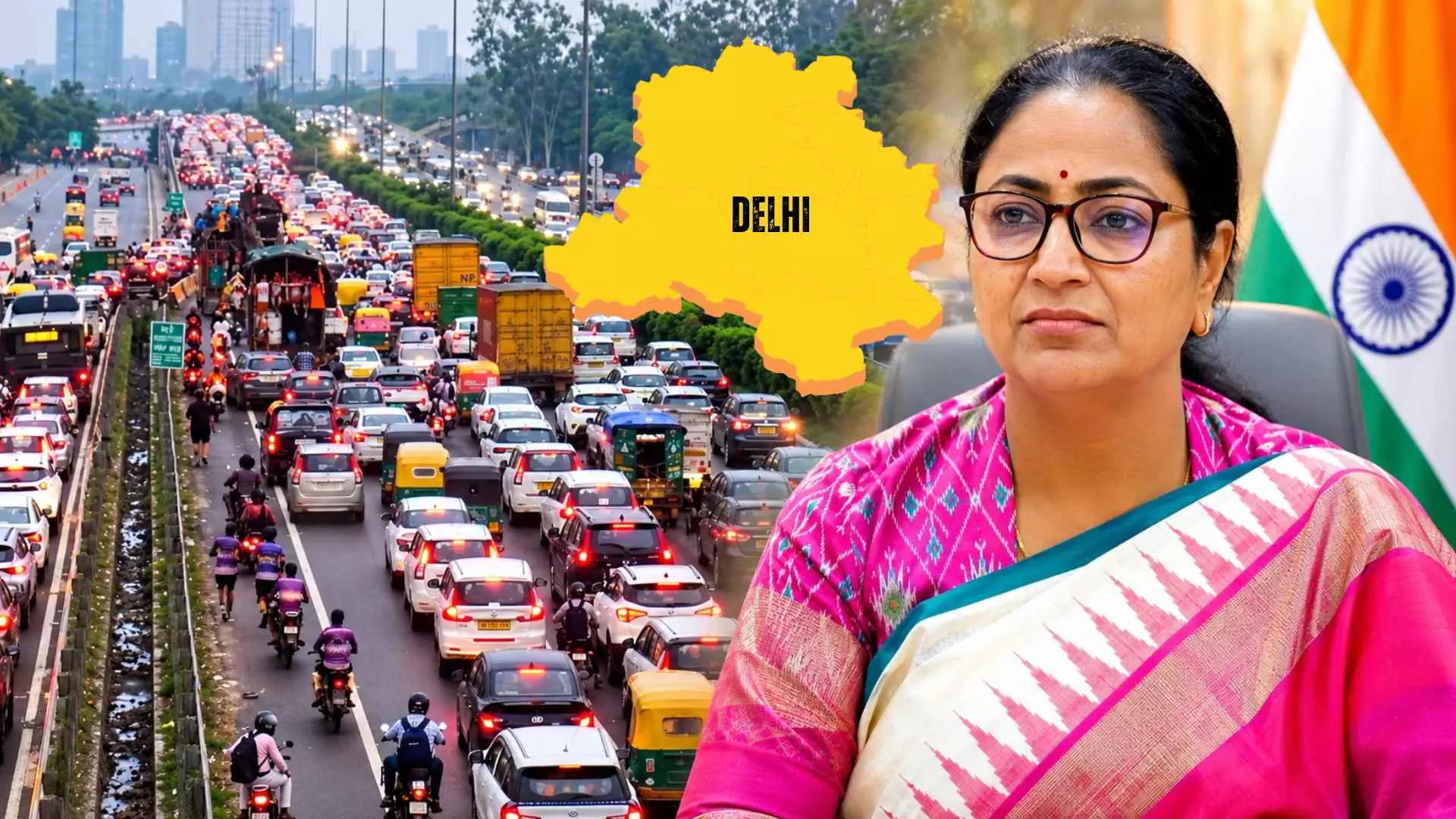
Delhi winter air pollution: 10 lakh vehicles face ban from November 1
Delhi will restrict non-BS6 vehicles from November 1 to January 31 to curb winter pollution, with strict border checks and a no PUC, no fuel policy

Delhi is set to impose stringent vehicle restrictions from November 1 to January 31 as the national capital prepares for another winter of hazardous air pollution.
At least 10 lakh vehicles that enter and exit Delhi daily are expected to be affected by the restrictions, according to estimates from the Delhi Transport Department.
The restrictions will target vehicles that do not comply with Bharat Stage 6 (BS6) emission standards. The move is aimed at reducing vehicular emissions as air quality deteriorates during the winter months.
Also read: World's most polluted: Post-Dussehra, 21 Indian cities feature in top 25
Delhi's Air Quality Index (AQI) has been rising since Dussehra, while the first-stage measures under the Graded Response Action Plan (GRAP) are already in force to tackle worsening air pollution.
Winter curbs
From November 1, restrictions are expected to be progressively tightened as temperatures fall and pollution levels typically rise. Studies cited in the report suggest that vehicular emissions contribute nearly 40 per cent of overall air pollution in the National Capital Region (NCR).
The restrictions are expected to have a significant impact on commuters travelling to Delhi from neighbouring NCR cities, including Noida, Gurugram, Faridabad and Ghaziabad.
According to estimates from the Delhi Transport Department, at least 10 lakh vehicles entering and leaving the national capital daily could be directly affected. Authorities are expected to intensify checks at Delhi's borders with neighbouring cities to enforce the restrictions.
Border checks
Automatic number plate recognition cameras are being installed at Delhi's borders to monitor vehicle movement and alert the police about vehicles that are not permitted to enter the capital during the three months.
Vehicles without a valid Pollution Under Control (PUC) certificate will also face scrutiny. Only vehicles used for emergency services, such as ambulances and fire tenders, along with vehicles falling under other specified exemption categories, will be exempt from the restrictions.
The enforcement measures are intended to identify non-compliant vehicles entering Delhi and ensure that vehicles permitted on the roads meet the applicable emission and pollution-control requirements.
Who is affected?
Petrol and diesel vehicles falling under the BS3 and BS4 categories, as well as vehicles registered outside Delhi, will not be allowed to enter the national capital under the restrictions described in the report.
Electric vehicles (EVs) and compressed natural gas (CNG) vehicles will remain largely unaffected. However, all vehicles permitted to ply on Delhi's roads must have a valid PUC certificate.
'No PUC, no fuel'
Fuel stations across Delhi have also been directed to strictly enforce the 'no PUC, no fuel' policy. This means vehicle owners must have a valid pollution certificate to purchase fuel.
With restrictions expected to affect daily commuters and vehicles travelling from neighbouring NCR cities, enforcement at Delhi's borders and fuel stations will be central to the winter pollution-control drive.