



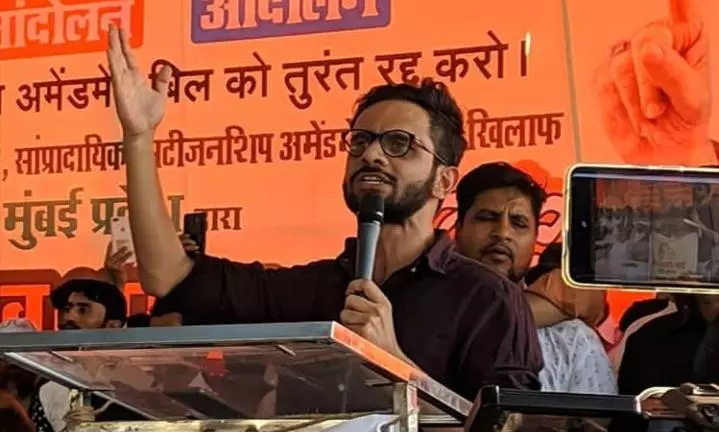
Delhi court rejects Umar Khalid’s interim bail plea, says it's 'not reasonable'
Delhi court rejected Umar Khalid’s interim bail plea seeking temporary release for his uncle’s 'Chehlum' and mother’s medical care.

A Delhi court on Tuesday (May 19) rejected activist Umar Khalid’s interim bail plea seeking temporary release to attend his uncle’s Chehlum ceremony and care for his ailing mother, stating that the reasons cited in support of the request did not warrant relief at this stage.
Plea for temporary release
Additional Sessions Judge Sameer Bajpai of Delhi’s Karkardooma Court was hearing Khalid’s application seeking 15 days of interim bail on humanitarian grounds. The plea had sought permission for him to participate in his uncle’s Chehlum, the 40-day post-death ritual observed after bereavement, and assist his mother, who is scheduled to undergo surgery.
Also Read: SC rejects Umar Khalid’s review plea in Delhi riots conspiracy case
The court, however, was not persuaded by the grounds advanced in the plea and dismissed the request, observing that the reasons furnished for temporary release were not considered "reasonable", reported ANI. Khalid has been in custody since September 13, 2020.
SC observations on bail principles
The development comes a day after the Supreme Court questioned the reasoning adopted in an earlier judgment denying bail to Khalid and activist Sharjeel Imam in the alleged larger conspiracy case linked to the 2020 Delhi riots.
Also Read: 'Jail is my life now': Umar Khalid after Supreme Court denies bail
A bench of Justices BV Nagarathna and Ujjal Bhuyan, while hearing a separate matter concerning a Jammu and Kashmir resident accused in a narco-terror case investigated by the National Investigation Agency (NIA), expressed “serious reservations” over the approach taken in the January 5 verdict.
The court noted that the previous ruling did not properly apply principles laid down by a larger three-judge bench in Union of India vs KA Najeeb (2021), which held that prolonged incarceration and delays in trial could override statutory restrictions on bail, including in cases arising under special laws.
‘Bail is not an empty statutory slogan’
Reading portions of the judgment in open court, Justice Bhuyan stated “Bail is not an empty statutory slogan. It is a constitutional principle flowing from Article 21, and the presumption of innocence is the cornerstone of any civilised society governed by the rule of law.”
Also Read: 2020 Delhi riots: Why SC denied bail to Umar Khalid, Sharjeel Imam
“Even under UAPA, bail is the rule and jail an exception. Bail can only be denied in a particular case depending on the facts of that particular case,” added the bench as reported by the Hindustan Times.
Case background and charges
Khalid and several others have been charged under the Unlawful Activities (Prevention) Act (UAPA) and provisions of the Indian Penal Code for allegedly orchestrating the 2020 northeast Delhi riots, which claimed 53 lives and injured more than 700 people during protests against the Citizenship (Amendment) Act and the proposed National Register of Citizens.